wfmu showed a public service announcement by David Lynch (photography Frederick Elmes): "The message is clear: trash creates rats who will gnaw away at your existence with their razor sharp teeth and whip your legs with their heavy, hairless tails".
video
Showing posts with label semiotics. Show all posts
Showing posts with label semiotics. Show all posts
Sunday, April 01, 2007
Fresh, fun and innocent anti-littering ad

Sunday, December 10, 2006
More about alter-ego images in the media ...

I read the blog of Jeff Lieberman and found this campaign for real beauty by Dove and through the comments I also discovered this swedish campain.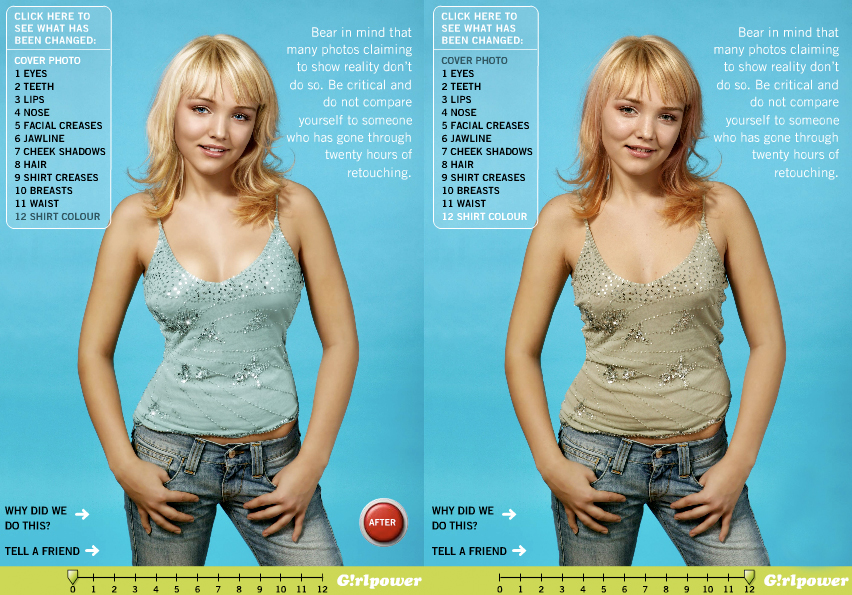
The idea behind the campaign is to make women aware of how altered these images can be and how our vision of beauty can be distorted. The campaign of Dove is pretty clever in bringing us through all the steps of the woman metamorphosis. From makeup & light to digital edition. You can watch the movie here. Photoshop, le meilleur ami de la femme!
It seems to me that this ad tells us more than just the woman metamorphosis through editing. It also talks about the authority of the consumer. It of course plays an important role on accusing the fetishized repetition of Alter-Ego images in the media.
For the discussion, I readapted the semiotic identity square from Metz, Christian; “The Imaginary Signifier”, from Apparatus Theory., pp408-439. 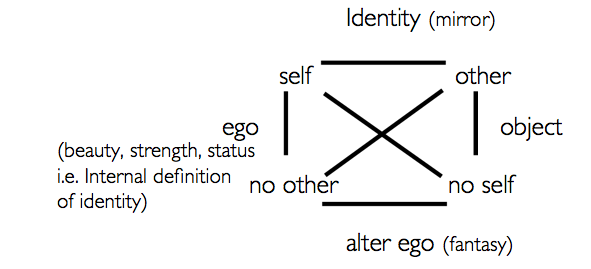
Considering identity made of the self and the others (the mirror), the ego (our internal definition of identity) made of the self and the no-other, the alter ego (fantasy identity) that does not include the self neither the other, and the object (no self, other). The characters presented on these ads are unreal, fictional and the emotional resonance with the viewer cannot be of an identification, because the identities are impossible. However these images represent an alter ego, an alter-identification. An attachment to the image as an Alter Ego. Through these images, individuals try to reconcile the alter ego and identity such as they correspond to the ego. They end up forcing the alter ego image into the mirror, and end up into phenomena such as anorexia, aesthetic surgery and so on.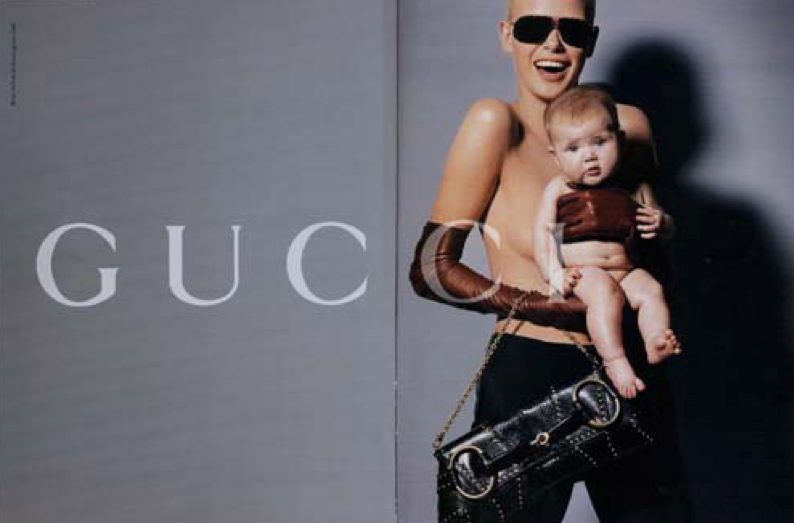
Gucci ad used as reference point
An interesting reference on the subject is the semiotic analysis of high fashion advertising by Alan Rhodes and Rodrigo Zuloago (2003). Here is the .pdf of the paper.
However, the Dove campaign tells us more. By giving authority to the viewer, it mentions a new area for advertisement . It talks to this naive consumer that has not overcome the manipulation of the media. However is also implies that there is another consumer that has already overcome this manipulation. This campaign tries to satisfy both consumers.
Hugo Liu has analyzed the passage from being a naive consumer to being the superconsumer, the one that is self-constructed culturally and can freely choose the culture that will fulfill him/her. An idealistic view of the after post-modern area and another paper that makes you feel good of being multicultural... .pdf of the paper.
Wednesday, November 29, 2006
Semiotic principles for practical design
I recently gave a lecture for the Tangible Interfaces class lead by Professor Hiroshi Ishii. I presented my process of design from a Graphical User Interface to a Tangible User Interface. I also introduced semiotic principles for practical design in the form of a design assignment.
I introduced a visual aesthetic process to bring the students into re-thinking their own process from their first ideas to the conceptualisation of their project. 
The visual aesthetic production process by Howard Riley (2004)
The main point is that social and individual percepts are codified into material form. Products can then be decomposed into separated features. This help understand that, when combined, these features become cultural choices. Pointing out the combination of features naturally point to cultural implications, i.e. are culture specific.
The final point is to determine within a concept what are the assumptions while making design choices. It helps articulate a project within a framework and allows the identification of the 'why' of the final design choices that will later be encoded into material form.
I also presented the Semiotic Square by Greimas and Rastier. 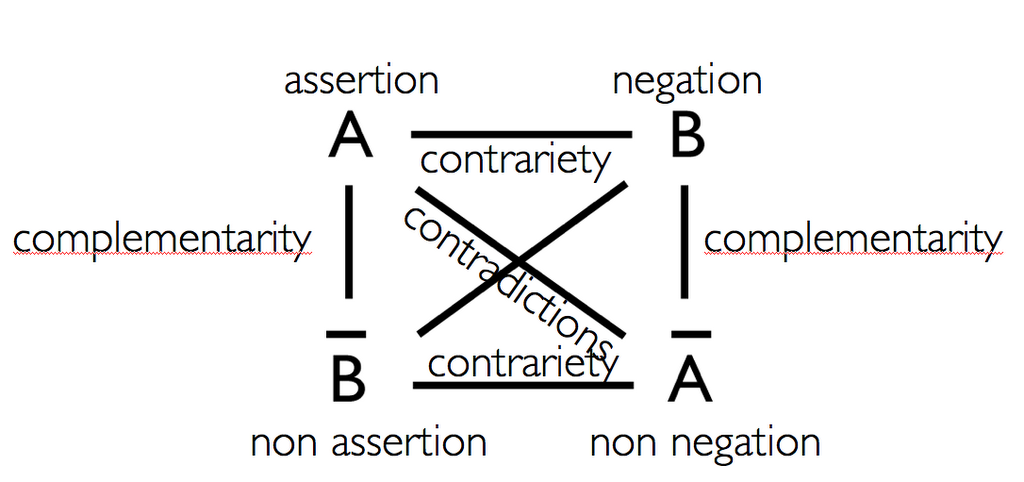
Designers can use semiotic tools for visualizing social ideology embedded in combinations of features.
A selection of references
HOWARD RILEY (2004) Perceptual modes, semiotic codes, social mores: a contribution towards a social semiotics of drawing. Visual Communication, Vol. 3, No. 3, 294-315 .pdf
ALAN RHODES and RODRIGO ZULOAGO (2003) A semiotic analysis of high fashion advertising. 2003. .pdf
OSBORN J.R. (2005) Theory Pictures as Trails: Diagrams and the Navigation of Theoretical Narratives Cognitive Science Online, 3.2, pp. 15-44 .pdf
Subscribe to:
Posts (Atom)
