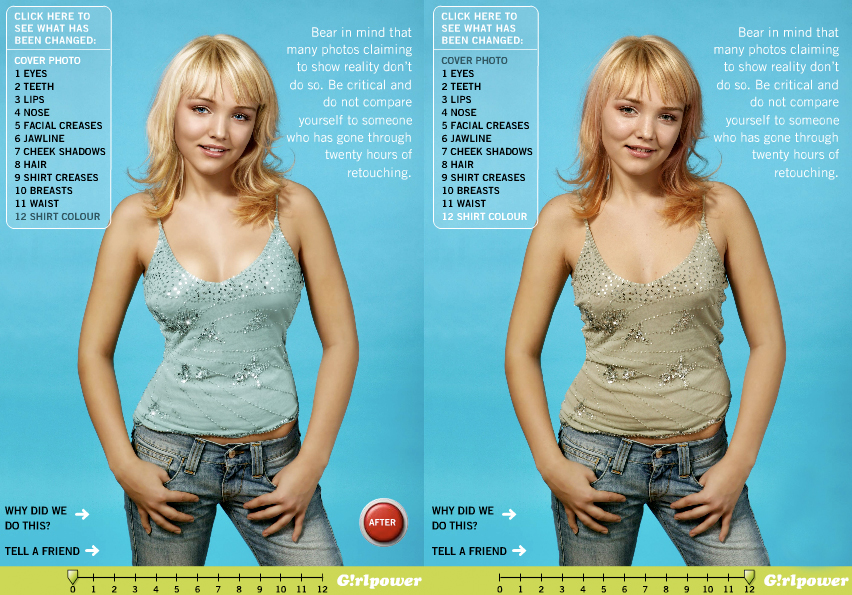
I read the blog of Jeff Lieberman and found this campaign for real beauty by Dove and through the comments I also discovered this swedish campain.
The idea behind the campaign is to make women aware of how altered these images can be and how our vision of beauty can be distorted. The campaign of Dove is pretty clever in bringing us through all the steps of the woman metamorphosis. From makeup & light to digital edition. You can watch the movie here. Photoshop, le meilleur ami de la femme!
It seems to me that this ad tells us more than just the woman metamorphosis through editing. It also talks about the authority of the consumer. It of course plays an important role on accusing the fetishized repetition of Alter-Ego images in the media.
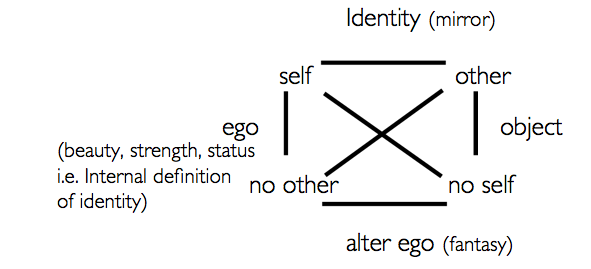
For the discussion, I readapted the semiotic identity square from Metz, Christian; “The Imaginary Signifier”, from Apparatus Theory., pp408-439.
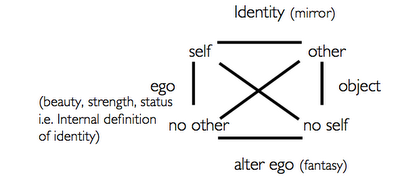
Considering identity made of the self and the others (the mirror), the ego (our internal definition of identity) made of the self and the no-other, the alter ego (fantasy identity) that does not include the self neither the other, and the object (no self, other). The characters presented on these ads are unreal, fictional and the emotional resonance with the viewer cannot be of an identification, because the identities are impossible. However these images represent an alter ego, an alter-identification. An attachment to the image as an Alter Ego. Through these images, individuals try to reconcile the alter ego and identity such as they correspond to the ego. They end up forcing the alter ego image into the mirror, and end up into phenomena such as anorexia, aesthetic surgery and so on.
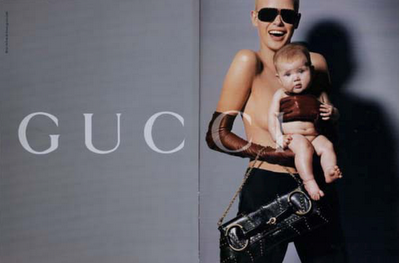
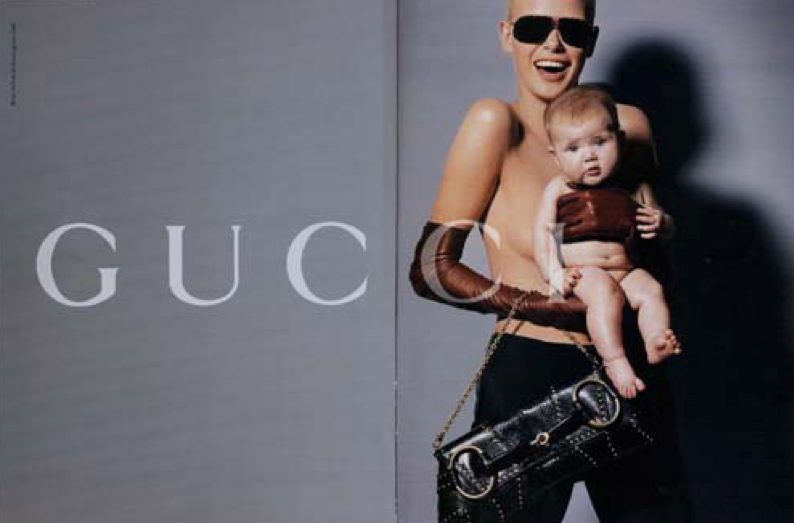
Gucci ad used as reference point
An interesting reference on the subject is the semiotic analysis of high fashion advertising by Alan Rhodes and Rodrigo Zuloago (2003). Here is the .pdf of the paper.
However, the Dove campaign tells us more. By giving authority to the viewer, it mentions a new area for advertisement . It talks to this naive consumer that has not overcome the manipulation of the media. However is also implies that there is another consumer that has already overcome this manipulation. This campaign tries to satisfy both consumers.
Hugo Liu has analyzed the passage from being a naive consumer to being the superconsumer, the one that is self-constructed culturally and can freely choose the culture that will fulfill him/her. An idealistic view of the after post-modern area and another paper that makes you feel good of being multicultural... .pdf of the paper.