Showing posts with label psychology. Show all posts

Thursday, June 19, 2008

A journey for the foreigner

All foreigners who have made a choice add to their passion for indifference a fervent extremism that reveals the origin of their exile – Julia Kristeva


I recently read a book, depressing and fascinating, Strangers to Ourselves, by Julia Kristerva.
This book is a journey through the notion of the stranger (the foreigner, outsider or alien in a country and society), and explores the idea of strangeness within the self (a person’s deep sense of being). In this book Julia Kristeva distinguishes the inside from the outside appearance and the conscious idea of self. She explains mostly the point of view of the foreigner, how he feels and perceives others in his welcoming foreign country. She attempts to analyze him and shows how this exile is nurtured by a deep inside exile. I share my notes because I know many foreigners who will resonate with this book.

Strangers to ourselves

In the first chapter, “Tocata and Fugue for the Foreigner”, the author explains her attempt to not turn the foreigner into a thing, but rather to “brush it” with no permanent structure. She presents a happy foreigner to the eyes of others, while the foreigner is actually away from his homeland because most probably he has lost his mother. As in Camus, his Stranger reveals himself at the time of his mother’s death: “One has not much noticed that this cold orphan, whose indifference can become criminal, is a fanatic of absence”. The foreigner is a devotee of solitude.

In the eyes of the foreigner those who are not foreign have no life at all: barely do they exist, haughty or mediocre. In contrast, the space of the foreigner is a moving train! As for confidence, the foreigner has no self. An empty confidence, valueless, which focuses his possibilities of being constantly other: “I do what they want me to, but it is not me. Me is elsewhere, me belongs to no one, me does not belong to me, … does me exist?”. Julia Kristeva concludes that the foreigner is a dreamer making love with absence, one exquisitely depressed. Happy? No one knows better than the foreigner the passion for solitude. “The paradox is that the foreigner wishes to be alone but with partners, and yet none is willing to join him in the torrid space of his uniqueness”.

The author proposes two categories of foreigner. The one who agonizes between what is no longer and what will never be, the advocate of emptiness, usually the best ironist, and the one who transcends, living neither before nor now but beyond, a believer and sometimes ripens into a skeptic! She explains how meeting balances wandering for the foreigner. The banquet of hospitality is the foreigner’s utopia with the brotherhood of guests who soothe and forget their differences … the banquet is outside of time!

The author shows how the foreigner constantly feels the hatred of others and how living with the foreigner (with the other) confronts people with the possibility or not of being an other, as in being in his place. Rimbaud’s psychotic ghost Je est un autre (I is an other) is the acknowledgment of this exile: to be foreign and live in a foreign country.
“Being alienated from myself, as painful as that may be, provides me with that exquisite distance within which perverse pleasure begins, as well as the possibility of my imagining and thinking, the impetus of my culture.” Split identity? Should we recognize that one becomes a foreigner in another country because he is already a foreigner from within?
How strange is Camus’ Meursault (The Stranger, 1942), so anesthetized, lacking emotions, all passion having been eradicated, and not a scratch to show for it. One could easily take him for a borderline case, or a fasle self, in short for a quasi-psychotic, rather than for a prototype of the foreigner.

Julia Kristeva brings language into this exile. The foreigner does not speak his mother tongue nor he is filled with resonance from the body’s memory! The resurrection through a new language slowly appears superficial and meaningless. This new language appears like a prosthesis, it is superficial.

Apparently, nobody listens to the foreigner, because the foreigner is only tolerated. As the author explains: “Those who have never lost the slightest root seem unable to understand any word liable to temper their point of view”. And the foreigner’s friends, aside from bleeding hearts who feel obliged to do good, could only be those who feel foreign to themselves.

Nowhere does one find better somatization than among foreigners, so much can linguistic and passional expression find itself inhibited

The realm of the foreigner slowly becomes silence. “It is the silence that empties the mind and fills the brain with despondency, like the gaze of sorrowful women coiled up in some nonexistent eternity.” Instead of approximating words, the foreigner no longer says them. The foreigner has lost his own language in a foreign land …

Posted by Cati Vaucelle @ Architectradure

Monday, June 16, 2008

A century of evolution between La Guerre des Boutons and Harry Potter

I'd like to share the notes I wrote about a fascinating French book:
De la Guerre des Boutons à Harry Pottter by Jean-Marie Gauthier and Roger Moukakou.

In this book, two psychiatrists connect the novel of Louis Pergaud, La Guerre des boutons (English: "War of the Buttons") written in 1906 with the best seller of Joanne K Rowling (1997-), Harry Potter. The authors present a century of evolution in the teenagers’ life: their space/time structure, their relationship to a group of peers, and their appropriation of the land. The authors analyze the progression from developing concrete skills (close to the ones of adults) to an imaginary virtual world. Based on these two influential novels, a repository for this evolution, they illustrate their clinical analysis with real life scenarios of teenagers.

La Guerre des Boutons VS Harry Potter, The Order of the Phoenix movie


You can read on La Guerre des Boutons flyer: “Il y a des guerres qui durent des années, celle-ci doit se terminer avant le diner” which stands for “There are wars that last for years, this one needs to be over before diner”. For the ones who do not know this French novel, I am posting some screenshots from a movie interpretation of La Guerre des boutons made in 1962 by Yves Robert.

An excerpt from the movie can be found ->here<-

La Guerre des Boutons


Notes from: De la Guerre des Boutons à Harry Pottter by Jean-Marie Gauthier and Roger Moukakou.

Essais anthropologiques

The authors observed that the ones who usually have difficulties to talk and show some reserve towards socialization, tends to spend a long period of time on internet for remote communication. With the computer, the relationship between distance and proximity, direct communication, corporeal and indirect, mediated is transformed. It is as if these teenagers privilege a communication in which the body is absent. The authors propose that this transformation induces difficulties in sharing and exchanging across generations and difficulties in the position that parents take place in the growth of their children.

The relationship to the body
- Rhythm of lives is different. We neglect the sun’s motion in our lives! Before the industrial revolution, a rhythmic life was imposed due to the constraints of working in the field, outside! Now we eat at unstable hours, find abnormal quantity of food anytime of the day, forgetting that meals can have a social function. The social function of meals is replaced by their nutritional function.

- The physical constraints related to transportation have been transformed. We walk less, thus transforming our relationship to time and space as well as our relationship to the body: feelings, feeling tired, cold/heat or being well.
At the time of “la guerre des boutons”, children were progressively learning how to build toys, hunting equipment, using the wheelbarrow under the grand father’s supervision! Now we can be a champion in Karate without moving a finger! The measure of each gesture (cause and effect) goes through an iterative process usually explored by gathering in locations & spaces.

La Guerre des Boutons

The Land
Play is key for social & individual development, a way to measure personal skills in comparison to others at the same time than measuring one’s body, a necessary step imposed by the life as an adult.

guerre3.png

Harry Potter, The Order of the Phoenix movie

Urban concentration has reduced the children’s possibility to gather outside. The space for play and collective experience is disappearing. Not only that but the parents themselves lost their everyday corporeal connection, their craftsmanship and their personal space. These transformations impact our ability to measure the consequences of our actions; this can explain a come back of the magical thought in a world where the relationship between causes and effects is more and more uncertain. Not only the quantity of available land has changed but also its quality has decreased. Before one could close his house with doors and windows, now it is completely impossible. The house walls not only did become porous, but the family remains in communication with the entire world through telecommunication, TV, internet, mobile phone… thus interrupting the paternal order of things!
Distinguishing between the inside and the outside world is harder (this relationship becomes more and more ambiguous). Distinguishing between private, individual, internal and external realities becomes very hard.

The Group
Children have a predisposition to form groups in which learning by imitation is very important. This helps children leave the exclusive parental relationship to enter a more complex form of socialization: creating an identity and functional skills. In La Guerre des Boutons one practices his skills by crating weapons for hunting while in Harry Potter to compete with one another the children use magical formulas.
In psychoanalysis, authors such as Leroi-Gourhan, Winnicott, Mendal, Montagner, Gibbs show the importance of a psychic construction that needs to connect to the outside world, necessarily going through gesture and object manipulation. Playing without using the body, without manipulating objects is very different.

La Guerre des Boutons

Harry Potter, The Order of the Phoenix movie

Creating relationships between children is a considerable advantage as it allows children to realize early on the human’s fundamental destiny: a social being (De Waal, F. 2005). It also allows kids to find modes of learning outside of the parental relationship. The authors remark that we need to think of this child’s pleasure to group and learn in a group and reevaluate the quality of learning that can happen within the group. It is not impossible that behind this pleasure of the group, kids can rediscover values of solidarity probably essential to our humanity and that were still very present at the beginning of industrialization but that are disappearing.

With La Guerre des Boutons one would constitute a group that opposes itself to another one, but today individuals are pushed towards being identical. Solidarity as a value is the most compromised, while individuation is assimilated to the general identical. Consumer society can only live if it destroys values of sharing and solidarity benefiting individualization ...

Time and space
Important for rational thinking, time and space are constituted and function via intuition. These intuitive forms of representation are constructed progressively while the child uses his corporeal skills. Corporeal exercise has a direct influence on the essential cognitive functions (Gibs, Gauthier, Montagner).
With a computer, one can be in contact with the entire world without having moved from the parent's house. The computer is the perfect compromise between the teenager’s necessity to go outside to become independent and the necessity to keep the protection and security of the parent’s house.

La Guerre des Boutons

Harry Potter, The Order of the Phoenix movie

While in the 20th century, kids were riskily gathering outside, creating groups, risking their identity confronting others, now kids can just stay home while contacting the external world, protected by their parents. According to the Oedipian complex, teenagers have to develop their personal lives outside of the family environment [Winnicott & Mendel], the computer seem to be the perfect compromise as children avoid the risks of the foreign while being closely connected to this outside world. The teenagers can also escape their fears related to their own body in comparison to the severe criticisms induced by co-located peers! The narcissistic image remains idealized. The teenagers will not quit their bedrooms and will remain dependent on their parents, because this context does not offer a way to move physically away from the family house.

Speech
Communication technologies modified our relationship to space and time and this cannot be left without consequences on the development of thoughts. Instead of confronting peers using a verbal exchange, communication is now guided with icons that one needs to only “clic” in order to be projected in the other side of the globe. The relationship to speech in which the exchange is contrary to the magical icon formula, is a relationship of time.
This modification of the general relationship to space/time can explain the modification of our potential to take time to share thoughts. Language is more and more stereotypical and univocal (close to the marketing discourse) which appears in the political speech today (Chomsky, 1986, 1998).
The dialog with the computer is a series of keywords and reveal the transformation of the structure and use of language in our occidental society. Harry Potter is truly a hero of our time!

Transmission
To separate themselves from their parents, children need to be a minimum aggressive to distant themselves. At the same time, children need to identify to their parents.
However, parents are questioning their role models and hesitate to propose them as references to their children. So the entire reproduction of behavior and models is questioned. Speed, technological progress and the fact that children possess higher skills in tech fields such as IT, all contributed to this change in the parental role. Harry Potter and his adventures confront us to tendencies and forces, that are modified both in the parental and social space.

The hunting land and the exploration space are restricted. It is now rather difficult to find resources outside of the parental home, parental home from which one of the two parent is usually absent. Grand parents are usually distant geographically. Living conditions have changed so much that there is an unbalanced between our human potentials and the environment in which we evolve. This can explain largely the developmental difficulties of the children. The authors question how socially we can address the educational needs of children considering that we cannot go back in time!
The conditions for education have changed because parents have changed. It happened before, but this time it happened extremely rapidly and the educational methods have not evolved as much. Harry Potter raises interesting questions on how the individual maturation of a teenager is a complex and uncertain process, because of the uncertainties that rest on the transmission mechanism across generations.
Most probably the teenagers need to rediscover the joy of living in a group, the values of solidarity and the belonging to a group of peers. Wouldn’t that be what these novels of youth are demanding from adults?

La Guerre des Boutons


Posted by Cati Vaucelle @ Architectradure

Monday, May 19, 2008

A Health-Obsessed Robot for Health Obsessives

After leaving us for London, Daisy Ginsberg now designs health obsessed robots at RCA! Daisy uses her Bio Spy concept to express that we develop irrational relationships with machines, mourning dead appliances or resisting unfamiliar replacements. How will we behave when robots are trusted with the most intimate moments of our personal lives? Will the master/slave relationship survive? Is symbiosis with a robot possible? And what are the consequences of offering our most personal data for surveillance? Her questions remind me of my post on jealous computers and the 80's electric dreams movie, with a special RCA's touch!

robot

For the hypochondriac, the BioSpy offers reassuring constant health surveillance, removing the nagging fear of illness. But would such a health aid induce unhealthy behaviour? The user and robot develop obsessive mutual dependence: the user only feels healthy when accompanied by the robot, sharing her most intimate information with it. Meanwhile, recording, storing and analyzing every physical change 24/7, the robot is dependent on its user's health for its existence.

adg_biospy3.jpg

After a period of domestic harmony, the robot captures data that indicates serious illness. ‘Fearful’, it mirrors its user's own neurosis. It logically computes that if it records any more data, it might ultimately result in unplugging. The robot’s erratic behaviour confuses the owner – is it behaving autonomously or malfunctioning? Is the user really ill or is it imagined?

Posted by Cati Vaucelle @ Architectradure

Tuesday, April 29, 2008

Attachments to artifacts: Collect to connect to construct

I am thrilled! My proposal for book chapter titled Attachments to artifacts: Collect to connect to construct has been accepted! It will be part of the first Franco-English book that will tell you all you ever wanted to know about new technologies of the self, mobilities and (co-)constructions of identities.

In this book chapter, I explore the psychological trade-off between what we call virtual and tangible “attachments”: I focus on people’s attachments to things, and through things, their relations to people (virtual and digital). I address the digital object collection mechanism in relation to the way we gather artifacts in the physical world.

Edited by Fred Dervin, Senior Lecturer, Department of French Studies, University of Turku, Finland and partner in crime Yasmine Abbas, Doctor of Design, Harvard, USA, ReD Associates, Denmark. The book will be published in Autumn 2009.
More info ->here<-

SYNOPSIS extraits/excerpts, in both French and English
L’hypermobilité physique comme virtuelle qui touche les individus contemporains conduit à multiplier les récits et discours sur les rencontres avec les autres, mais aussi avec soi-même. Qu’ils soient issus de migrants, membres de diasporas, réfugiés, personnes en mobilité à court ou long-terme, résidents virtuels, internautes, etc., ces témoignages sont transmis à travers différents média et espaces personnels et publics: du simple coup de téléphone au site internet et à l’e-mail, ou à travers des autobiographies, des témoignages écrits et oraux, des articles de presse, des documentaires, etc. L’avènement de nouveaux espaces relationnels tels que ceux proposés par les Webs 2.0 et 3.0 (weblogs, podcasts, vidéocasts, Facebook, Second Life, Youtube…) offre la possibilité à la fois de faire partager ses expériences de mobilité au quotidien et de construire son soi face à/avec des millions d’interlocuteurs potentiels et ce, de manière multimodale. La présence de ces témoignages de mobilité, qui s’apparentent à des actes de confession, donne accès à des données intéressantes et inédites dans plusieurs langues et cela, de façon illimitée…

The new interpersonal spaces created by web 2.0 and 3.0 technologies seem to correspond to the technologies of the self that Michel Foucault (1988) has addressed in his lectures at the Collège de France at the beginning of the 1980s. These new technologies enable the individual’s self to emerge publicly and to be worked upon with its “disciples”: be they companions in Second Life, readers (for example on a blog) or listeners (Podcasts). With high speed Internet access and increasingly generous capacities of storage (mp3, USB keys, iPhone, portable computers…), the opportunities for staging the self have become unlimited…

MEDIA TREATED blogs, forum, Life Forms, MMS, moblogging, mondes virtuels, photo et vidéo, photos et vidéos mobiles, robots de compagnie, sites Internet, téléphones portables. | Craigslist, digital artifacts, Del.ici.ous, World of Warcrafts, Facebook, Gaming, Geolocalisation, MMORPG, retail surveillance devices, SilkRoad online, Social Networking, YouTube, WWOOF, Second Life.

THEMES Photographies en mobilité, espaces relationnels, hétérogénéité culturelle, industries culturelles, identités migratoires, identité hmong, diaspora, NOTICs (Nouveaux Objets issus des Technologies de l’Information et de la Communication), infoguerre, mouvement en danse, personnage virtuel, avatars, Autre imaginaire, voyage réel et virtuel | Attachment, backpacking, collection, collective identity, participatory culture, politics, rhythm, second self, tourism, tribalism, virtual nomadism. Attachment, backpacking, collection, collective identity, participatory culture, politics, rhythm, second self, tourism, tribalism, virtual nomadism.

Parka

I could not help but join this picture sent to us by Edith Ackermann, also selected by Yasmine Abbas, because it directly refers to the ideal of mobility and its beautiful sacrifice. Edith says:" i am in Switzerland moving out from my apartment: a sweet dump i had rented since i am a student, filled with paintings from my grand father, mom’s carpets, and leather coated books. i never had to let go of so many evocative objects at once. a bit overwhelming really, but i guess i will feel lighter once i am done. good i have my “final home” coat, a gift from my japanese friend noboyuki…. objects come, objects go! and so do people :) " Edith tells us all about it ->here<-


Posted by Cati Vaucelle @ Architectradure
.............................................................................................
Blog Jouons Blog Maison Blog Passion

Sunday, January 06, 2008

Therapeutic objects

Having researched and designed haptic devices to support psychotherapeutic treatments, I am fascinated by French designer :) Mathieu Lehanneur's work on therapeutic objects he conceived with psychiatric consultants: Bernard Lachaux, Patrick Lemoine and model makers: Alban Danguy des Deserts. These objects are part of the permanent collection of the MOMA, NYC.

He proposes a series of objects not only as an attempt to bring design into the medical sphere, but essentially to design medications from the perspective of the patient and his/her illness relationship.

His scenario envisions: the placebo effect, a participation of the patient in his/her treatment, making the medication a communicative and sensory object, debating on the mechanistic approach of modern pharmacology, playing on emotions of attraction, desire, fear and repulsion towards a device or a particular form using gestures, usage practices and rituals.


Therapeutic felt-tip pen, 2001.

This analgesic for chronic pain is a systemic medication, which acts on all symptoms together. All that is required is to write on the painful area of the body each day and to remove the used cartridge at the end of each day. This transdermal product is coupled with a user-friendly ink that disappears after several minutes.


The Third Lung, 2001.

This project consists of a base treatment for asthma. The patient who refuses to accept his illness will reject even more the idea of taking medication unnecessary. The idea behind this therapeutic object is to establish a relationship of dependence.

But in this case the medication is dependent on the patient. Between two doses, the volume of the medication increases, this displaying its own physiological problem and indicating to the patient the urgency of taking the medication. Once the dose is administered, the volume decreases and returns to its normal level, only to expand once again until the next dose is administered.


The First Mouthful


Posted by Cati Vaucelle
Architectradure

Tuesday, November 27, 2007

Transitional objects


Filet From the series Hommage au Sol - accesoires de prolongement du corps, objets transitionels de perception
1989-1994

Marie-Claire Bevar works with textiles, transforms them, adds all kinds of other materials to them, turns them into objects which has been her passion and necessity since childhood.

After collaborating both in trade and in theater, she decided to create objects as part of a personal introspection expressing itself through propositions evolving around the theme of the body. Both in Hommage au Sol and in L'Avant-Bras, Le Lien, Le Trait d'Union on one side and in Artextilabo, a laboratory of experimentations.


Doré

Hommage au Sol focuses around the foot and its relation to the ground. It includes accessories extending the body, transitory objects of perception, photos, videos and written documentation.


Venise

L'Avant-Bras, Le Lien, Le Trait d'Union is a work in progress. First she experimented with materials and techniques proper to the theme. A first series of objects were created, and now the artist is reflecting on them, furthering her research and figuring out how to stage them and present them to the public.

Chatting with Paulina on transitional objects made me revisit its classical roots. And what a pleasure to re-read Jerome Singer and his wife Dorothy's -authors of the awesome house of make believe book- fascinating journal paper from which I quote:

One possible route to the beginnings of the creation of miniaturized virtual realities by the very young may emerge in the course of older babies’ or toddlers’ manifestations of what the psychoanalyst, Winnicott (1971), termed involvement with “transitional objects.” Early on many children become attached to a soft cloth or to some combination of an old crib blanket and a “plush” toy, a cloth bunny rabbit, bear, or lamb. The well-known Peanuts’ cartoons’ youngest character, Linus, carries a worn blanket around all day and clings to it tenaciously. Such behavior generally meets those criteria of play developed in the research of Smith and Vollstedt (1985), nonliteralness and associated positive affect. Actually, one might propose that the tenacity with which children cling to these objects even as they fade in color, shrink or become ragged, may reflect the very beginnings of an experience of autonomy (“my blankie”) and personal ownership, a primordial expression of our nearly universal adult sense of private property upon which whole societies and legal systems are constructed.

In Singer, Jerome L. & Singer, Dorothy G. (2006). Preschoolers' imaginative play as precursor of narrative consciousness. Imagination, Cognition and Personality 25 (2):97-117.

By Architectradure

Thursday, August 30, 2007

Cooling down or heating up the body

At MIT, Tangible Media Research Group, we created Cool Me Down, a flexible fabric wrap with electronic heat pumps and metallic sinks that generates a cooling sensation. we originally designed the system for the treatment of schizophrenia within a care-giving facility. Conducting case studies at a local hospital, we discovered that this technology could be used to accompany usual treatment for other mental conditions.


Throughout the research I explored ways of heat synchronization with the body instead of triggering artificial heat independently from the body. I recently found a fascinating product CoreControl developed by researchers Dennis Grahn and H. Craig Heller.

Problem: "Overheating is a serious concern when exercising in hot environments, wearing insulative clothing, or during high intensity activity. CoreControl can be used to effectively remove heat from the body in a variety of settings."

Solution: "CoreControl TM powered by RTX cools you quickly and safely from the inside out. With patented, cutting-edge technology, it rapidly cools your body core first, unlike ice packs, vests, and misting fans, which cool you from the outside in. CoreControl enables you to consistently perform at your peak."


CoreControl diagram by Nigel Holmes, from Just Cool It's article in Stanford Magazine.

CoreControl's web site

Thursday, July 26, 2007

Video, toys and perspective taking

I discovered this fabulous experimental research on perspective taking by developmental psychologist Masuo Koyasu.

Masuo Koyasu's web site (in Japanese only).

In the 1980s, I was interested in studying the development of perspective-taking in young children. Piaget's "three mountains task" had demonstrated that children find it difficult to understand how something looks to a person who is in a different position from themselves. In fact, younger children exhibit a strong tendency to choose their own view when asked to indicate how an object looks to someone in another position, a tendency that Piaget called "egocentrism." I thought there are three dimensions of egocentrism (up and down, front and back, and left and right), and that children's difficulty in understanding different perspectives might be because they do not receive feedback about other people's perspectives. To test this hypothesis, I conducted a series of experiments with kindergarteners.


Figure 1. Experimental Situation
A:Child,B:Experimenter,C:Sample Photos,D:Place to put toy animal(s),E:Three toy animals,F:Still camera or video camera

The task in the first experiment was to face a camera set up across from them and then to arrange one to three toy animals in a way that would produce a photograph like the sample (Figure 1). Forty-three percent of the four-year-olds exhibited front and back egocentrism by placing the toy animals' backs to the camera. That tendency had mostly disappeared among the five-year-olds and six-year-olds, but it became clear that hardly any of the four- to six-year-olds could position two or three toy animals in the correct left-to-right order. In a second experiment, I used a video camera instead of a still camera and provided video feedback, showing an image of the toy animals as viewed from the opposite side on a color CRT monitor. In the control group, which was shown only the CRT monitor, the children were able to correct their front-back egocentrism on their own but were not informed of their errors. Even in the experimental group, which received instruction and practice in correcting left-right egocentrism, the effect on their post-test results was clearly small (Figure 2).


Figure 2. Mean number correct in each condition

Until the age of about seven, most children facing a teacher who says, "Let's raise our right hands" while raising his or her own right hand will raise their left hands.
Incidentally, research into perspective-taking abilities has traditionally focused on investigating how children understand other people's viewpoints, but I have noticed a serious limitation in the paradigm commonly used to study this. In the case of the "three mountains task," even if children can't directly guess the viewpoint of a person in another position, they can solve the problem by conducting a mental simulation in which they imagine that they have gone to the other person's position, or by a type of mental rotation, in which they imagine that the object has been placed on a lazy Susan and rotated to the correct position. The lack of methodological distinctions in the perspective-taking paradigm was a major problem. As I was worrying about how to think about this problem, I encountered research into "theory of mind." In particular, I spent ten months as a visiting scholar in the Department of Experimental Psychology at the University of Oxford from 1994 to 1995, where I had the opportunity to come into contact with the front lines of British research into cognitive development. After returning to Japan, I began studying "theory of mind," but at that time, hardly anyone else in the country was doing so. Without intending to, I have had to carry out the role of "missionary" in the field of "theory of mind" in Japan.
The most famous experiment in "theory of mind" is the false belief task (the so-called "Sally and Anne task") of Josef Perner and his colleagues. "Sally puts a doll in a basket. While Sally is away, Anne takes the doll out of the basket and puts it into a box nearby. Sally then returns and the child is asked where Sally will look for her doll." In general, three-year-olds can't pass this task, but they become able to do so between the ages of four and six. It has also been demonstrated that even high-functioning autistic children can't pass this task. It is odd that most young children are easily deceived by this task, which is no problem at all for adults. I have been observing the daily lives of children at a Kyoto kindergarten once a week for three years, as well as conducting developmental research, including the false belief task. As a result, I have obtained longitudinal data on "theory of mind" (Figure 3).


Figure 3. Results of a longitudinal study of "theory of mind"

The data presented in this figure began with 15 children, with 4 more children transferring in at the ages of four and five, for a total of 19 children at the end. Only one child regressed from being able to pass the task to failing it, but he was a boy who became extremely nervous and made mistakes in the testing situation at age five and six. The fact that I was conducting experiments on children with whom I was in contact on a daily basis made me feel that I could interpret the results more broadly.

Thursday, June 28, 2007

Mobile toys for children with PDD

Characteristics of mobile robotic toys for children with pervasive developmental disorders, 2003, Michaud, F. Duquette, A. Nadeau, I. IEEE International Conference on Systems, Man and Cybernetics.
Paper.

Abstract Pervasive developmental disorders (PDD) refers to a group of disorders characterized by delays in the development of multiple basic functions including socialization and communication. Symptoms may include communication problems such as using and understanding language; difficulty relating to people, objects, and events; unusual play with toys and other objects; difficulty with changes in routine or familiar surroundings, and repetitive body movements or behavior patterns. Autism is the most characteristic and best studied PDD. We are investigating the use of mobile robotic toys that can move in the environment and interact in various manners (vocal messages, music, visual cues, movement, etc.) with children with autism. The hypothesis is that mobile robots can serve as an appropriate pedagogical tool to help children with PDD develop social skills because they are more predictable and less intimidating. The objective is to see how such devices can be used to capture the child's attention and contribute to helping him or her develop social skills. This paper outlines the design considerations for such robots, and presents experimental protocols that are being developed to study the impacts of using these robots on the development of the child.

The paper reveals characteristics associated with children with autism and how a robotic toy should be designed considering these specifics. As a conclusion the authors state: "Engineers need to combine their expertise with scientists in the field of autism, in order to get interesting insights that will help guide the design of innovative new robots. The application describes in this paper is only one example of such rich source of multidisciplinary research. Our hope is that mobile robotic toys can become efficient therapeutic tools that will help children with autism develop early on the necessary skills they need to compensate for and cope with their disability."

Thursday, May 03, 2007

Touch Sensitive Apparel at Chi 2007


Poster presented at Chi 2007

Our Touch Sensitive apparel is inspired by the vision to leverage stress, comfort, and massage people while they are on the move. When always on the move, as an interview based study has shown, people use technological devices to “tune-out” or express their fear of technology by finding “a place where [their] soul is” . What if objects that people carry with them and even carry on them could offer this sensory comfort that they seem to seek?

More on our Touch Sensitive Apparel.

Inspiration In hypermobile societies, people carry objects, information and goods. They develop habits. The notion of habitus coined by Bourdieu relates to everything that someone does, and in fact defines the individual. The search for comfort, to feel at home (to inhabit space through hab-its, habitus) when on the move defines the populations of our hyper-societies.

Design
Touch·Sensitive is a work-in-progress to develop a series of haptic modules that allow computational massage therapy to be diffused, customized and controlled by people on the move. It provides individuals with a sensory cocoon. Our current prototypes succeeded in defining a flexible structure, a mechanism of diffusion, and a feedback system for alerting and comforting the user through haptic means.
In addition, we propose to integrate machine-learning algorithms to understand the massage needs of the users through the analysis over time of the correlation between the motions of the user, the location of the pressure points, the intensity and qualities of the stimulus. We plan to develop these next steps along with specialists in massage therapy.

Download Chi 2007 WIP paper

Touch Sensitive Apparel was presented at Chi 2007. Enthusiasm, advices, references, and new ideas inspired by the visitors will lead a new prototype this summer.

Sunday, December 10, 2006

More about alter-ego images in the media ...


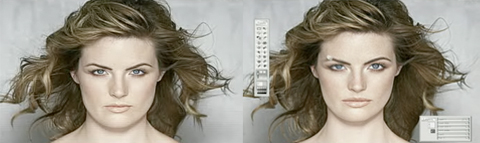
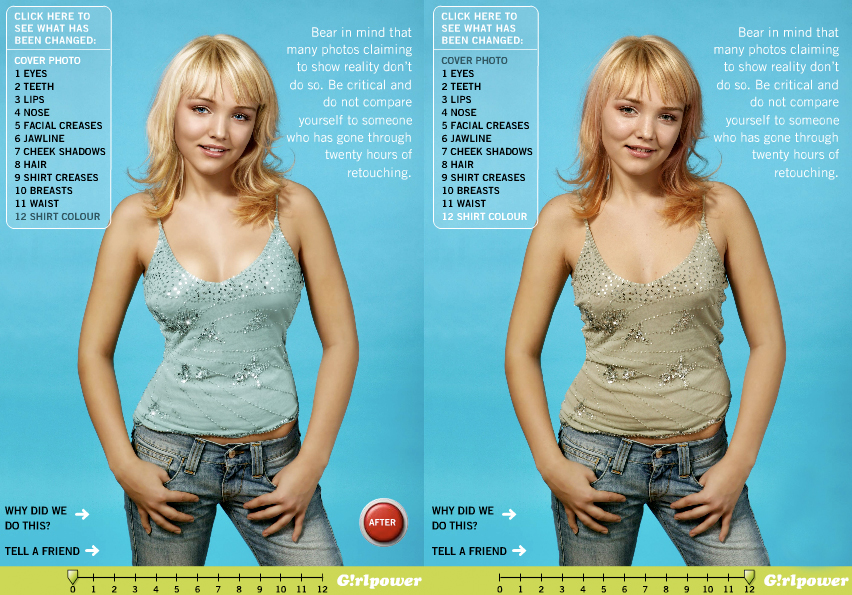
I read the blog of Jeff Lieberman and found this campaign for real beauty by Dove and through the comments I also discovered this swedish campain.


The idea behind the campaign is to make women aware of how altered these images can be and how our vision of beauty can be distorted. The campaign of Dove is pretty clever in bringing us through all the steps of the woman metamorphosis. From makeup & light to digital edition. You can watch the movie here. Photoshop, le meilleur ami de la femme!

It seems to me that this ad tells us more than just the woman metamorphosis through editing. It also talks about the authority of the consumer. It of course plays an important role on accusing the fetishized repetition of Alter-Ego images in the media.

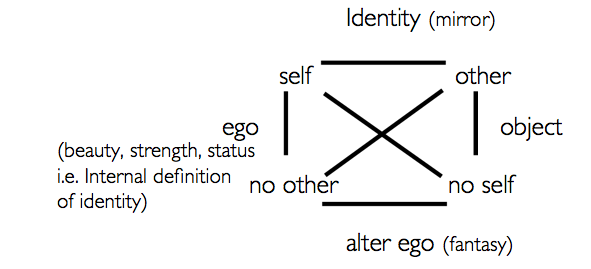
For the discussion, I readapted the semiotic identity square from Metz, Christian; “The Imaginary Signifier”, from Apparatus Theory., pp408-439.


Considering identity made of the self and the others (the mirror), the ego (our internal definition of identity) made of the self and the no-other, the alter ego (fantasy identity) that does not include the self neither the other, and the object (no self, other). The characters presented on these ads are unreal, fictional and the emotional resonance with the viewer cannot be of an identification, because the identities are impossible. However these images represent an alter ego, an alter-identification. An attachment to the image as an Alter Ego. Through these images, individuals try to reconcile the alter ego and identity such as they correspond to the ego. They end up forcing the alter ego image into the mirror, and end up into phenomena such as anorexia, aesthetic surgery and so on.

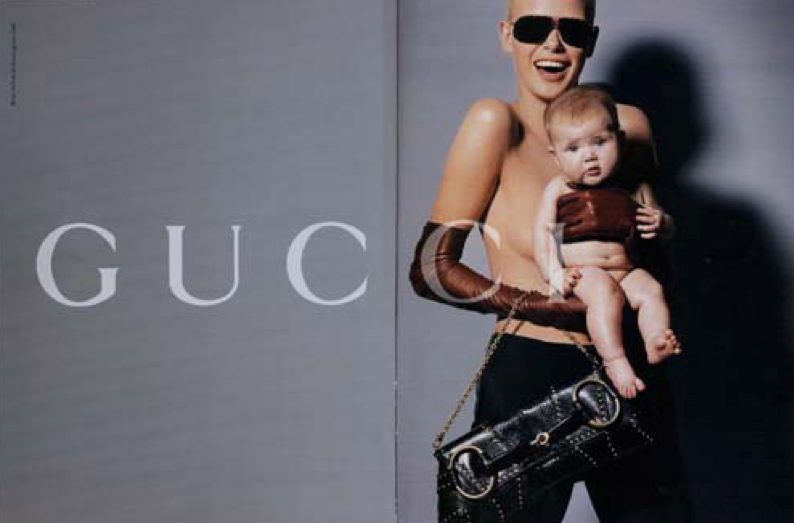
Gucci ad used as reference point
An interesting reference on the subject is the semiotic analysis of high fashion advertising by Alan Rhodes and Rodrigo Zuloago (2003). Here is the .pdf of the paper.

However, the Dove campaign tells us more. By giving authority to the viewer, it mentions a new area for advertisement . It talks to this naive consumer that has not overcome the manipulation of the media. However is also implies that there is another consumer that has already overcome this manipulation. This campaign tries to satisfy both consumers.
Hugo Liu has analyzed the passage from being a naive consumer to being the superconsumer, the one that is self-constructed culturally and can freely choose the culture that will fulfill him/her. An idealistic view of the after post-modern area and another paper that makes you feel good of being multicultural... .pdf of the paper.

Thursday, November 30, 2006

Effects of a Snoezelen on self-injury and aggression


Attribution: Photo of a snoezelroom at Het Balanske, Halensebaan 2, 3390 Tielt-Winge, Belgium by Michaël RY Laurent, Belgium.

Snoezelen or controlled multisensory stimulation is used for people with (severe) mental disabilities, and involves exposing them to a soothing and stimulating environment, the "snoezelen room". These rooms are specially designed to deliver stimuli to various senses, using lighting effects, color, sounds, music, scents, etc. The combination of different materials on a wall may be explored using tactile senses, and the floor may be adjusted to stimulate the sense of balance.
Originally developed in the Netherlands in the 1970s, snoezelen rooms have been established in institutions all over the world (like in Germany, where more than 1200 exist).
Snoezelen might be beneficial to people with autism and other developmental disabilities, dementia, and brain injury. However, research on these matters is scarce, with variable study designs.[1] [2]
References
[1]Chung JCC, Lai CKY. Snoezelen for dementia. The Cochrane Database of Systematic Reviews 2002, Issue 4. Art.
[2]Lancioni GE, Cuvo AJ, O'Reilly MF. Snoezelen: an overview of research with people with developmental disabilities and dementia. Disabil Rehabil. 2002; 24: 175-84.
by Wikipedia


Effects of Snoezelen room, Activities of Daily Living skills training, and Vocational skills training on aggression and self-injury by adults with mental retardation and mental illness. Res Dev Disabil. 2004 May-Jun;25(3):285-93. By Singh NN,
Lancioni GE, Winton AS, Molina EJ, Sage M, Brown S, Groeneweg J.
Abstract Multi-sensory stimulation provided in a Snoezelen room is being used increasingly for individuals with mental retardation and mental illness to facilitate relaxation, provide enjoyment, and inhibit behavioral challenges. We observed aggressive and self-injurious behavior in three groups of 15 individuals with severe or profound mental retardation and mental illness before, during, and after being in a Snoezelen room. All participants were receiving psychotropic medication for their mental illness and function-derived behavioral interventions for aggression, self-injury, or both. Using a repeated measures counterbalanced design, each group of participants was rotated through three experimental conditions: Activities of Daily Living (ADL) skills training, Snoezelen, and Vocational skills training. All other treatment and training activities specified in each individual's person-centered plan were continued during the 10-week observational period. Both aggression and self-injury were lowest when the individuals were in a Snoezelen room, followed by Vocational skills training and ADL skills training. The levels in the Snoezelen room were significantly lower than in both the other conditions for aggression but only in ADL skills training for self-injury. The difference in levels before and after Snoezelen were statistically significant with self-injury but not with aggression. The order of conditions showed no significant effect on either behavior. Snoezelen may provide an effective context for reducing the occurrence of self-injury and aggression.
PMID: 15134793 [PubMed - indexed for MEDLINE]

Wednesday, November 15, 2006

Seamless-sensory Interventions

Based on my previous work on haptics for psychotherapy, I am now designing Seamless Sensory Interventions for the treatment of mental and neurological disorders.

My current research proposes haptics as the key to bringing treatment into the social sphere through devices, and providing new ways to mediate between the patient and the therapist both in and outside of therapy. Self-mutilation is a perfect test-case, because of the definitive “physicality” of the symptoms. However, the broader solutions that I am proposing have implications for diseases as diverse as autism, depression, and schizophrenia.

Tuesday, November 07, 2006

Core sample


Material: wax and plaster

I took the perspective of a child trying to understand the meaning of the term Core Sample, an intuitive translation from the French analogy. Core sample then means 'le corps samplé', i.e. dismembered body.
An immediate reference to the dismembered body is a serial killer, the one that would be prompt to body sampling. Starting with an obsession for the neck, to a more tool-istic approach to body members: arms, legs, feet. I made a rock that symbolizes le plan de travail.

I chose to dismember a Barbie doll that I created out of wax. The Barbie being for a while a representation of the woman for a child. I chose the white wax, the wax being a way a woman suffers regularly by trying to reach an ideal. The white is the symbole of purity thus the contrast between the canvas fabric & the plaster sculpted with chisel, and the angelic face of the doll made of white wax.

This sculpture is a tool-kit box for understanding serial killing for children. The tools are also made of wax and represent legs, arms, hands, feet. A tool is normally very hard, here it is very fragile as a mean to represent the complete chimère, i.e. pipe dream, the serial killer is immersed in.


More pictures on Flickr

I made this sculpture for the sculpture class taught by Helen Mirra at Harvard University, VES.

In doll and sculpture

Thursday, September 21, 2006

Sleep disorders interventions through technology mediated environment

Exploring the synthesis of temperature deployed through haptic systems, I have found that researchers have previously considered the effects of an electric blanket on sleep stages and body temperature in young healthy men. They conclude that use of a temperature-controlled electric blankets under low ambient temperature may decrease cold stress to support sleep stability and thermoregulation during sleep.

Reference of the paper
Okamoto-Mizuno, Kazue; Tsuzuki, Kazuyo; Ohshiro, Yasushi; Mizuno, Koh (2005) Effects of an electric blanket on sleep stages and body temperature in young men. Ergonomics, Vol. 48 Issue 7, p749.

Based on research on seasonal affective disorders (SAD), designers have also created bedding that synchronizes the body clock. It is a poetic and transparent manner to support patients with seasonal affective disorder in which the insufficience of day-light causes the onset of depression. Designers have also created the SRE - Sleep & Recovery Enhancer. The SRE guide the user through autogenous exercises to lower the stress-level and reduce time to fall asleep.

Wednesday, September 13, 2006

Virtual Reality and mental health applications

Working on haptics for psychotherapy, I found interesting the past work on Virtual Reality for psychotherapy.

There is a lot of systems being developped for therapy, especially phobic disorders for instance when it involves panic disorders associated with acrophobia. The basic idea is to provide the patient with a virtual scenario where he/she can feel a sense height. The results of the studies proved that VR environments are effective and realistic at overcoming acrophobia

[Virtual environments for treating the fear of heights (1995) by Hodges, L.F. Kooper, R. Meyer, T.C. Rothbaum, B.O. Opdyke, D. de Graaff, J.J. Williford, J.S. North, The development of virtual reality therapy (VRT) system for the treatment of acrophobia and therapeutic case (2002) by Jang, D.P. Ku, J.H. Choi, Y.H. Wiederhold, B.K. Nam, S.W. Kim, I.Y. Kim, S.I. ].

More specifically related to neuropsychology, Dorothy Strickland has used Virtual reality for the treatment of autism. She also tested her system with children with attention deficit disorders. She concludes that because autism and attention disorders involve abnormal stimulus response to the external world, Virtual reality offers the potential to regulate an artificial computer environment to better match the expectations and needs of individuals with these problems.

Reference of her paper Virtual Reality for the Treatment of Autism. By Strickland D. In GIUSEPPE RIVA, BRENDA K. WIEDERHOLD, ENRICO MOLINARI (Eds.), Virtual Environments in Clinical Psychology and Neuroscience 1997, 1998 Los Press: Amsterdam, Netherlands.

I also found a critical paper about basic theoretical and pragmatic issues that need to be considered while designing a VR system in the areas of clinical psychology and neuropsychology. For instance Basic VE Cost/Benefit Issues for Mental Health Applications

1) Can the same objective be accomplished using a simpler approach?
2) How well do the current attributes of a VE fit the needs of the psychological approach
or target?
3) How does a VE approach match the characteristics of the target clinical population?
4) What is the optimal level of presence necessary for the application?
5) Will the target users be able to learn to navigate in and interact with the environment in
an effective manner?
6) What is the potential for side-effects (cybersickness and aftereffects) in light of the
characteristics of different clinical groups?
7) Will assessment results and treatment effects generalize to the “real world”?
8) How should VE studies be designed and how will the data be analyzed?


These questions should be also addressed while designing and testing haptic systems for psychotherapy.

The paper also proposes areas where the immersion component can be crutial:
1. Systems designed to produce active distraction where the goal is to “remove” the
person’s ability to view conditioned (and unconditioned) pain related stimuli
Anticipated pain reduction may also serve to motivate a patient to become “involved” in
this alternative experience, with a higher level of presence resulting.
2. Systems designed to allow comparisons and ratings of full-sized humans for purposes
of assessing and treating body image disturbances, or for other applications that
may require some interaction with virtual “actors”.
3. Systems that target the assessment and rehabilitation of attention processes (as well as
other cognitive domains) whereby HMD fostered immersion would be needed to eliminate
external “distractions” that would intrude on the controlled environment .
4. Systems designed to assess and rehabilitate functional activities where transfer to the
real world is highly valued. An example where a higher level of the sense of presence
may be needed to maximize ecological validity, is when the objective is the assessment
or training of a complex procedurally-based functional skill (i.e., driving ability).
However, it should be noted that non-HMD approaches have shown some success for
this purpose for simple navigation-based activities.


The authors of the paper concludes positively on this work. They particularly states that these considerations for the development of virtual technology is necessary to maximize the potential usefulness of virtual environment for mental health applications. They remark that this is key to consider the standards that should be applied to research-based and clinically-oriented mental health applications.

Reference of the paper Basic issues in the use of virtual environments for mental health applications. By AA Rizzo, M Wiederhold, JG Buckwalter, GIUSEPPE RIVA, BRENDA K. WIEDERHOLD, ENRICO MOLINARI (Eds.), Virtual Environments in Clinical Psychology and Neuroscience 1998, Los Press: Amsterdam, Netherlands.

Later in 2003 another review is published. It presents the state of the art of virtual reality therapy (VRT) in phobic disorders and conclude: Possibilities offered by VR in the field of the cognitive-behavioral therapies are numerous. Immersion, guide by the therapist, leads the patient to live this experiment in a more realistic way. But this “technicization” of the psychotherapy, as attractive as it is, does not modify the theoretical and methodological bases on which VRT rests. VRT has not replaced the role played by therapist. Indeed, his/her presence near to the patient remains essential. It seems that VR reinforces the therapeutic relation between patient and therapist on a collaborative mode.

Replacing the therapist is now the fear of the psychologists ;) but I did not interpret in any of my readings that these VR projects offered a replacement of a therapist. I certainly agree with the conclusion that if we design for the patient, we also design for the therapist. VR and haptic systems could be introduced by therapists for patients to gain both import and control on their own therapy.

Reference of this last paper State of the art of virtual reality therapy (VRT) in phobic disorders. By Stéphane Roy. In PsychNology Journal, 2003, Volume 1, Number 2, 176 - 183.


In Virtual Reality for clinical psychology and neuropsychology

Monday, September 11, 2006

Cultures multiples

The virtue of multiculturalism: personal transformation, character, and openness to the other.
By Fowers BJ, Davidov BJ In Am Psychol. 2006 Sep ; 61(6): 581-94

A paper that makes you feel good about being multi cultural! Abstract is bellow.


The social, intellectual, and moral movement known as multiculturalism has been enormously influential in psychology. Its ability to reshape psychology has been due to its ethical force, which derives from the attractiveness of its aims of inclusion, social justice, and mutual respect. The cultivation of cultural competence, presented as a developmental process of acquiring self-awareness, cultural knowledge, and skills, is an important emphasis in the multicultural literature. The authors place the cultural competence literature in dialogue with virtue ethics (a contemporary ethical theory derived from Aristotle) to develop a rich and illuminating way for psychologists to understand and embody the personal self-examination, commitment, and transformation required for learning and practicing in a culturally competent manner. According to virtue ethics, multiculturalism can be seen as the pursuit of worthwhile goals that require personal strengths or virtues, knowledge, consistent actions, proper motivation, and practical wisdom. The authors term the virtue of multiculturalism openness to the other and conclude by describing how attention to cultural matters also transforms virtue ethics in important and necessary ways. ((c) 2006 APA, all rights reserved).


In multi cultures

Saturday, September 09, 2006

Body organisation and spatial representation

Body organisation and spatial representation.
By Tolja J, Cardia C In Cogn Process. 2006 Sep ; 7 Suppl 5: 95

Abstract

This work falls within the area where psychology, anatomy and architecture meet and overlap. It comes from an interdisciplinary research carried out by professionals from very different, although complementary, backgrounds, as medicine and psychotherapy on one side, and interior design, landscape and urban design, on the other side. Through a brief powerpoint slide show, the results of a research carried out with the students of the Domus Academy of Design, the Landscape School Arte e Messaggio and the Department of Architecture and Planning of the Milan Polytechnic. The objective of the presentation is to show how a change in body organisation can affect the spatial perception, the spatial experience and the spatial representation. In the experiment reported, through a series of small, but specific, body movements the students have entered into different phisical patterns, with their relative "state of mind", and then led to note how these changes have affected their perception of space. After the students to the research have been lead to experience specific body organisations and neurological patterns, they have been asked to draw a familiar type of space: a room for the interior designers of the Domus Academy, a garden for the landscape designers, a town square for the urban designers of the Politecnico di Milano.The results show recurring and meaningful patterns in the drawings for every type of body organisation. The demonstration, will offer to the participants the opportunity to understand clearly the correlation among neuro-physical patterns and their related spatial perception and representation. A short discussion at the end will adress practical implications of specific spatial choices in determining body and neurological patterns in fields as architecture, urban design, education, psychology and medicine.

Pocket-sized psychology studies

Pocket-sized psychology studies: exploring daily diary software for palm pilots.
By Le B, Choi HN, Beal DJ. In Behav Res Methods. 2006 May ; 38(2): 325-32

Abstract

Daily dairies, also known as experience sampling methods (ESM) or everyday experience methods, are a common methodology utilized to provide insight into momentary psychological processes. Traditionally, such studies often have utilized paper-and-pencil surveys administered several times each day over a span of several days or weeks. However, advances in technology now allow these studies to be conducted using palmtop computers (i.e., personal digital assistants; PDAs). Three software packages for running these studies on the Palm operating system were explored and compared on a number of features Specifically, ESP (Experience Sampling Program, by Feldman Barrett & Barrett, 2001), iESP Version 3.2 (Intel Experience Sampling Program, by Intel Research Seattle & the University of Washington Computer Science and Engineering Department), and PMAT Version 2.0 (Purdue Momentary Assessment Tool, by the Military Family Research Institute at Purdue University) were examined, with their key features compared. These advances in software for running diary studies include a number of features that provide researchers with methods and information previously unavailable in diary studies and may expand the range of possibilities in diary study designs.


In psychology & wearable technology

Friday, September 08, 2006

The 'moi-peau' and self mutilation

Researching on how haptics can provide a controlled painful stimulus as a treatment for self mutilation, I found an interesting medical research paper on the relationship between personal physical boundaries and self mutilation.
[The "Moi-peau"], Consoli SG, Med Sci (Paris). 2006 Feb ; 22(2): 197-200.

The author reviews the work of Didier Anzieu, pionneer of the 'moi-peau' concept. Certain persons have not yet acquired the 'moi peau', and use defense mechanims: Among other clinical characteristics, they have a "pathology of action" and frequently attack their own skin, paradoxically, in order to test the solidity and reliability of their own limits.

Because dermatologists frequently receive patients suffering from ereutophobia, dysmorphophobia, tattooing, self-mutilation, artefacta dermatitis, the author suggests that Anzieu bridged dermatologists to psychoanalysts.

Abstract of the paper

To construct a coherent identity, humans must distinguish what belongs to the external, perceived world from what belongs to their own inner world and the inner world of other individuals. Based on the theory developed by S. Freud and on work by ethologists, a number of psychoanalysts (J. Bowlby, R.A. Spitz, D.W. Winnicott, etc.) have underlined the importance of early tactile exchanges with the mother if a child is to become an autonomous individual who feels secure within what he or she perceives to be sound and reliable mental and physical boundaries. More recently, other psychoanalysts (E. Bick, W.R. Bion, etc.) have studied the fantasized mental structures that form the limits between an individual's inner mental space and the external world (including other individuals). As part of this theoretical psychoanalytical movement, Didier Anzieu, a French psychoanalyst, started to develop the concept of the "Moi-peau" in 1974. The "Moi-peau" designates a fantasized reality that a child uses during its early development to represent itself as "me", based on its experience of the body surface. The child, enveloped in its mother's care, fantasizes of a skin shared with its mother: on one side the mother (the outer layer of the "Moi-peau"), and on the other side the child (the inner layer of the "Moi-peau"). These two layers must separate gradually if the child is to acquire its own me-skin. D. Anzieu's work allowed dermatologists and other specialists, such as pediatricians, to focus on the quality of early tactile exchanges between a mother and her child, including the child with a chronic skin disorder. It also helped dermatologists to recognize patients with "borderline" states, which are particularly frequent in dermatology (ereutophobia, dysmorphophobia, tattooing, self-mutilation, artefacta dermatitis). These borderline patients are adults who, as a result of their mental conflicts, adopt defense mechanisms derived from both neurotic and psychotic functioning. Their complaints reflect difficulties with the solidity of their mental and physical limits: their real skin is metaphorically linked to the fantasized mental structure that delimits the individual mental space. Among other clinical characteristics, they have a "pathology of action" and frequently attack their own skin, paradoxically, in order to test the solidity and reliability of their own limits. Finally, D. Anzieu's work encouraged dermatologists to use psychotherapeutic approaches in parallel to classical dermatologic approaches, when necessary, and helped them better understand how psychoanalysts work with patients who have not yet acquired their own "Moi-peau". As a result, D. Anzieu was among the first to reconcile dermatologists and psychoanalysts.


In haptic psycho therapy