I cannot wait to read  Making Things Talk
After taking classes in sensors and electronics at MIT, this semester I take Physics 123 at Harvard University. I recommend this class for any mechanical/electrical/software engineer, designer and researcher who wants to get a deeper understanding of physics related to electronics and to develop an intuitive relationship to electronics. It is the equivalent of 3 full time classes, because two days of the week and the week end are devoted to the class laboratories and assignments. Intensive but productive! This is one of the most valuable class I took in a long time. I hope after that class that all my things will talk!
"A lab-intensive introduction to electronic circuit design. Develops circuit intuition and debugging skills through daily hands-on lab exercises, each preceded by class discussion, with minimal use of mathematics and physics. Moves quickly from passive circuits, to discrete transistors, then concentrates on operational amplifiers, used to make a variety of circuits including integrators, oscillators, regulators, and filters. The digital half of the course treats analog-digital interfacing, emphasizes the use of microcontrollers and programmable logic devices (PLDs)."
Thursday, November 01, 2007
Making Things Talk

Tuesday, May 22, 2007
Shell

[The other's eyes] turn to me a liquid pool waiting for unforseeable disturbances. They are more naked than the flesh without pelt or hide, without clothing. ... They are more naked than things can be, than walls bared of their adornments and revolvers stripped of their camouflage; they bare a substance susceptible and vulnerable. Their nudity exposes them to whatever message I may want to impose, whatever offense I can contrive - Alphonso Lingis, Foreign Bodies, p171.
In shell, I tailored a plastic envelop of a human body, envelop that is then discarded. The plastic fabric is carved with textural information. Its transparence resembles a ghost, its undefined junctions and closed top suggest a metamorphosis rather than a piece of clothing. It is an object that has been depersonalized by being discarded in public.
Attached to a long stick, it floats in the wind, linking the experience of the playground (yard), the uncomfortable cocoon (the shell) and academic knowledge (the Widener library at Harvard University).


Thursday, April 05, 2007
Richard Nonas

55 meter long double-line of double-bolders cutting diagonally trough a formal grid of trees - Permanent work
Image from Galleri Andersson Sandstrom
Not the forest, or even the North, but simple places barren, and hard when you touch them - places that are clear about excess... 1997
Invited by Helen Mirra, Richard Nonas came to lecture in our sculpture class. He discussed his view on art, art trying to confuse the categories in a way the culture hesitates to or is not meant to do. He raised the question of the difference between entertainment and art. He compared to a meal "this is the difference between a meal that makes you feel well fed and a meal that you remember twenty years later." An artist is someone who devotes his life to the cause of what he is trying to achieve. It is not per se a profession. An artist looks at everything and question everything.
He explained that he became an artist by coincidence, being an anthropologist at first. He started building sculptures of objects that were powerful for him, such as two pieces of wood. He watches and observes people in their environment before creating anything. Richard Nonas invests in space and place. In the notion of space the world is untouched and undefined by human counsciousness, rather in place there is a direct interaction between the physical world and the human mind. It contains an emotional content of that of an hybrid between the physical world and the human being.
He builds sculptures as place and unsettled, for him the tension is the power. The notion of fragment is key because it is in the middle of something.
He is interested in the strong power of an object into a space. For instance, a dog shit on the ground and everybody walks around. The dog shit recreates the space. He is working on that type of power of an object that transforms a place within his work. He thinks that most outside sculptures are confusing: are they about entertaining? are they a logo? ...
Some outdoor sculptures that were powerful and moving to him, such as the ones of Richard Serra, have been removed and this argumented with practical reasons: terrorism, people using the sculpture as a toilet, ...
The confusion that Richard Nonas creates, is an opening, a discovery, it is not a closing. He does not try to annoy people. He mentions that it is very hard to draw this line. He needs to seat on a bench and watch people to understand their habits and not distub them with his sculptures. He wants to create a shift, a move, so that, for a piece of time, one cannot see the world the same way. This is important because we live in a wolrd of compromises and we makes choices that are important. We need to filter, and certain things are ambiguous while others are not. He finds this type of shift exciting, energizing, and also it is about wander. That way the world changes. He compared this shift with drugs, and he says "with drugs it is always the same thing" with art it is always different. Unfortunately with time everything becomes a cliche, for the artists of his generation, it is hard to see something new. He says he has this responsibility as an artist to keep this dialogue, and create this shift happening.
What an inspiring person! My PhD work is very different and extremelly practical. Yet I always integrated this shift component as a principle in my work. I try to empower people by letting different kind of complexity emerged and this by reducing the technical complexity of expressive tools. I also always worked on what can be seen as two contradictory elements: designing tools for people to create their personal content to be driven into someone else's perspective.
With the class and Richard Nonas, we will all go out for a drink later tonight, I cannot wait to continue this discussion!
Tuesday, February 27, 2007
Charles Goldman
Sculptor Charles Goldman says : TIME + DISTANCE = EXPERIENCE.
So I look at his on work on his web site work and find ...
Spruce / Spree (2005) A grass-dressed shopping cart that was apparently chained up at various locations throughout a developing neighborhood in Brooklyn, NY ...
Finally, the chain was clipped and the shopping cart was confiscated
Elsewhere (2000) and in particular Infinity Walk, wood, 32' x 16' x 8'. It is an iconic infinity sign.
"In elevation, the walkway rises, falls and turns underneath itself, providing a never-ending pathway that the visitor may follow."
The work dealt with the repetative nature of time and experience.
Scrapwood (1998) made of 6,144 cubic feet of scrapwood and cardboard.
"About two years worth -- 18 boxes -- of wood scraps are assembled site-specifically, according to whim and using only gravity. "
Chicago
Charles Goldman's web site
Monday, February 19, 2007
Buried


In this project, sensor modules are hidden within snow elements such as rocks, pavements, icy beach. Each sensor module contains pre-recorded chirping birds. Each module is composed of a set of wireless speakers and plays a pre-recorded cardinal bird - Many thanks to Cornell lab of Ornithology for their great collection of free bird sounds.
When a passerby travels through her environment, she observes her surroundings. Hearing birds coming from the snow she declares: “this is lovely”. She does not yet connect the meaning of the two. She is projected within her idealistic view of her environment, snow and birds symbolizing magic.
She tries to obtain her curious information: “I know the sound comes from the ground, but where?” In a few minutes she notices that the sounds come from the snow, and realizes the fact: this is unusual and disorienting.
This project exemplifies the disconnection between natural elements of the outside; the birds symbolizing the spring, the snow symbolizing the winter. The two are reunited in a dramatic way. I shift the location of the birds from the trees to the ground. I shift the seasonal sounds from winter to spring. In this piece I selected a large landscape, nude from anything else than a winter tree, with no leaves, just branches. I bury the sounds into the ground, in the snow.
I find that we are disconnected from reality. Aesthetic endeavors create magic, but magic that distances us from facts. I use this magic in nature, elements that are natural but yet inspire us: snow, sounds of birds. I put them together to create this aestheticised tragedy.
Project I made for the sculpture studio : outside
Friday, January 12, 2007
Remembrance of an absence
In my sculpture work, I combine the material representation of a souvenir and its effect over time. I print on plaster molds a series of clothing on life-sized frames. The pieces of clothing carved in the plaster come from people I care for. Their prints represent their passage in my life at a point, and the mold essentially keeps the shape and the textural significance of the clothing.
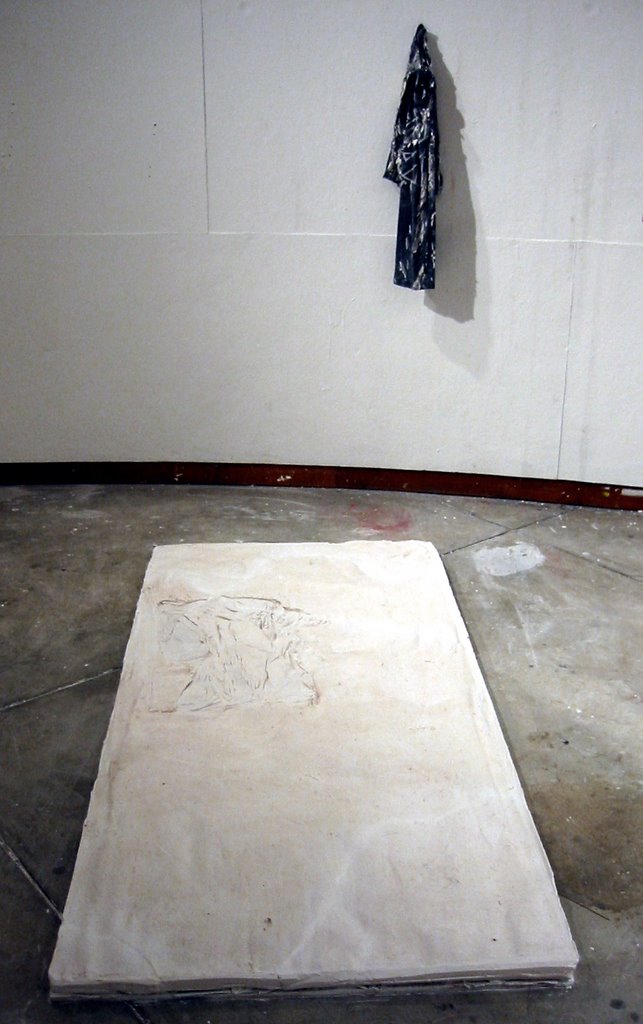
final installation (2007)
More pictures.
My paper on a selection of sculptures for Helen Mirra, VES, Harvard University, (Cambridge, MA, USA. December, 2006). Remembrance of an absence
Wednesday, December 06, 2006
Peter Welz
For the context of the class, Helen Mirra invited the sculptor Peter Welz. He also reviewed my work on inside/outside and shared with me his approach from studying the figure to lastly using the figure as a tool. I am fascinated by his process. During his trajectory, he sculpted and casted the figure to later get rid of its cast to only project the figures onto structural spaces.
Today, Peter Welz gave a talk at the Harvard Film Archive, Carpenter Center. He presented a selection of work expressing the relationship between the space and being.
In the following work, a line is projected on a concrete wall. By blowing onto the camera, the line vanishes and disappear to present a plain concrete wall; as the artist stops blowing, the line reappears.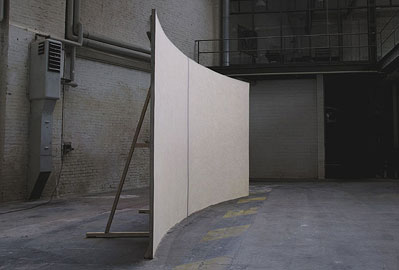
line | vanishing | disappearing | breath | aspirate |
onto fake concrete wall | concave, Berlin 2004
video projection onto a fake concrete wall, 550 x 280 cm, 30 min Loop on DVD
In this work, Peter Weltz translates a unfinished portrait from Francis Bacon into figure movements.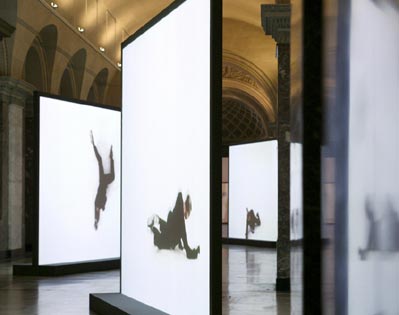
retranslation | final unfinished portrait (francis bacon) | figure inscribing figure | [take 02] Installation view Musée du Louvre
Photo: © Musée du Louvre / Angèle Dequier © Peter Welz / DACS & the Estate of Francis Bacon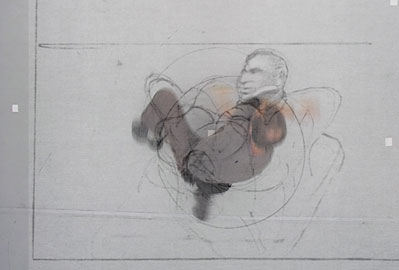
study | w.forsythe re-translating the unfinished portrait by francis bacon
colour print on acitate/paper, permanent marker, gaffa tape 61cm x 86 cm, 2005 (© Estate of Francis Bacon | Dublin City Gallery The Hugh Lane)
Friday, November 10, 2006
A Carrie Outfit for Barbie
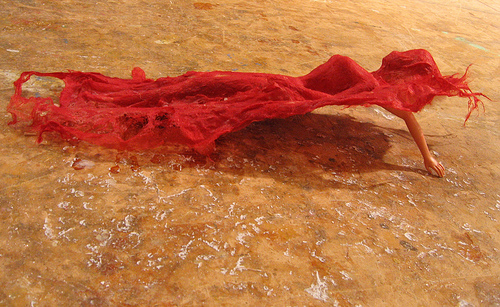
After having designed a Tomb for my Barbie, I have designed a Carrie Outfit.
Barbie has a Ken, a Corvette, a castle, and all the outfits she ever wanted. However she has nothing for Halloween. I designed this outfit in Papier Mache to fit the Barbie we love.
The following picture shows that the outfit has taken the perfect shape of the Barbie doll.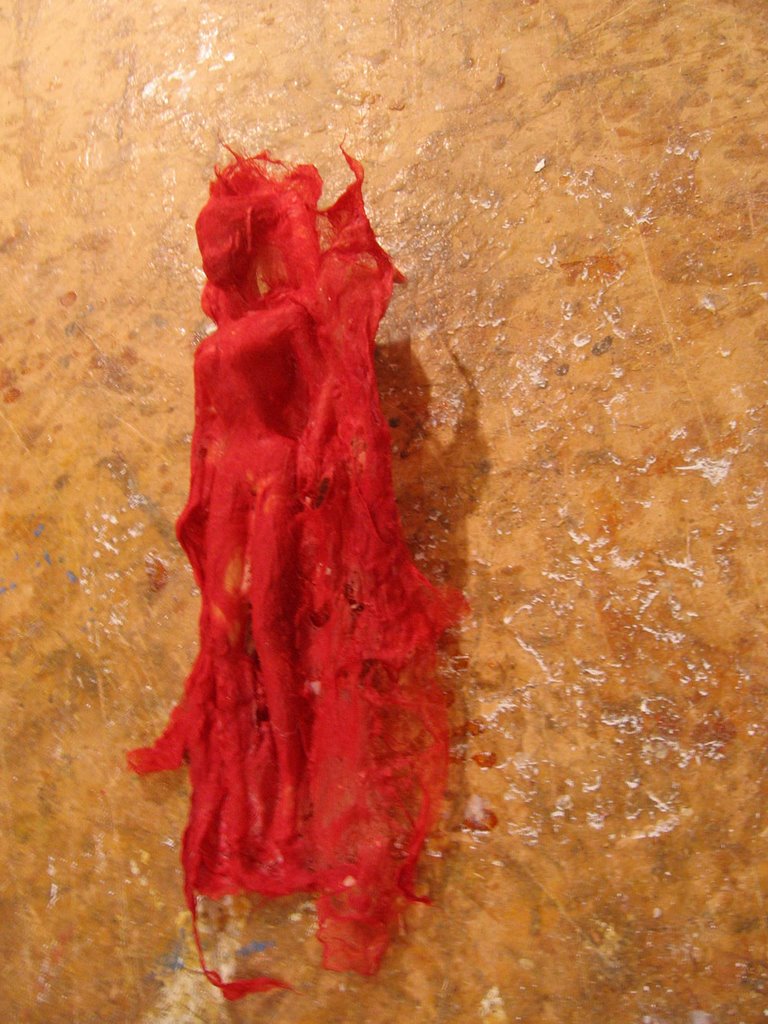
A Carrie Outfit for Barbie in Papier maché (doll not included)
More pictures on Flickr ...
Tuesday, November 07, 2006
Core sample
Material: wax and plaster
I took the perspective of a child trying to understand the meaning of the term Core Sample, an intuitive translation from the French analogy. Core sample then means 'le corps samplé', i.e. dismembered body.
An immediate reference to the dismembered body is a serial killer, the one that would be prompt to body sampling. Starting with an obsession for the neck, to a more tool-istic approach to body members: arms, legs, feet. I made a rock that symbolizes le plan de travail.
I chose to dismember a Barbie doll that I created out of wax. The Barbie being for a while a representation of the woman for a child. I chose the white wax, the wax being a way a woman suffers regularly by trying to reach an ideal. The white is the symbole of purity thus the contrast between the canvas fabric & the plaster sculpted with chisel, and the angelic face of the doll made of white wax.
This sculpture is a tool-kit box for understanding serial killing for children. The tools are also made of wax and represent legs, arms, hands, feet. A tool is normally very hard, here it is very fragile as a mean to represent the complete chimère, i.e. pipe dream, the serial killer is immersed in.


More pictures on Flickr
I made this sculpture for the sculpture class taught by Helen Mirra at Harvard University, VES.
In doll and sculpture
Thursday, October 26, 2006
Volume and Light

Three states
This semester I follow a sculpture class taught by Helen Mirra at Harvard University, VES.
I am a big fan of light, from perceptive to illusory, such as in the work of James Turell. For my second assignment I integrated the playful intervention of light within my sculpture. It also integrates the three numbers that define my volume as stated in the assignment.
scenario
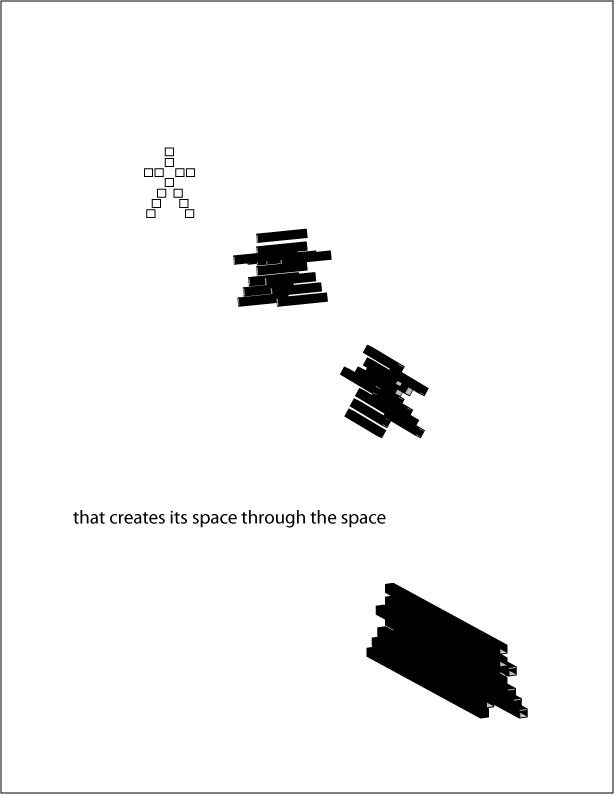
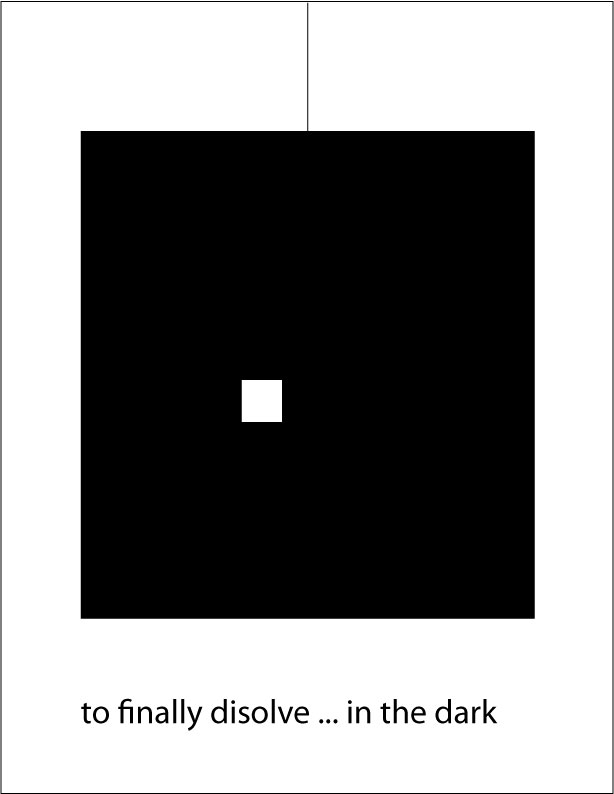
I calculated my volume to determine the number of boxes and shadows. 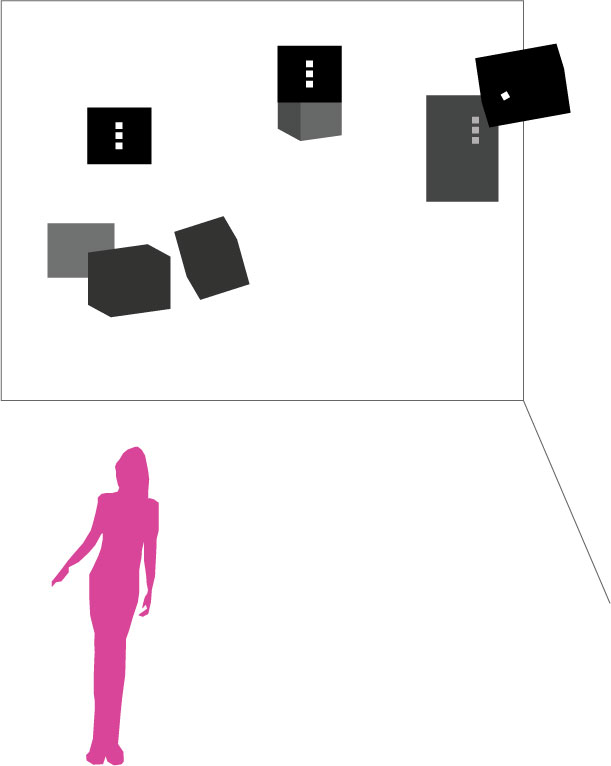
I installed light boxes made out of brown paper in a cubic room. I controlled the direction of the light sources to build consistent shadows around the boxes and bring the light in and out of the boxes.
Out of the three boxes, the third box moves to create different cubic light patterns on the walls, e.g. from three to two patterns. 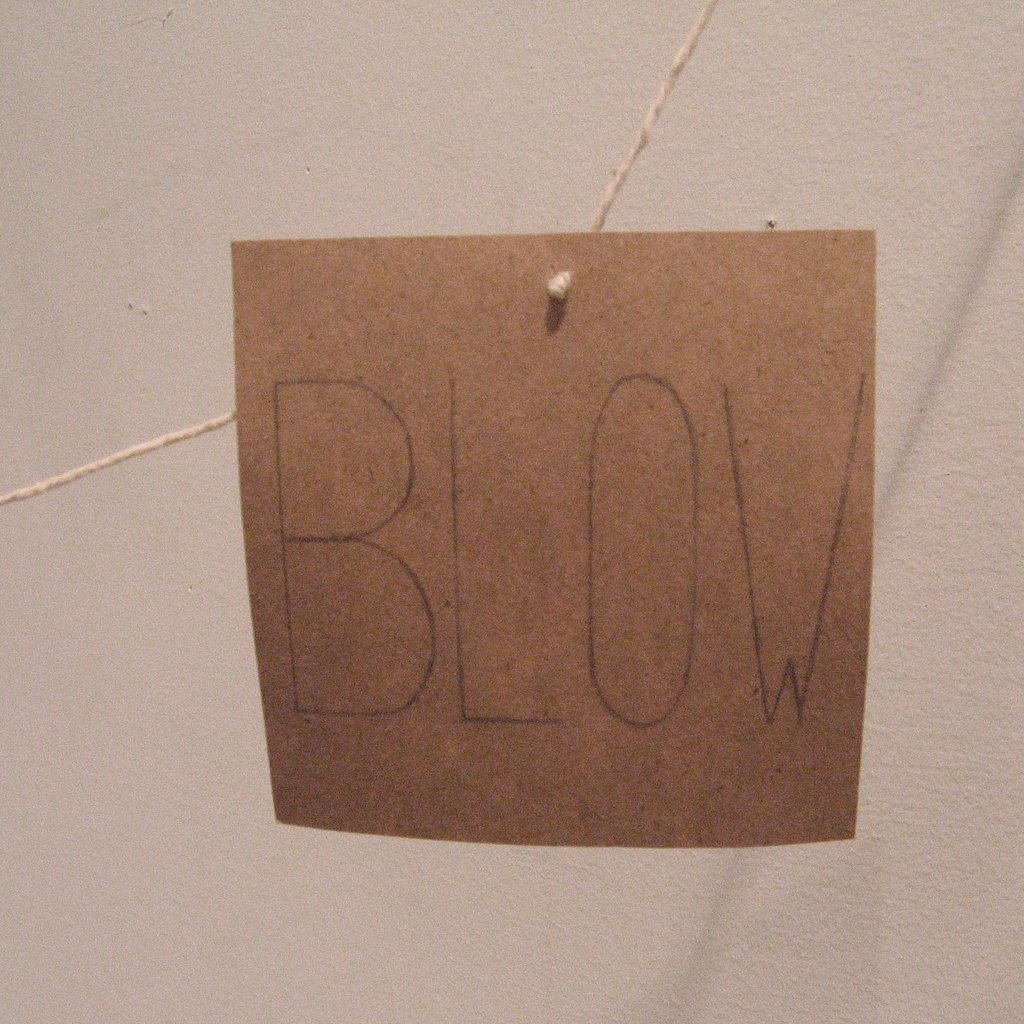


Material: brown paper, wooden sticks, strings.
In volume, light and sculpture
Thursday, June 08, 2006
Harvard University commencement 2006
,
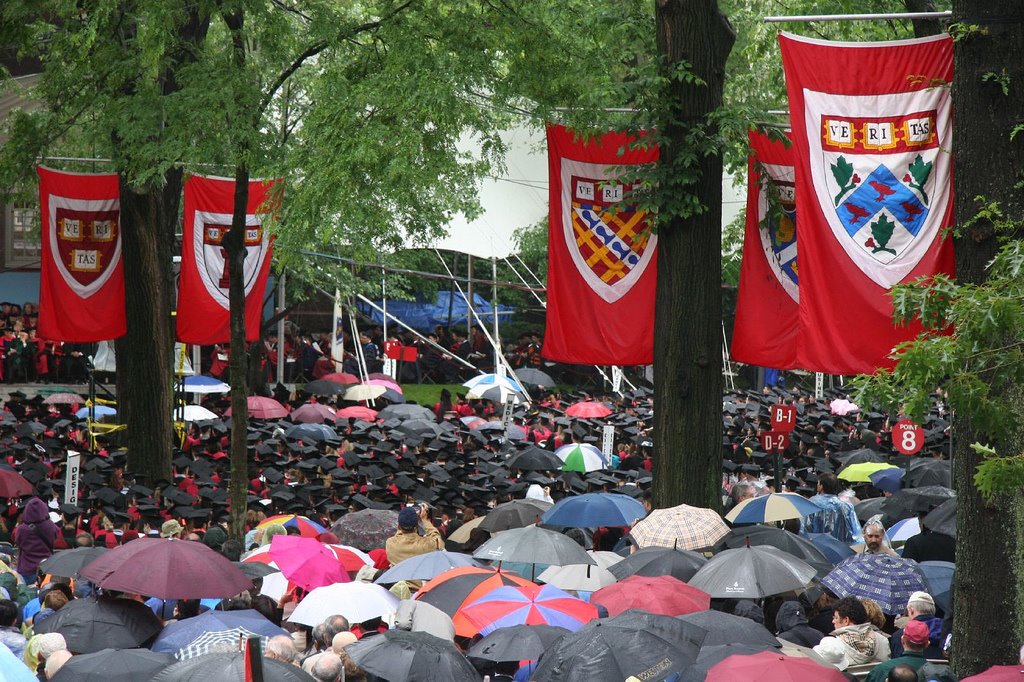
Official news about the commencement ...
So, I did it! I decided to enjoy the experience of US commencement's ceremony. My Bostonian family was here: Daisy & Adam. I did rent the academic dress and marched to Harvard Yard :) and Daisy and Adam took pictures under the rain ...

Finally I received my degree at the Harvard Design school. A Master in Design specializing in product design and architecture ...
I received my grades. Among the grades I received a High Pass from Dr Antoine Picon and Distinctions from Marco Steinberg. What a nice ending for such a challenging degree!
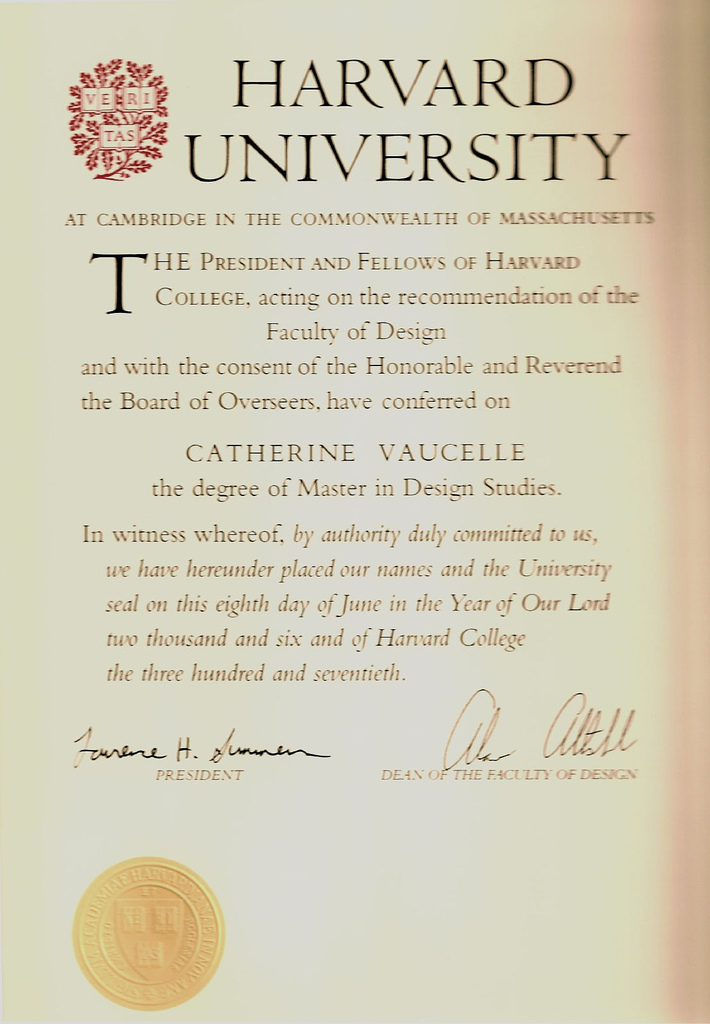
My ID, a last glance at it before starting the exciting journey of a MIT PhD at the Media Lab, in the Tangible Media group run by Prof. Hiroshi Ishii ...

In academic achievements
Monday, June 05, 2006
The Texture of Light at Siggraph 2006

My research poster The Texture of Light has been accepted at Siggraph 2006. The reviews are very encouraging and I have been recommended to suggest it to a Emergency Technology session . It will be part of the Art and Design tools category.
Abstract : The Texture of Light is research on lighting principles and the exploration of life feed video metamorphosis in the public space using reflection of light on transparent materials. The Texture of Light is an attempt to fight the boredom of everyday life. This project employs the simple use of chemistry, Plexiglas, and plastic patterns to form a reconstruction of reality, giving it a texture and expressive form. The transformation of life feed video comes from physical, plastic circles that act as different masks of reality. These masks can be moved around and swapped by the public, enabling collective expression. This metamorphosis of the public space is presented in real time as a moving painting and is projected on city walls. The public can record video clips of their 'moving painting' and project them back on different city locations.
I plan to develop it on a larger scale such as building-size panels the public could mechanically control using remote devices. Each panel will be pattern and transparent material specific. Two Plexiglas sheets could embed a water-fall, or viscous transparent material the user could distribute along his/her selected point of view. The software will allow media distribution among cities so that the outcomes of the public performances could be exposed on the panels of other cities ...
More about the project by Regine Debatty.

Tuesday, May 23, 2006
Drawing ...

This semester, I took the Advanced Drawing class in the Landscape Architecture department at the Harvard Graduate School of Design taught by Anne McGhee.
Today was the review and I presented my assignments, class exercices and my final project in front of a jury including oil painting artist Marian Dioguardi, visual historian Camila Chaves Cortes, architect Katherine G. Stifel and professors from the Design School. The general comment is that I can take anything banal and make it beautiful, expressive and attractive... What a compliment! But does it mean I don't master the technical skill to reproduce reality? Well I am still working on it...
What a surprise when, after reviewing my work, the artist Marian Dioguardi asked me to buy one of my hetching, an exercice on Piranesi.
More pictures of my drawing are coming soon ...
Monday, May 22, 2006
John F. Kennedy grant
A little history on my three years of research in Ireland ...
From 2002-2004 I worked at the Media Lab Europe, the European Research Partner of the MIT Media Lab . In 2005, I joined Crite a research group from the department of computer science at Trinity College University in Ireland. I was also technology director for a robot exhibition at the Ark, a cultural center for children.

Sunday, May 21, 2006
Une histoire pour voir
After a series of exercices, I decided for my final animation, une histoire pour voir, to use sand as main medium. Even though I find sand much harder to animate than pencil drawing animation, I find it much easier to express with.
Screenshots from my animation
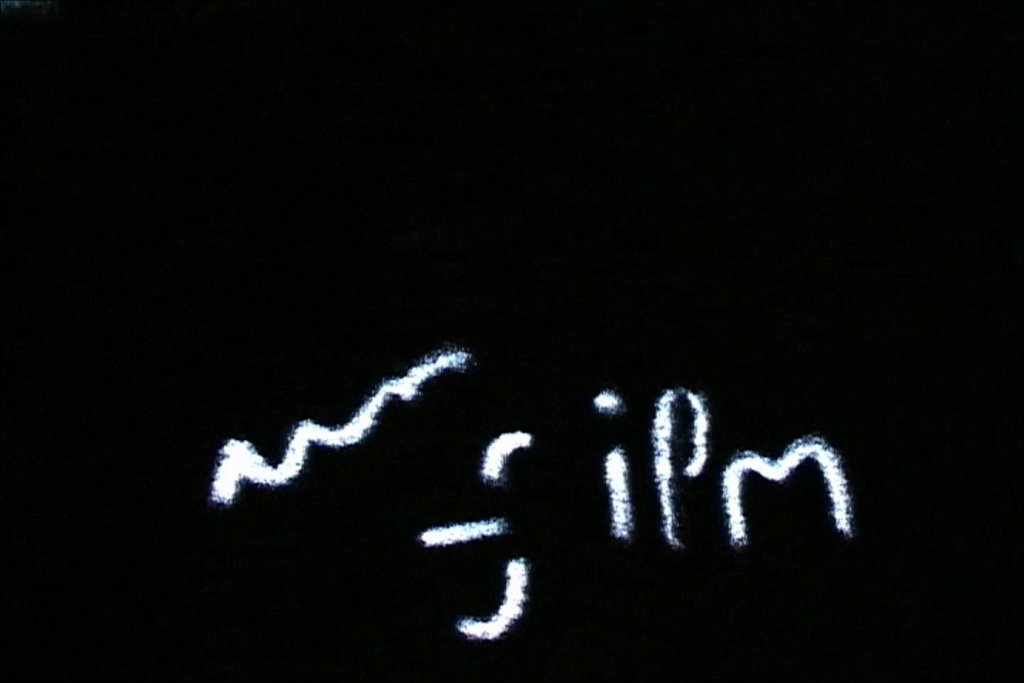


Watch the animation here (38 mb)
Monday, May 15, 2006
Les neo-nomades se soutiennent!
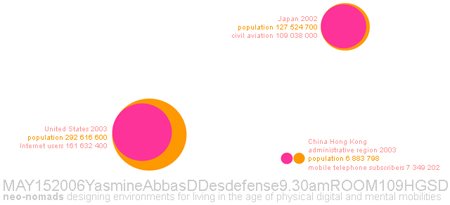
Today I attended Dr Yasmine Abbas thesis defense 'designing environments for living in the age of physical digital and mental mobilities'. I realised how beautiful nomadic life is and tomorrow I will buy the new Kenzo Samsonite suitcase and assorted night dress. A thesis like Yasmine's is so refreshing. I cannot wait to read the full thesis.
Congratulations Yasmine!
Monday, March 20, 2006
Google earth pro and GIS
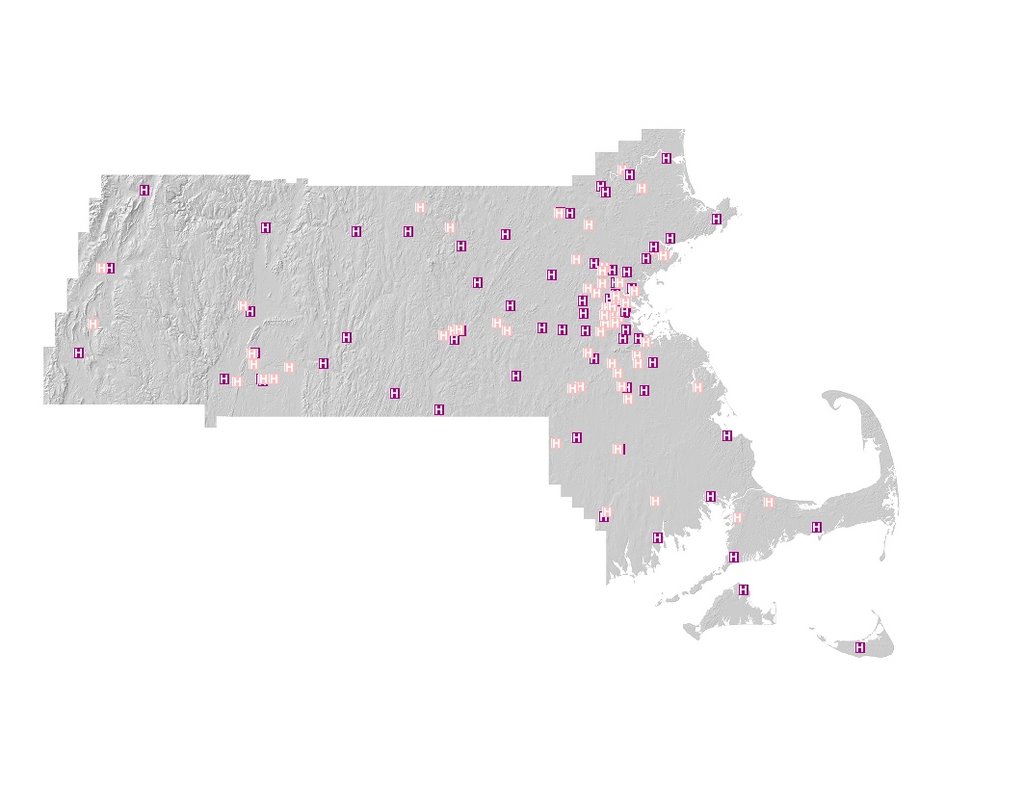
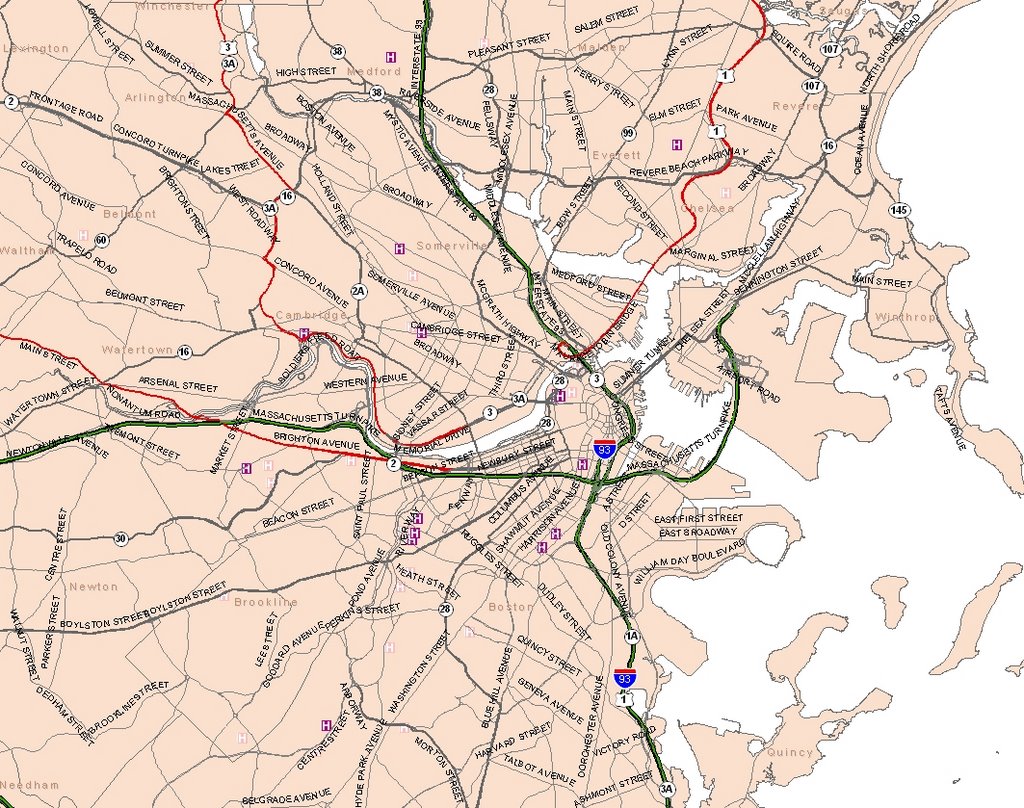
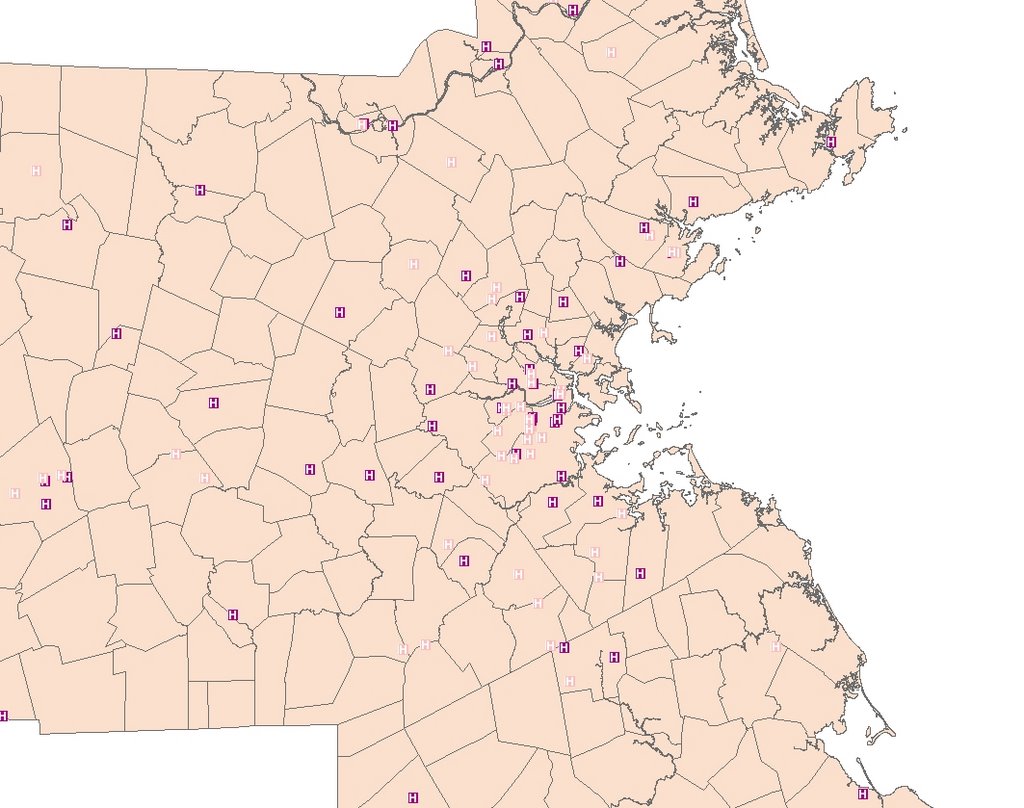
Because I needed more cross analysis of the visual data, today I have used ArchGIS for ArchMap to run a visual analysis of hospitals with emergency rooms in the US.
I love this ArchMap software, many layers of data can be overlayereded and a quick and easy visual analysis can be done. I ran the analysis over the Massachusetts and specifics and data layers can be downlowded from the mass.org website.
Pictures of my quick study



Wednesday, March 15, 2006
Integrated dropped ceiling
I take a Product Design course at Harvard GSD taught by Marco Steinberg.
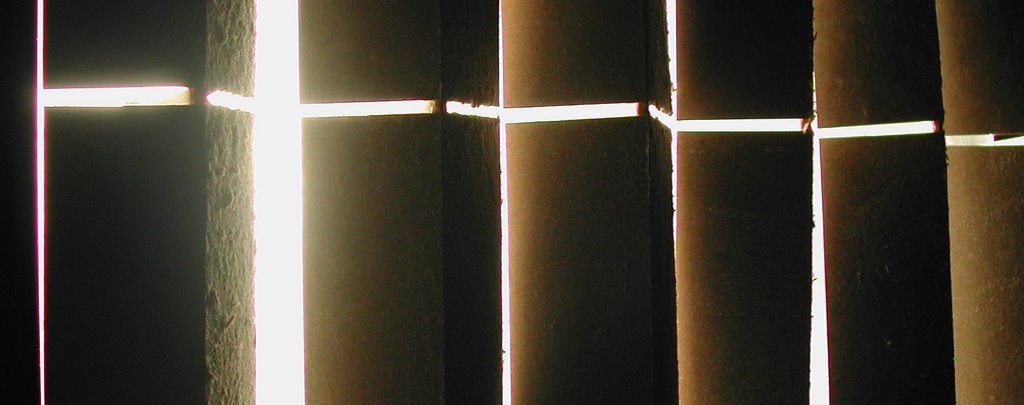
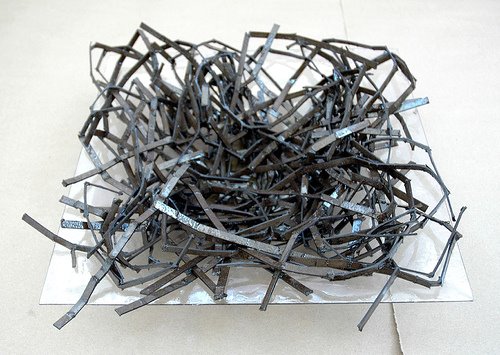
The first assignment consisted of a free-form research on Chip Board. I worked on it with Alexandra Ginsberg (Daisy) and Sharon Kim. We decided to laser cut the Chip board into many thin slices and create different molds with rubber, resine and clear plastic; we mixed wet and also dry chip board slices to the materials.
A documentary on our design process of the chip board transformation ...
The following picture shows the chip board dried with resine
For our second assignment, Marco asked us to research on dropped ceilings.
We documented dropped ceiling and done intensive online search.
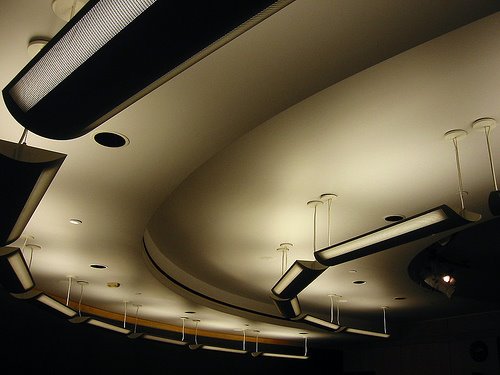
The following slideshow presents our on-site documentation on existing drop ceilings
We came up with a process of categorisation: economy, aesthetics, sustainability, and function. We looked at the advantages, negatives and opportunity of each category and defined cross over between category to design our 'ideal' dropped ceiling. We then investigated a dropped ceiling with integrated functionality.
Our aim is to combine luminaire with dropped ceiling functionality (could be described as concealing HVAC) whilst considering other potential uses such as ventilation/lighting control
How can a ceiling system be an essential element of the conception and design of a space, not just an added suface?
Our design process

EMBODIMENT general considerations
Functionality could include heat/responsive technologies (does it open up into
a louvered system, could we integrate ventialtion, and replace an additional HVAC system ?)
Layering with sunlighting strategy above the dropped ceiing
– ie. the louvres rotate and allow natural ventilation ?
Do the smaller individual parts of the ciling contribute to a greater overall visual aesthetic – cf. the chipboard exercise where the scale of the material lends itself to another set of readings when considered at a larger scale. Can we control this feature ?
Is there a limit to the functionality?
Do multiple configurations make the system too complex, or could this system enable truly multi-functional space with a large variety of available lighting strategies?
Can the system be used with both daylighting and/or natural lighting systems, or could its appeal be as a referential system that tracks outdoor weather/lighting conditions and replicates through the ceiling system to improve user conditions.
Material: Our requirements
- transparent surface
- opaque surface
- reflective surface
- material for upper panels
- framing material
- sustainable choices ?
We researched on the properties of glass and past related projects
Processes: laminated, painted, fretting, dichroic glass
Soda-Lime Glass, Borosilicate Glass, Silica Glass, Glass Ceramic
Recycle potential is high
Corrosion resistant
Wear resistant
We also researched on other material options
- Plywood (Used as solid, perforated, thin veneer)
- Plastics
- Films/Laminating/Coating
EMBODIMENT
Function Shaping
Our Initial Concept is a pixilated ceiling that can be programmed as a referential/interactive installation.
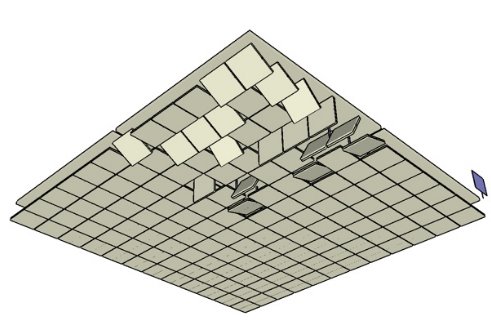
Function Motion with Actuators
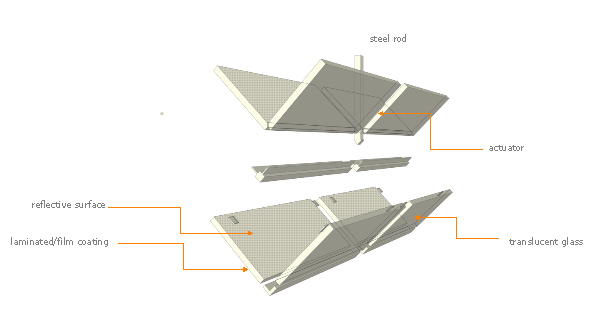
We have chosen the Tork-Mate 890 for
- its low friction
- extended life
- up to 15 million cycles
- ideal for the operation of 90 degree turn devices
- can be coupled with other electronic components etc...
It works by redirected air pressure: the pistons linear movement is converted to
rotary motion (gear).
Function Joining and the value of working on joints
- economy of assembly
- ease of assembly
- most appropriate process
- performance of the joint
- must resolve the problem with weight of glass (joint solution is very important)
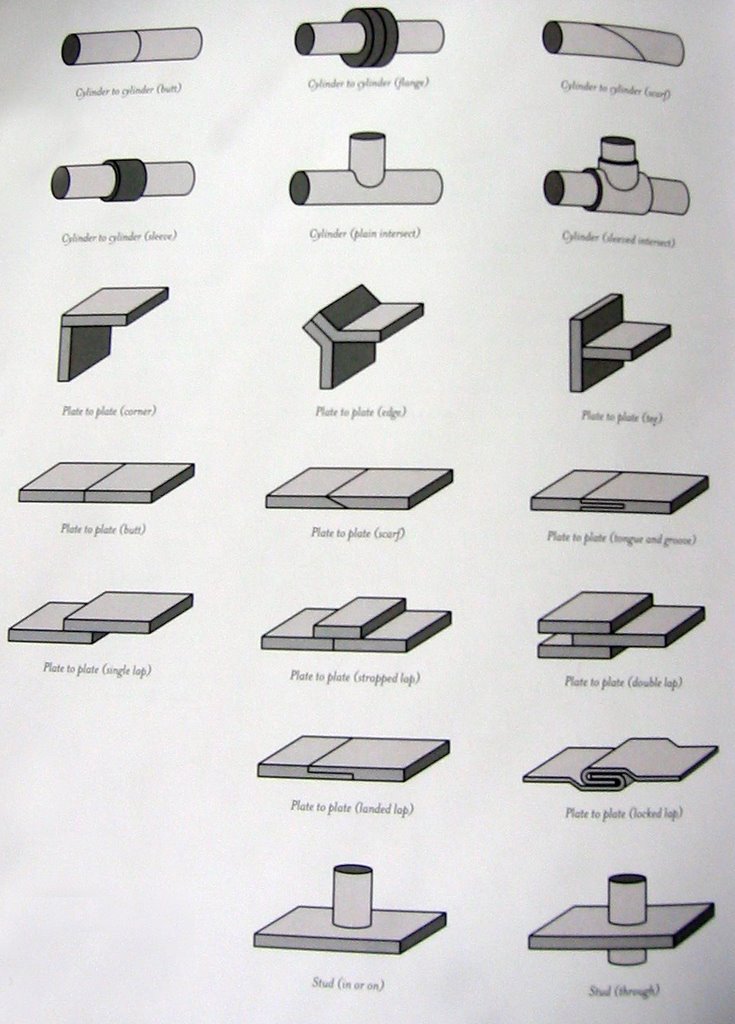
Function Surfacing
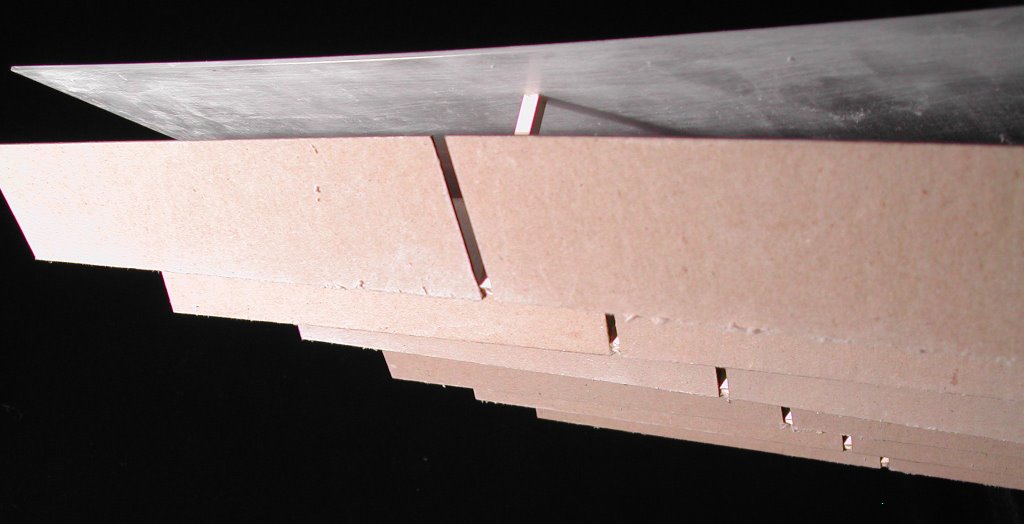
Our final material choice is glass but we made our first prototype in chip board.
The following is a picture of the Reflective side (glue laminated on chip board)
Other side (scratched chip board)
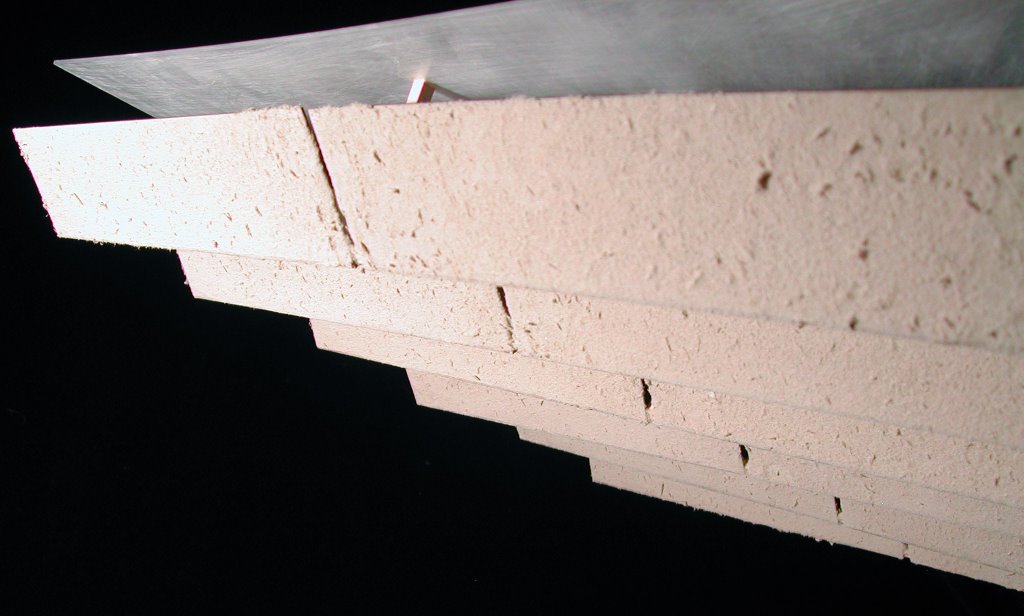
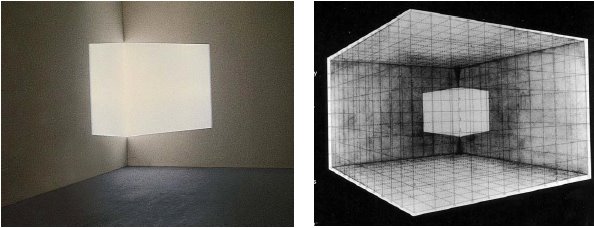
During this process we were inspired by James Turrell light installation
Our final model is composed of



APPEAL Background
- industrial standards keep within fixed constraints.
- how can smart materials/technologies improve the dropped ceiling?
- hospital : how can existing research into improved user interface/consideration of users inform design process?
- integration of function as sustainable/intelligent solution.
APPEAL Application
- A general purpose solution that could be used in hospitals, homes, offices, public buildings, museums
- Variable lighting functionality and possible multiple application possibilites are key.
- Could this be part of an integrated HVAC solution (ventilation) ?
APPEAL Benefits
- Sustainable design
- Improved lighting conditions
- Variety of lighting solutions available, even simultaneously.
- Aesthetic benefits
I completed this last assignment with Young Joong Chang, Alexandra Ginsberg, Sharon Kim and Irwin Sentilles.
References
