
The Explorers, 2005 - Archival ink jet
The explorers is part of Jennifer Zwick's constructed-narrative series of photographs. They focus on bizarrely adventurous young girls populating beautiful but uneasy worlds. To create these images, the artist draws from childhood fantasies and memories, then constructs life-sized environments. By pushing these scenarios to an extreme conclusion, the girls become metaphors for our hyper-real childhood selves, where remembered emotions become stronger through time.
The Explorers (detail), 2005
.............................................................................................
Showing posts with label memory. Show all posts
Showing posts with label memory. Show all posts
Wednesday, February 20, 2008
The explorers

Wednesday, April 04, 2007
Clothing with memories

For my sculpture class, I created a dress that works as a low-tech magnetic tape of tactile sensations. I vaccum formed hands, objects, textures throughout the fabric of a dress I made in transparent plastic.
I depart from scarring on the body: tatoos, percings, scarves in our western societies. I am looking for envelops: mental but also physical. These envelops that people try to create after traumas. I want to represent these envelops in a sculptural form.
I would like to create a skin shell, in the form of a coat, that can be worn. A skin shell that is a souvenir of a previous body and that was left out. This skin shell that showcases traces of influences, people, and objects. Yet I want this skin to be vulnerable, fragile. A skin that tries to protect, to be useful and accepted. I also want the skin to be obvious and a showcase of its internal fight.
I like the vinyl raincoat metaphor because it protects against the rain, but it does not comfort, nor does it contain. It does not isolate, because it is transparent. It feels vulnerable. I was envisioning creating clothing elements in transparent vinyl / PVC / plastic. Vinyl could symbolize the material used for the outside against the rain. Clothing and fashion, the showcase. A coat could work as to represent the cocoon, the shell, a protection against the outside.
I mold objects, textures, persons within the transparent pieces of clothing, objects that have been internalized and been forced to appear for a showcase. It has to be a mess of objects, or organs or things that can show the violence of the showcase done onto someone.
Because I want this sculpture to be a left over of a fight, I want it to be left on the ground, like an animal mutation. Yet in this case it could also be re-worn and re-appropriated.
Saturday, March 03, 2007
Sculpting Behavior

Hayes Raffle not only just had two full academic papers accepted to the first class conference IDC 2007: Interaction design and Children but he is also a talented sculptor and designer. His Super Cilia Skin reflects his aesthetic sensibility and his ongoing passion for kinetic sculpture.
Video
Super Cilia Skin
After co-creating and designing the award-winning ZOOB® building system, Hayes joined the Tangible Media Group at the MIT Media Laboratory and created Topobo, a 3D constructive assembly system with kinetic memory and the ability to record and playback physical motion.
Video
a ZOOB® creature
a Topobo creature
If you happen to be in the bay area, don't miss Hayes' talk, open to the public, that he is giving at the Berkeley Institute of Design, UC Berkeley, March 6th, from 1 to 2pm.
Information about his talk.
During the talk, he will explain how with Topobo children can assemble sculptures that dance and walk. He will present Fuzzmail a program that allow children to write a message that unfolds in time. He will show how with Jabberstamp children can embed stories, sounds and voices in their original drawings.
Friday, January 12, 2007
Remembrance of an absence
In my sculpture work, I combine the material representation of a souvenir and its effect over time. I print on plaster molds a series of clothing on life-sized frames. The pieces of clothing carved in the plaster come from people I care for. Their prints represent their passage in my life at a point, and the mold essentially keeps the shape and the textural significance of the clothing.
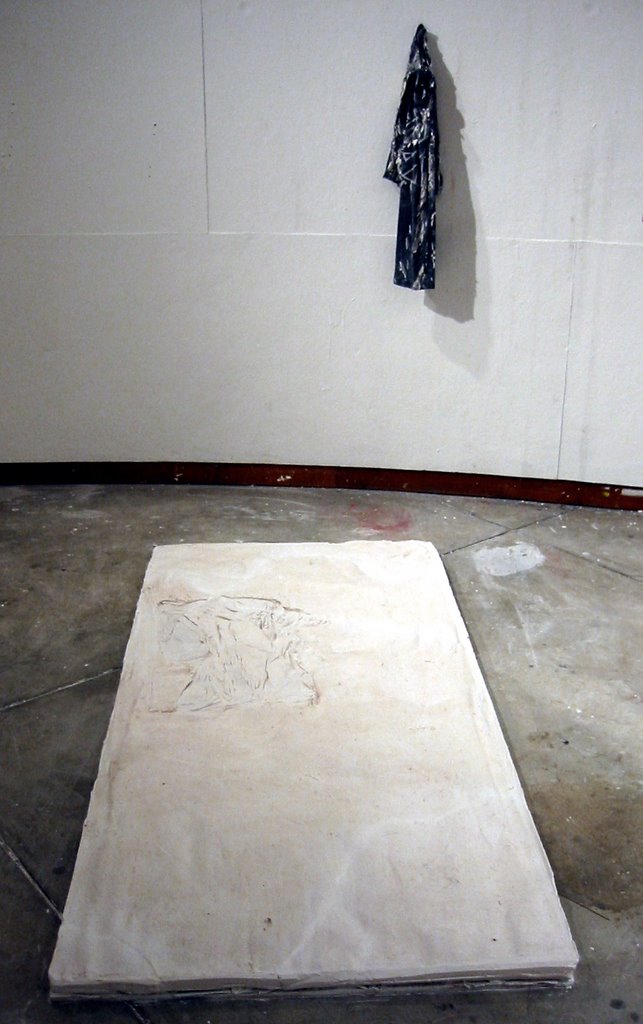
final installation (2007)
More pictures.
My paper on a selection of sculptures for Helen Mirra, VES, Harvard University, (Cambridge, MA, USA. December, 2006). Remembrance of an absence
Sunday, January 22, 2006
The Texture of Light
Description
The Texture of Light is research on lighting principles and the exploration of life feed video metamorphosis in the public space using reflection of light on transparent materials. The Texture of Light is an attempt to fight the boredom of everyday life. By reconstructing reality, giving it a texture, an expressive form, this project deploys the simple use of chemistry, plexiglas, and plastic patterns. The transformation of life feed video comes from the physical plastic circles that act as different masks of reality. These masks can be moved around and swap by the public enabling collective expressions. This metamorphosis of the public space is presented in real time as a moving painting and is projected on city walls. The public can record video clips of their 'moving painting' and project them back on different city locations.
Model

The final model is composed of a set of lenses, an iSight video camera, a rotary knob and a computer. For the purpose of this project I have conceived and implemented a software piece that links the life feed video to a projection screen. This application is controlled by the rotary knob and by pressing more than two seconds the knob, the software records a video clip coming from the life feed video. By pressing on the knob, the software plays back the recorded clip and projects it onto the screen. By turning the knob, the software returns in life feed mode. The video clips are collected onto a server and can be accessed by other computers from different cities. This instantly creates a canvas of multiple transformed city video clips controlled and created by the dwellers in each city.
Excerpts of life feed video metamorphosis Clic on the picture for a hi-res view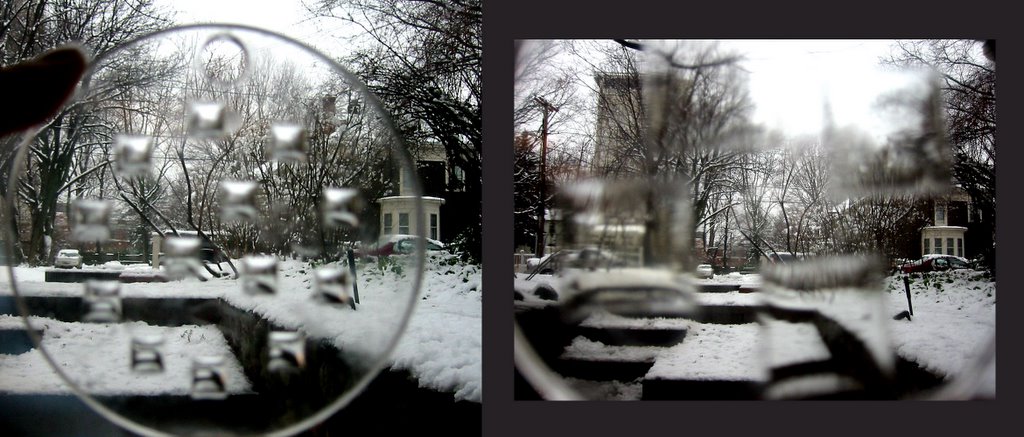
Small-squares large lense
Small-circles small lense
Medium-hexagons large lense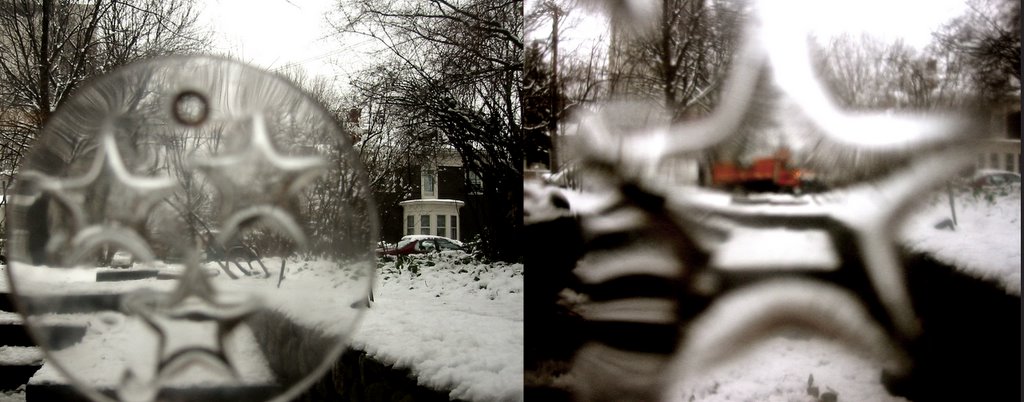
Large-stars small lense
Future outlook for Texture of Light
I envision this project on a larger scale such as building-size panels the public could mechanically control using remote devices. Each panels will be patterns and transparent material specific. For instance, two Plexiglas sheets could embed a water fall, or viscous transparent material the user could distribute along his/her selected point of views. The software will allow media distribution among cities so that the outcomes of the public performances could be exposed on the panels of other cities.
This is my final project for the Smart Materials course taught by Michelle Addington. Some information about the research and tests involved in this project.
More about the project
. Paper about the project (12mb).
. The Texture of Light on We Make Money Not art.
. auto vision
. Publication: The Texture of Light Vaucelle, C. In Art and Design Tools. Published in the Proceedings of SIGGRAPH'06, Boston, USA. Abstract from publisher: ACM Press.
download pdf
Friday, January 20, 2006
The Breathing Wall

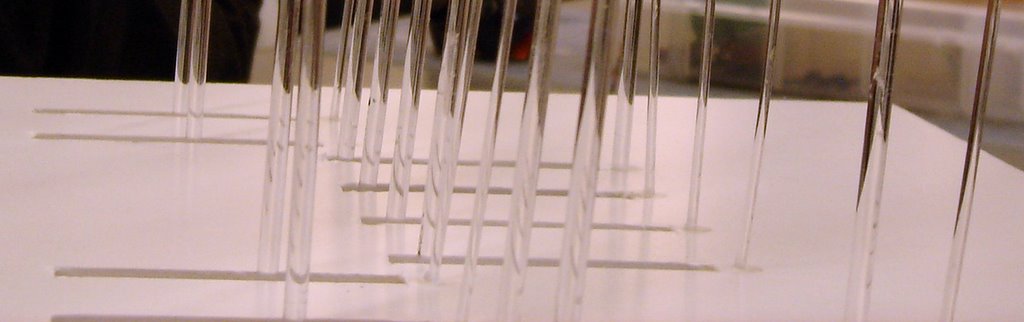
The Breathing Wall is a Kinetic Installation that shows a wall reacting to the public space. Made out of architectural objects that work independently or dependently of one another, it deploys and retracts soft fabric
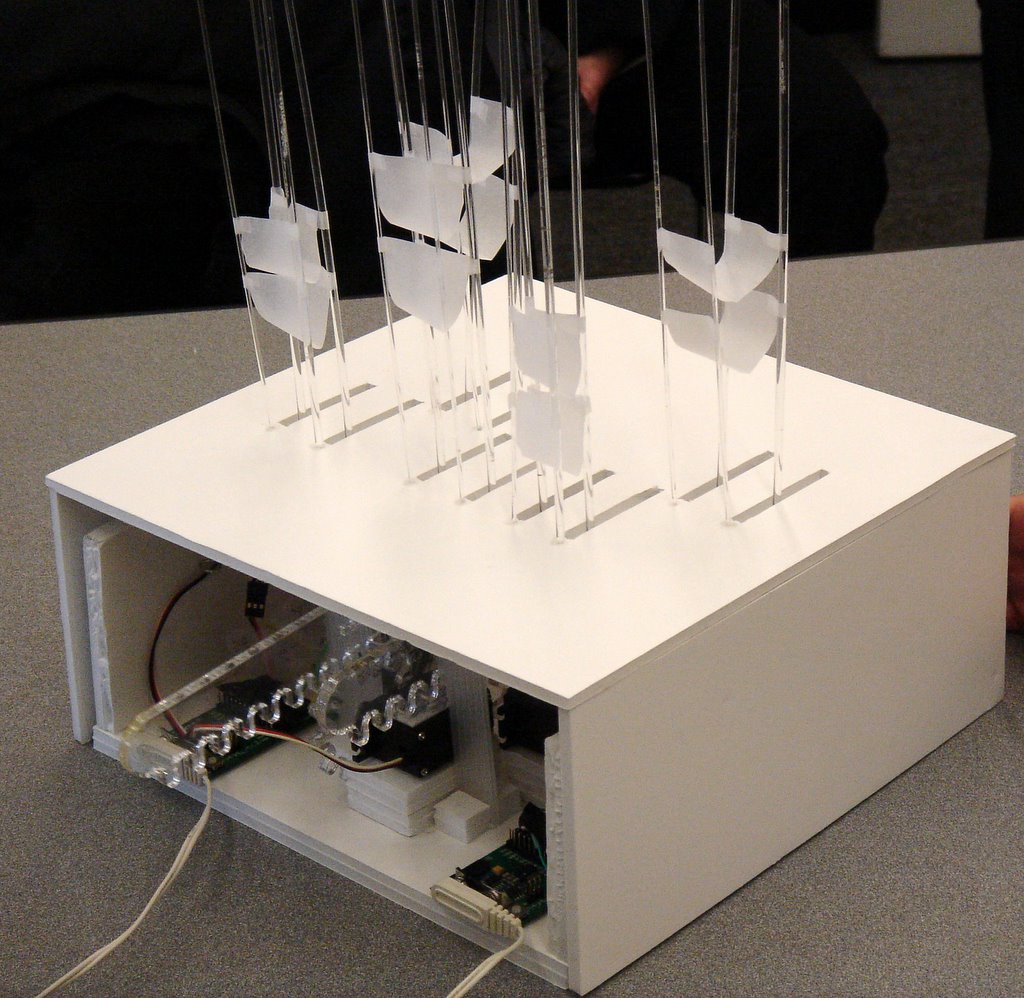
This picture shows the mechanics and electronics of our Breathing Wall piece.

On this picture I create shadows on the light sensors to have the Breathing Wall react to my presence.
During our conceptual phase, we thought of an assembly of cloth cubes that would form partial transparency. When densely packed, they form a privacy cloud or mist enclosure. When they retract they close the view they were enhancing. The idea is to use these kind of elements to define more diffuse borders in architecture. Soft edges resembling the spatial limits one finds in nature and in the landscape.
Our concept


Inspiring research
We would like to think of it on a scale of a huge wall, where the experience an outsider has of the activities going on inside is shifting constantly by the affordances of the changing architectural surface.
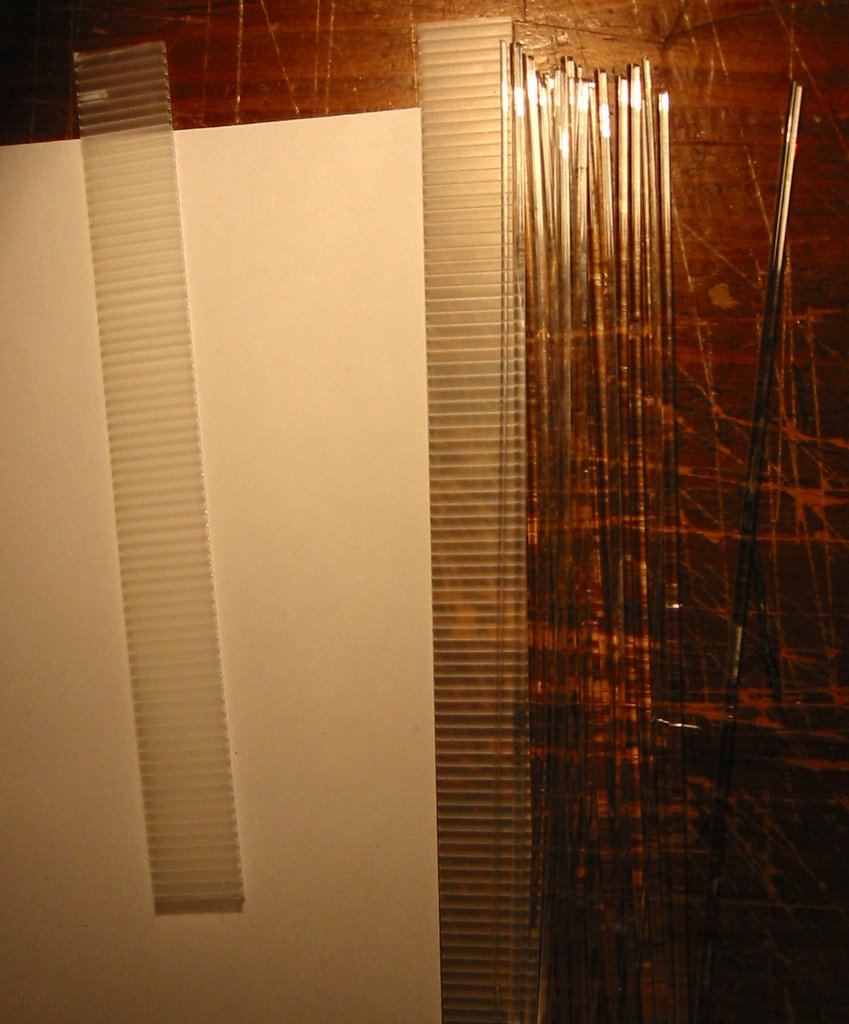
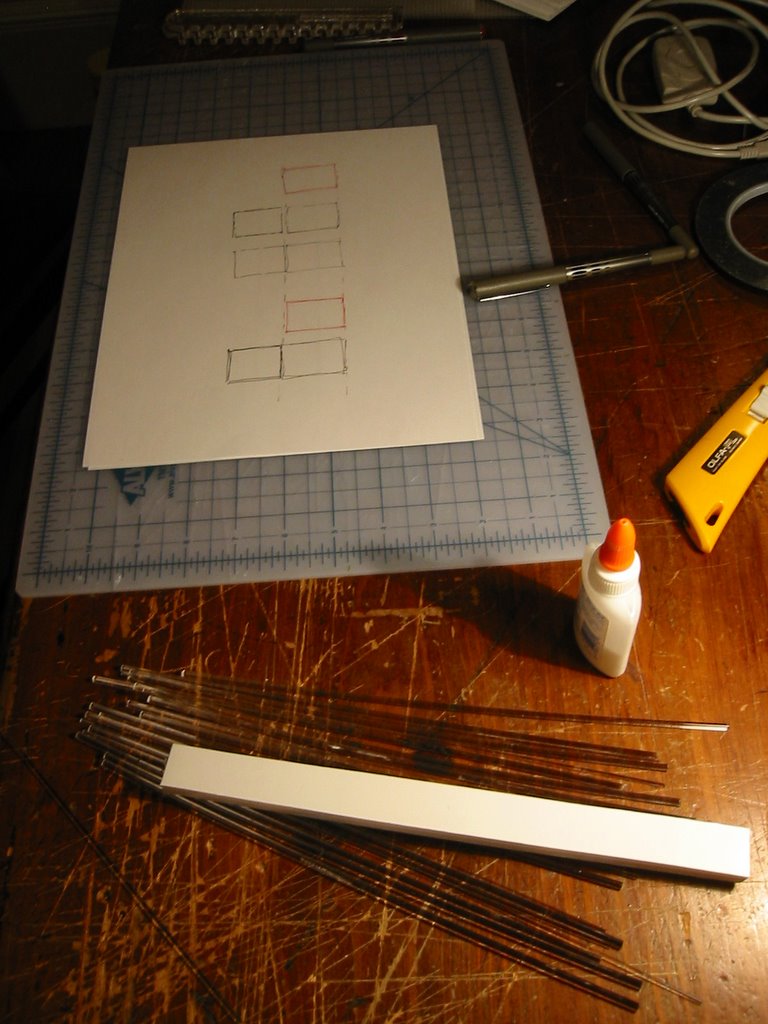
Process of implementation
First round
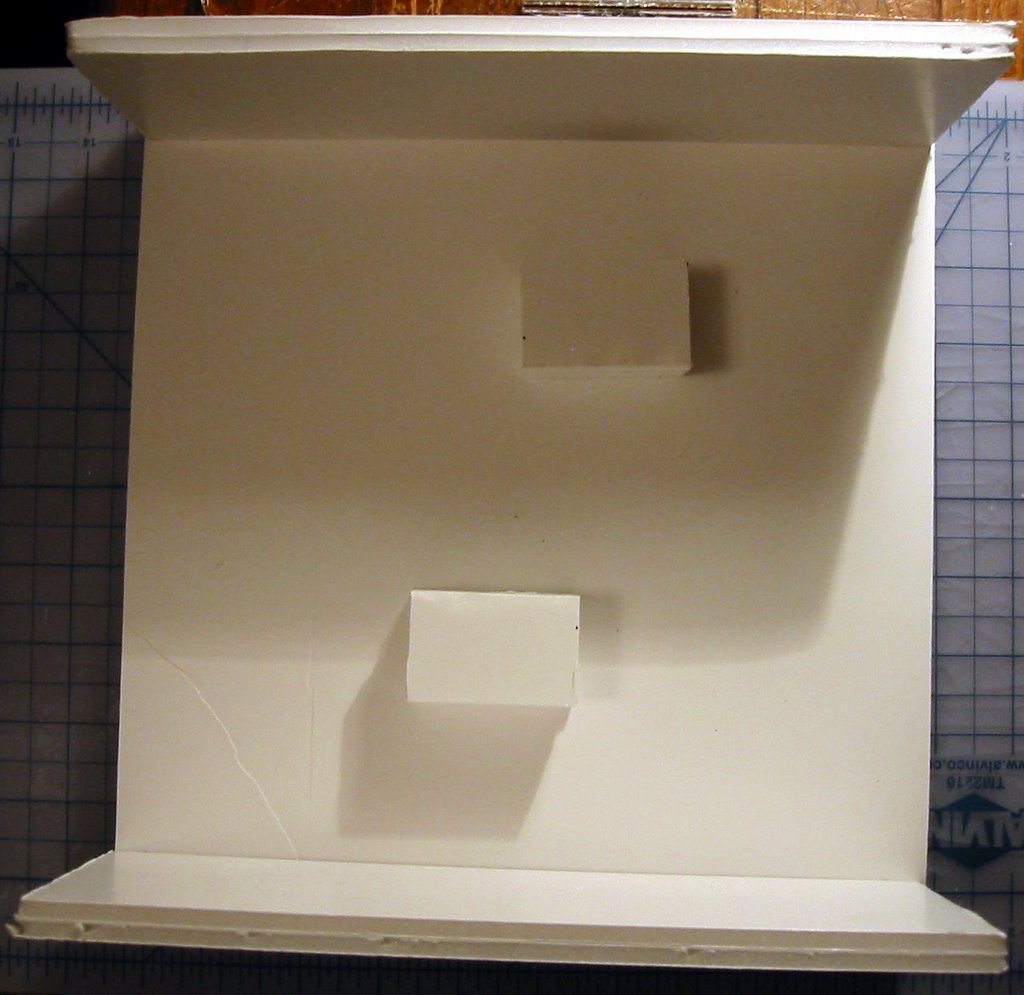


Second round
I have created this kinetic piece with Ana Aleman. It is our final assignment for the Kinetic Architecture class taught by Dr Kostas Terzidis.
Review process summary
For the first assignment of this class I had designed a Memento Box as an attractive passage from door to space. The door leads to your souvenirs and is always slightly opened. A bright light shines in the back of the box clarifying a few objects and pictures around it. However, whenever your hand tries to grab what captures the eye, the door closes onto your hand in front of you and all is dark again. Whenever you go away for a tiny bit, the door opens up and more lights shine into some parts of your souvenirs and you can travel though them from far away ...

Picture of the Memento Box
For the second assignment of this class I had designed the Ambient Peacock/Chameleon explorer with Philip Vriend as a serie of mobile units connected to a headquarter that display environmental visual on each of their shell. Real time connecting to the headquarter allow the head to ask for specific data gathering and collection of the environment. This project was blogged by Pasta and Vinegar.
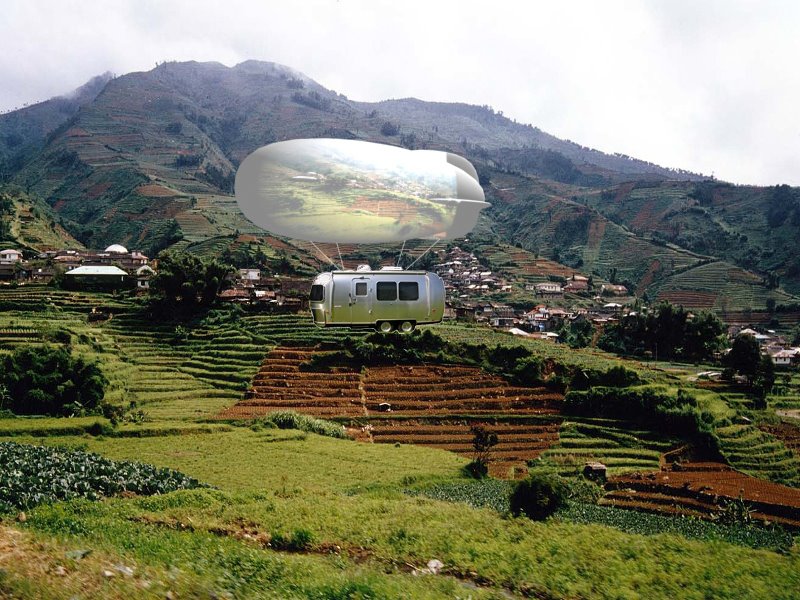
Picture of the 'air' mobile unit
By Cati in kinetic architecture
Thursday, January 12, 2006
Taptap, the affectionate scarf
TapTap: A Haptic Wearable for Asynchronous Distributed Touch Therapy
I continued the development on my conceptual idea touching memories and as a team we came up with a final prototype called 'taptap'.
TapTap is a wearable haptic system that allows nurturing human touch to be recorded, broadcast and played back for emotional therapy. Haptic input/output modules in a convenient modular scarf provide affectionate touch that can be personalized.
Movie of Taptap
This picture shows the second prototype that is a scarf with large pockets with a power supply. The design of the scarf is intended to make it wearable in a number of ways and allow specific TapTap actuators to be mounted wherever the wearer desires. The outside of the scarf is a public color (gray) while the inside and its intimate actuators are a warm color (pink).
Based on haptic devices, taptap can be re-configured to record and play back the touch that is most meaningful to each user. It is made from felt in two layers: one grey one that faces the public and a pink layer that touches you and contains the haptic modules in specially designed pockets. Taptap can be worn as a regular scarf, and custom touch modules can be placed in powered pockets within to record and play back touch where and when you want it
Taptap was blogged by Regine Debatty on we-make-money-not-art.com with a nice summary and useful references :)
Taptap is a team and class project for the Tangible Media class final assignment at MIT Media Lab taught by Dr Hiroshi Ishii. I presented with Leo at CHi'06 as an extended Abstract of Conference on Human Factors in Computing Systems (CHI '06), (Montreal, Quebec, Canada. April 22-27, 2006) by Bonanni, L., Lieberman, J., Vaucelle, C., Zuckerman, O. (alphabetical order). Download pdf.
Taptap was part of the second Seamless fashion show, on February 1, at the Boston Museum of Science.
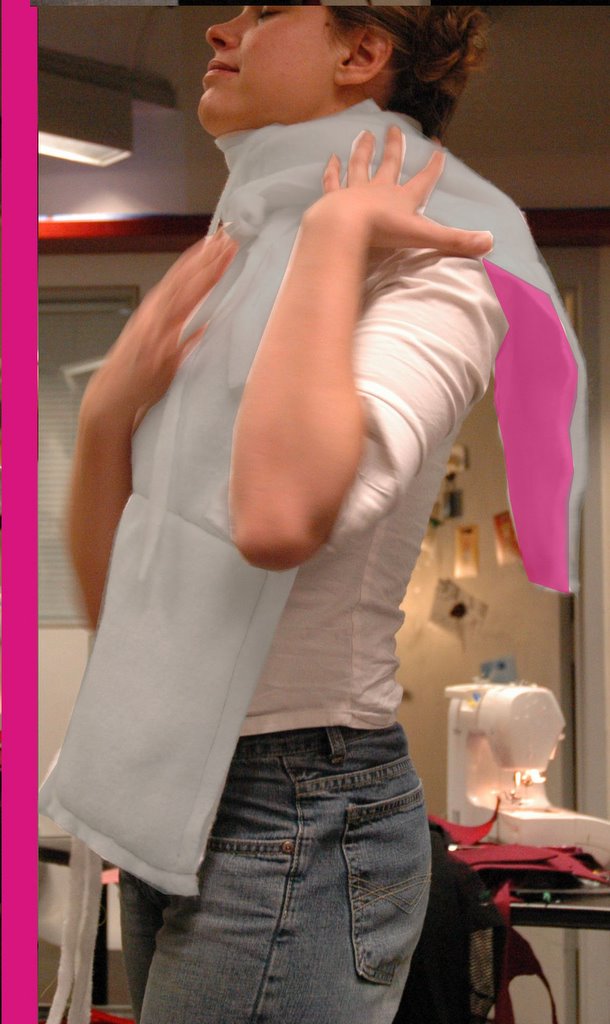 On this picture, I wear a second prototype
A few publications on Taptap and its next steps:
. A Framework for Haptic Psycho-Therapy Published in the Proceedings of IEEE ICPS Pervasive Health Systems Workshop, Lyon, France, 2006.
. Affective TouchCasting Published in the Proceedings of SIGGRAPH'06, Boston, USA. Abstract from publisher: ACM Press. Download pdf
Friday, October 28, 2005
Project: Memento Box
The Memento Box is a personal door to souvenirs. I designed this interactive box as an attractive passage from door to space. The door leads to my souvenirs and is always slightly opened.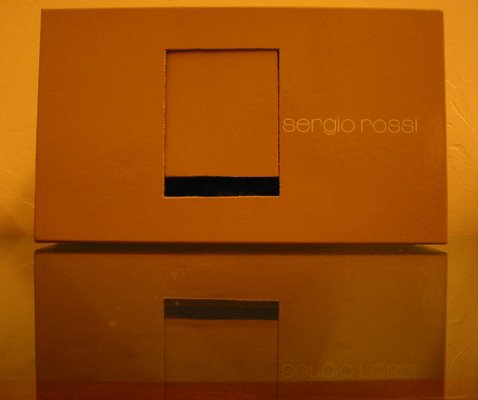
The door to souvenirs
I usually gather my souvenirs, my life memento artefacts into a shoe box . This shoe box gets older with the souvenirs and is such a precious element in my life . Any of the objects it contains recalls a passage in my life .
What if these souvenirs could be recalled though our senses? a smell can prompt a memory, a taste can suddenly recall an old story, e.g. the Madeleine of Marcel Proust and whenever we day dream, memories just pop up to our mind .
However, when we try to concentrate of souvenirs, they just fade away. There is this illusory sensation that it is impossible to grasp them, and the hardest we try, the less clearer the souvenirs become .
What if the process of recalling souvenirs were embedded into a shoe box and what of this shoe box becomes a space, our personal space of souvenirs .
I designed this interactive box as an attractive passage from door to space . The door leads to my souvenirs and is always slightly opened . A bright light shines in the back of the box clarifying a few objects and pictures around it . However, whenever my hand tries to grab what captures the eye, the door closes onto my hand and all is dark again . Whenever I go away for a tiny bit, the door opens up and more lights shine into some parts of my souvenirs and I can travel though them from far away ...
This project is my first assignment for the Kinetic Architecture class at Harvard GSD . More information about this project -its computational implementation, design properties, and concept details- can be found on my technical blog .
Inside the box
It connects a bit with Tantalus story where water recedes as he tries to drink and fruits retreat as he tries to reach.

well you cannot really see everything as it meant to attract you and represent the process of remembering souvenirs. If you go from far away you can then see few Legos everywhere, pictures of my childhood, my favorite doll as a child and few others objects ...

Hardware:
I am using a BASIC Stamp Rev. Dx Module to control a photocell sensor and a servo motor.
Mechanic:
I am using a rotational to linear motion system I made with Legos pieces.
Software:
I am writing in Basic for this Basic Stamp


Subscribe to:
Posts (Atom)
