Thursday, November 23, 2006

The talking machine

This is what I call sound art. An very simple design that can have such an impact.
I believe we forget what an object can naturally do without computing technology. By simply reproducing the vocal tract and pushing air through it, artists can make a acoustic speech synthesizer such as what Martin Riches achieved with his Talking Machine.


While I was voicing the pipes for a mechanical organ I noticed that when they were playing incorrectly they would sometimes make sounds quite similar to human speech. I wondered if it would be possible to make special speaking pipes and whether it would be possible to make them talk.

The result was the Talking Machine — an acoustic speech synthesizer.The speech sounds are produced using a flow of air and resonators just as in natural speech.The machine has 32 pipes, each one a simplified version of the human vocal tract. They reproduce the spaces which are formed in the mouth, nose and throat when we speak.The pipes are built according to measurements of X-Ray photographs taken of a person speaking. In other words, the E-pipe reproduces the narrow shape of the human mouth saying E, the OO- pipe has something like the small round OO-shaped lips and so on. S, F, Sh and similar sounds are produced by special whistles which reproduce the shapes made by the lips, tongue and teeth. The valves which control the flow of air are operated by a computer.


More info
Audio from the talking machine

Wednesday, November 15, 2006

Seamless-sensory Interventions

Based on my previous work on haptics for psychotherapy, I am now designing Seamless Sensory Interventions for the treatment of mental and neurological disorders.

My current research proposes haptics as the key to bringing treatment into the social sphere through devices, and providing new ways to mediate between the patient and the therapist both in and outside of therapy. Self-mutilation is a perfect test-case, because of the definitive “physicality” of the symptoms. However, the broader solutions that I am proposing have implications for diseases as diverse as autism, depression, and schizophrenia.

Sunday, November 12, 2006

The theremin by Three as Four


a cool video of an alien on a roof with one of the first electronic instrument, the theremin! (Invented in the 1920's) Worth watching ...

Also they make cool outfit for dogs

Web site: Three as Four.

Friday, November 10, 2006

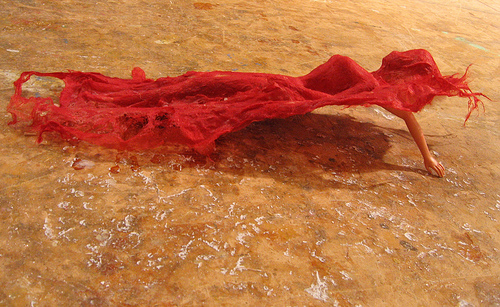
A Carrie Outfit for Barbie


After having designed a Tomb for my Barbie, I have designed a Carrie Outfit.

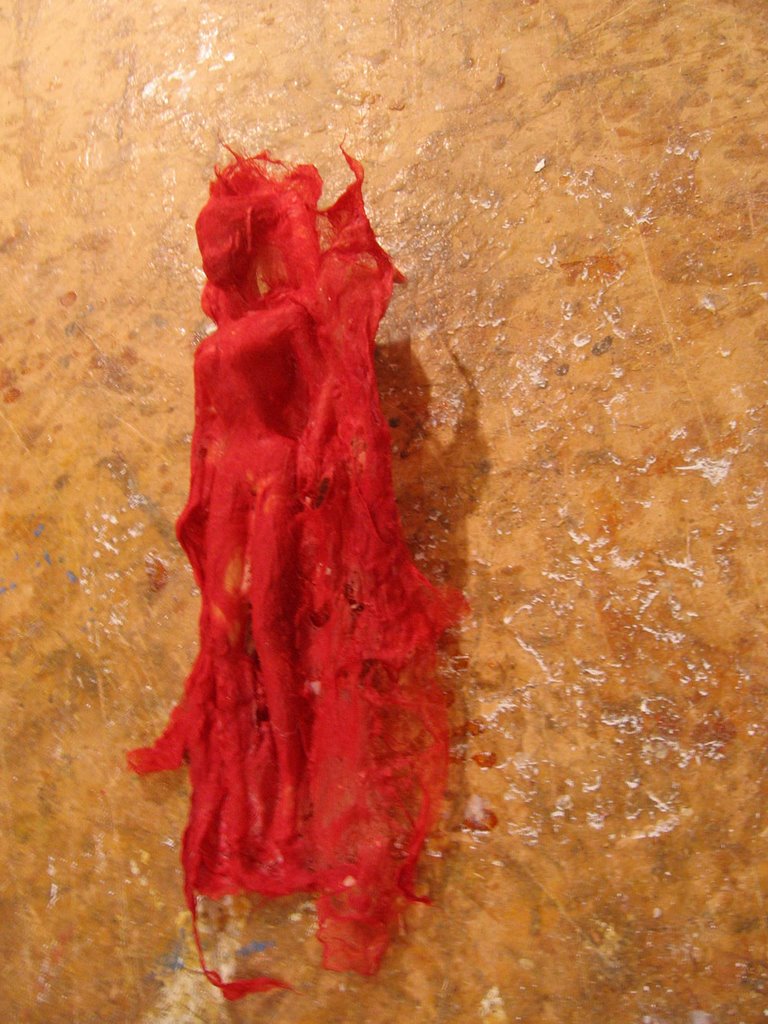
Barbie has a Ken, a Corvette, a castle, and all the outfits she ever wanted. However she has nothing for Halloween. I designed this outfit in Papier Mache to fit the Barbie we love.

The following picture shows that the outfit has taken the perfect shape of the Barbie doll.


A Carrie Outfit for Barbie in Papier maché (doll not included)

More pictures on Flickr ...

Wednesday, November 08, 2006

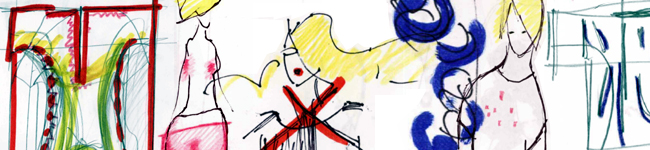
Fashion garments


Picture of our X-mode project

Creating, discussing, sharing, building with Yaz on fashion garments (statement coming soon). A few sketches of our nurturing ideas ...


More pictures

Tuesday, November 07, 2006

Core sample


Material: wax and plaster

I took the perspective of a child trying to understand the meaning of the term Core Sample, an intuitive translation from the French analogy. Core sample then means 'le corps samplé', i.e. dismembered body.
An immediate reference to the dismembered body is a serial killer, the one that would be prompt to body sampling. Starting with an obsession for the neck, to a more tool-istic approach to body members: arms, legs, feet. I made a rock that symbolizes le plan de travail.

I chose to dismember a Barbie doll that I created out of wax. The Barbie being for a while a representation of the woman for a child. I chose the white wax, the wax being a way a woman suffers regularly by trying to reach an ideal. The white is the symbole of purity thus the contrast between the canvas fabric & the plaster sculpted with chisel, and the angelic face of the doll made of white wax.

This sculpture is a tool-kit box for understanding serial killing for children. The tools are also made of wax and represent legs, arms, hands, feet. A tool is normally very hard, here it is very fragile as a mean to represent the complete chimère, i.e. pipe dream, the serial killer is immersed in.


More pictures on Flickr

I made this sculpture for the sculpture class taught by Helen Mirra at Harvard University, VES.

In doll and sculpture

Saturday, November 04, 2006

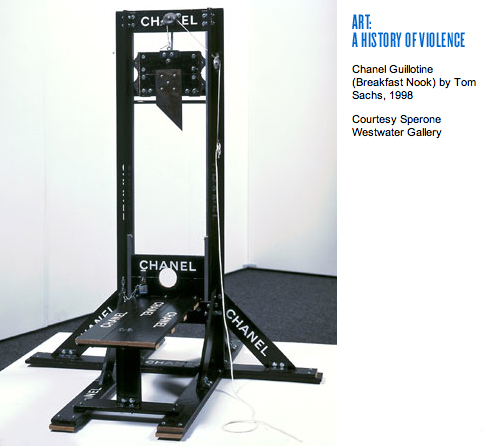
Fashion and violence

IN THE LAST DECADE, ARTISTS AND DESIGNERS HAVE TURNED THEIR ATTENTION TO WEAPONS AS ART OBJECTS. WELCOME TO THE CULTURE OF THE PRETTY HATE MACHINE

Found on V magazine


Thursday, October 26, 2006

Volume and Light


Three states

This semester I follow a sculpture class taught by Helen Mirra at Harvard University, VES.
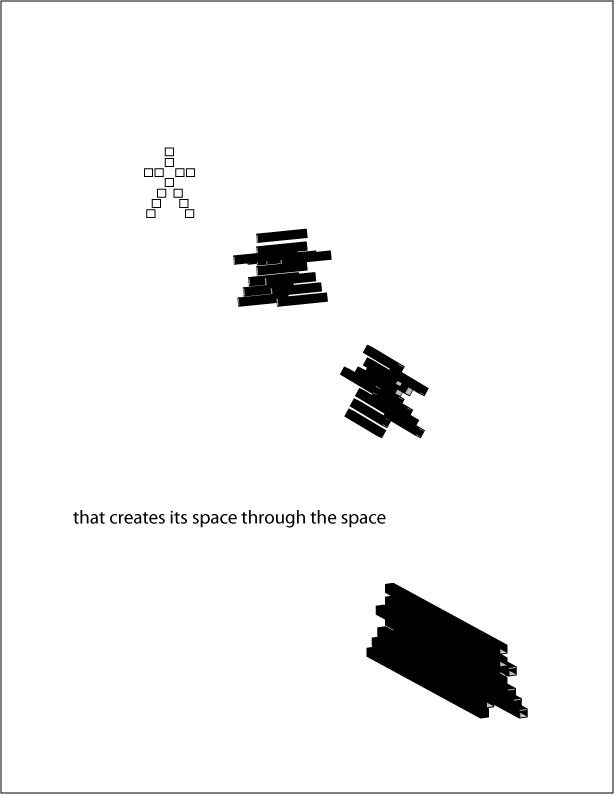
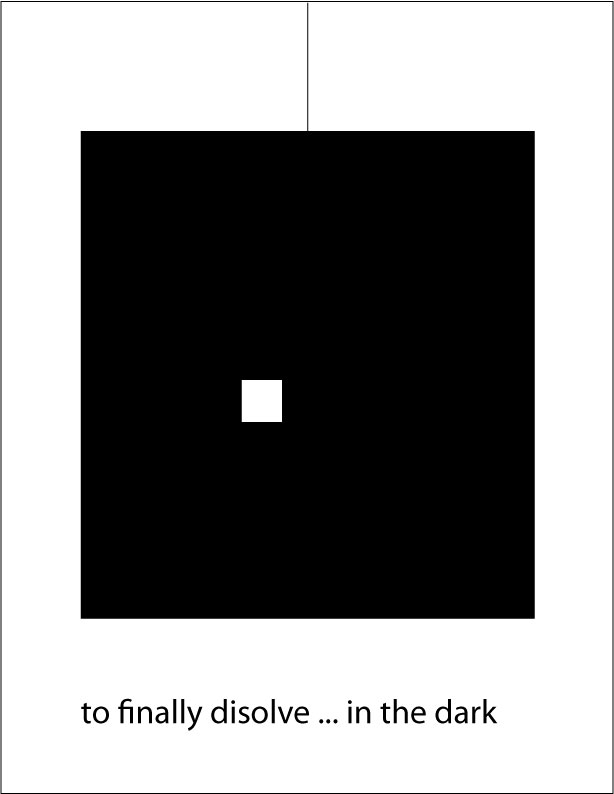
I am a big fan of light, from perceptive to illusory, such as in the work of James Turell. For my second assignment I integrated the playful intervention of light within my sculpture. It also integrates the three numbers that define my volume as stated in the assignment.

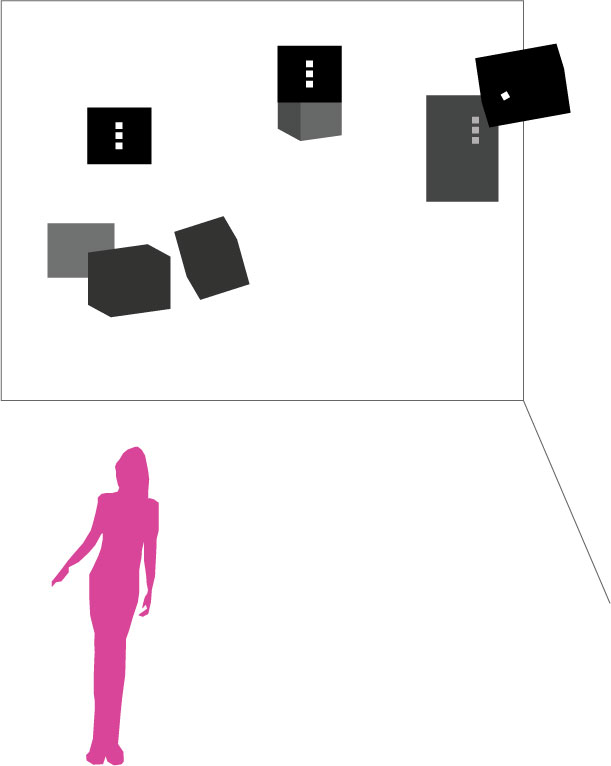
scenario


I calculated my volume to determine the number of boxes and shadows.

I installed light boxes made out of brown paper in a cubic room. I controlled the direction of the light sources to build consistent shadows around the boxes and bring the light in and out of the boxes.
Out of the three boxes, the third box moves to create different cubic light patterns on the walls, e.g. from three to two patterns.


Material: brown paper, wooden sticks, strings.

In volume, light and sculpture

Thursday, September 21, 2006

Sleep disorders interventions through technology mediated environment

Exploring the synthesis of temperature deployed through haptic systems, I have found that researchers have previously considered the effects of an electric blanket on sleep stages and body temperature in young healthy men. They conclude that use of a temperature-controlled electric blankets under low ambient temperature may decrease cold stress to support sleep stability and thermoregulation during sleep.

Reference of the paper
Okamoto-Mizuno, Kazue; Tsuzuki, Kazuyo; Ohshiro, Yasushi; Mizuno, Koh (2005) Effects of an electric blanket on sleep stages and body temperature in young men. Ergonomics, Vol. 48 Issue 7, p749.

Based on research on seasonal affective disorders (SAD), designers have also created bedding that synchronizes the body clock. It is a poetic and transparent manner to support patients with seasonal affective disorder in which the insufficience of day-light causes the onset of depression. Designers have also created the SRE - Sleep & Recovery Enhancer. The SRE guide the user through autogenous exercises to lower the stress-level and reduce time to fall asleep.

Wednesday, September 13, 2006

Virtual Reality and mental health applications

Working on haptics for psychotherapy, I found interesting the past work on Virtual Reality for psychotherapy.

There is a lot of systems being developped for therapy, especially phobic disorders for instance when it involves panic disorders associated with acrophobia. The basic idea is to provide the patient with a virtual scenario where he/she can feel a sense height. The results of the studies proved that VR environments are effective and realistic at overcoming acrophobia

[Virtual environments for treating the fear of heights (1995) by Hodges, L.F. Kooper, R. Meyer, T.C. Rothbaum, B.O. Opdyke, D. de Graaff, J.J. Williford, J.S. North, The development of virtual reality therapy (VRT) system for the treatment of acrophobia and therapeutic case (2002) by Jang, D.P. Ku, J.H. Choi, Y.H. Wiederhold, B.K. Nam, S.W. Kim, I.Y. Kim, S.I. ].

More specifically related to neuropsychology, Dorothy Strickland has used Virtual reality for the treatment of autism. She also tested her system with children with attention deficit disorders. She concludes that because autism and attention disorders involve abnormal stimulus response to the external world, Virtual reality offers the potential to regulate an artificial computer environment to better match the expectations and needs of individuals with these problems.

Reference of her paper Virtual Reality for the Treatment of Autism. By Strickland D. In GIUSEPPE RIVA, BRENDA K. WIEDERHOLD, ENRICO MOLINARI (Eds.), Virtual Environments in Clinical Psychology and Neuroscience 1997, 1998 Los Press: Amsterdam, Netherlands.

I also found a critical paper about basic theoretical and pragmatic issues that need to be considered while designing a VR system in the areas of clinical psychology and neuropsychology. For instance Basic VE Cost/Benefit Issues for Mental Health Applications

1) Can the same objective be accomplished using a simpler approach?
2) How well do the current attributes of a VE fit the needs of the psychological approach
or target?
3) How does a VE approach match the characteristics of the target clinical population?
4) What is the optimal level of presence necessary for the application?
5) Will the target users be able to learn to navigate in and interact with the environment in
an effective manner?
6) What is the potential for side-effects (cybersickness and aftereffects) in light of the
characteristics of different clinical groups?
7) Will assessment results and treatment effects generalize to the “real world”?
8) How should VE studies be designed and how will the data be analyzed?


These questions should be also addressed while designing and testing haptic systems for psychotherapy.

The paper also proposes areas where the immersion component can be crutial:
1. Systems designed to produce active distraction where the goal is to “remove” the
person’s ability to view conditioned (and unconditioned) pain related stimuli
Anticipated pain reduction may also serve to motivate a patient to become “involved” in
this alternative experience, with a higher level of presence resulting.
2. Systems designed to allow comparisons and ratings of full-sized humans for purposes
of assessing and treating body image disturbances, or for other applications that
may require some interaction with virtual “actors”.
3. Systems that target the assessment and rehabilitation of attention processes (as well as
other cognitive domains) whereby HMD fostered immersion would be needed to eliminate
external “distractions” that would intrude on the controlled environment .
4. Systems designed to assess and rehabilitate functional activities where transfer to the
real world is highly valued. An example where a higher level of the sense of presence
may be needed to maximize ecological validity, is when the objective is the assessment
or training of a complex procedurally-based functional skill (i.e., driving ability).
However, it should be noted that non-HMD approaches have shown some success for
this purpose for simple navigation-based activities.


The authors of the paper concludes positively on this work. They particularly states that these considerations for the development of virtual technology is necessary to maximize the potential usefulness of virtual environment for mental health applications. They remark that this is key to consider the standards that should be applied to research-based and clinically-oriented mental health applications.

Reference of the paper Basic issues in the use of virtual environments for mental health applications. By AA Rizzo, M Wiederhold, JG Buckwalter, GIUSEPPE RIVA, BRENDA K. WIEDERHOLD, ENRICO MOLINARI (Eds.), Virtual Environments in Clinical Psychology and Neuroscience 1998, Los Press: Amsterdam, Netherlands.

Later in 2003 another review is published. It presents the state of the art of virtual reality therapy (VRT) in phobic disorders and conclude: Possibilities offered by VR in the field of the cognitive-behavioral therapies are numerous. Immersion, guide by the therapist, leads the patient to live this experiment in a more realistic way. But this “technicization” of the psychotherapy, as attractive as it is, does not modify the theoretical and methodological bases on which VRT rests. VRT has not replaced the role played by therapist. Indeed, his/her presence near to the patient remains essential. It seems that VR reinforces the therapeutic relation between patient and therapist on a collaborative mode.

Replacing the therapist is now the fear of the psychologists ;) but I did not interpret in any of my readings that these VR projects offered a replacement of a therapist. I certainly agree with the conclusion that if we design for the patient, we also design for the therapist. VR and haptic systems could be introduced by therapists for patients to gain both import and control on their own therapy.

Reference of this last paper State of the art of virtual reality therapy (VRT) in phobic disorders. By Stéphane Roy. In PsychNology Journal, 2003, Volume 1, Number 2, 176 - 183.


In Virtual Reality for clinical psychology and neuropsychology