Wednesday, November 16, 2005

Open Studio by MIT Media Lab

Open Studio is a new experimental online art exchange system developed at the MIT Media Lab. I find it very promising, so check it out!
So yesterday night, I have started to look at it, and made a few drawings with their system, it looks as if I was painting with my feet, but the constraint in design is what makes it very interesting to me.

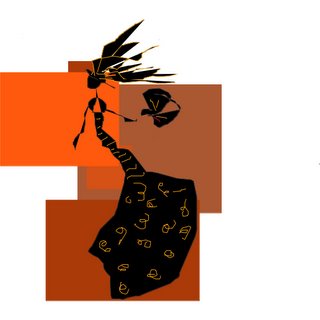
La Petite Tuture Rose that I have sold in 2 minutes to Burak Arikan :D

Le feu s'etiole that has been bought by Brent Fitzgerald today!

And ... Les mots doux, sold to Francis in 5 minutes last night !!!

There are cool ideas on this Studio and such a great tool to experiment with. By trying it out, and exchanging art work, I have found that it raises questions about the value of virtual art, especially the recognition in a virtual community.


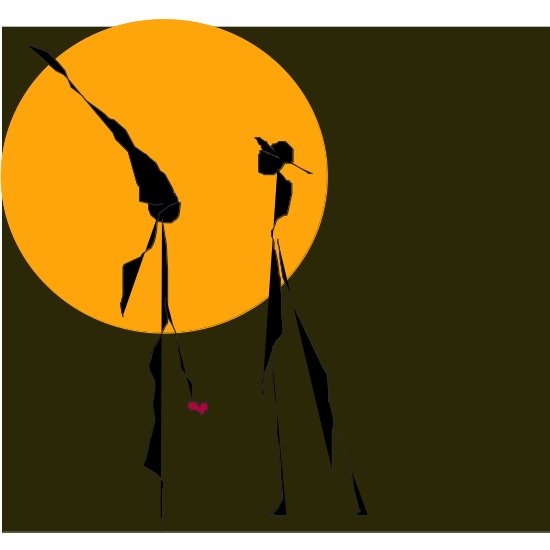
Finally, 'douceur' my last drawing with the system ...


By Cati in digital drawing

Thursday, November 10, 2005

The Strive to Capture the Elusive

Terzidis K. The Strive to Capture the Elusive in Terzidis K. Algorithmic Architecture London: Architectural Press, 2006

From this chapter, I selected parts that found the most important for my research. It is not a summary.

Design as a term can be confused with planning. Design is about conceptualisation when planning is about realization. Design is about the stage of capturing, conceiving, and outlining the main features of a plan, as such, it always preceds the planning stage.
In Latin, the word design is about the derivation of something that suggests the presence or existence of a fact, condition, or quality. In greek, it is about incompleteness, indefiniteness, or imperfection. « Design signifies not only the vague, intangible or ambiguous but also the trive to capture the elusive »

For the Greeks, design is linked indirectly to a loss of possession and a search into an oblivious state of memory. This is antithetic with the western notion of design that is stepping in the future and frequently associated with innovation.
Innovation is associated with originality but originiality is about a point of departure. Within the modernist tradition of novelty, the search for innovation may have become a misguiding rather than a guiding factor in deisgn.
« While the shock of the new may have provided in the early twentith-century an escape from the traditions of the past, its constant us ein the world of fashion today and the everlasting struggle to introduce something new for, or as if for, the first time defies its original purpose. »

A different appearence does not necessarily justify novelty, and an original concept involves newness in a productive, seminal and influential ways. Since novelty involves the negation of existence (something that did not exist before), novelty is impossible. It is only a sensory illusion.
Then the notion of an origin as a starting point is key in the process of design. First to determines the similar producst and second that it connects to the reminiscence of something that was lost but whose consequences are still present.


By Cati in kinetic architecture

Kinetic form

Terzidis K., Expressive Form: A Conceptual Approach to Computational Design, London: Spon Press, 2003, Chapter 3: Kinetic Form pp.33-45


From this chapter, I selected parts that found the most important. It is not a summary.

Kinetic form
'Kinetic is a term used to describe a situation related to or produced by motion' ; motion is the act or process of changing position or place over time. While the goal of motion may be immovability, the goal of kinetic form is to express perpetual motion through its immovable structure.


Observations : The perception of motion is relative ;


Superimposition is the act of laying or placing something on or over something else and can express motion.


Sequential justaposition : a serie of changes to a form are laid out in a sequential fashion, suggest motion by evolution, continuity.


Friction is a force that resist the relative motion perceived as motion when associated with matter and force.


Deformation can be associated with friction


Adhesion, stickiness, resistance and sluggishness suggest resistance to motion


Abscence as the state of being away and subtraction as the act of taking something away imply change since something was detached or dissappeared.


Aftereffect is an effect following its cause after some delay


Motion can be suggested to the viewer and not be literal, e.g. through metaphor or analogy like in the showing of a waterfalls without water.


Imagine a design where all is in motion. A variety of elements (geometrical form or symbolic form signifying a memory from the past) can be selected by a designer who directs the event. All the in between stages are transparent and become part of the compositional experience. The result is a moving image the behavior of which becomes the responsability of the designer.


« Kandinsky dreamed of a 'great city built according to all the rules of architecture and then suddenly shaken by a force that defies all calculation'. This dream sums up the double challenge of architecture and architectural theory today and the double challenge of computational design.(…) The architect of the past is seen as the virtuoso performer. The future architect may become the composer of symphonies in form, space, and color ».


By Cati in kinetic architecture

Space and motion

Jormakka K., Flying Dutchmen: Motion in Architecture, Basel: Birkhauser, 2002, 75-87

Space and motion
Nietzsche : « we want to have ourselves translated into stone and plant, we want to go for a walk in ourselves when we wander in these halls and gardens ». By means of empathetic projection, Nietzsche connected architecture to events in the body.

Schmarsow : the beholder’s body is essential to our experience of space (close to the idea of Nietzsche and Henri Poincare : the body being an instrument of measurement). But Schmarsow adds the notion of movement of the body in space as an essential element of architecture.

Husserl : all spatiality is constituted through movement. The speed of the observer affects the experience of space and like for Kant, the body is the source of our notion of space. For Kant there is the Nullpunkt : « thanks to the body, I am the center of things », Husserl adds a distinction between a lived body and a physical body « In walking my organism constitutes itself (…) the kinaesthetic activities and the spatial movements stay in union by means of association » For Husserl the body is the center of space.

Merleau-Ponty : our body is not primarily in space. What we understand as the axis of up and down does not change when we lie in a bed instead of standing up. In the abstract up and down has no meaning, it only is possible through other experience e.g. gravity

Deleuze : the idea of smooth space that can only be explored by the body (resemble Husserl’s notion of Nahspharen)

Deleuze and Gattari : A nomad is distended in the region. The absolute has become local because place is not delimited. The absolute is not at a particular place but become a non-limited locality.

Post-constructivist designs based on this idea of smoothness : they spa-tialize time (related to musical notation + rhythm of flow of things as in Bergson)
Lars Spuybroek says that space must be conceived from the perspective of the moving body « Bodies try to transgress themsleves in time… connected to other bodies, other rhythms, other actions. In this sense, you can really only talk about space as a result of an experimental body timing its actions. Space is never a given ».

Motion also implies disclocation relative to a frame of reference or an outside and motion is not contained within an object in movement but in a continuous differentiating co-constitution of the frame and the mobile, e.g. the sky annalogy of Deleuze where the flash of lightening is distinguished from the balc sky but must carry the sky with it. Things with different properties must be different things, so that a hand as a detached member is not the same thing as a hand connected to the body. Then for Hegel, parts of an organic whole are inconceivable except as parts of that whole which is self contradcitory according to Moore as it assumes that the part is logically distinguishable from the whole.

Derrida radical organicism, where in the actual workd everything is bound to and conditioned by everythign else (resemble Nietzsche). Boundaries of art for instance are marked by somthing that exists beyond the work. The outside constitutes the inside, e.g. a frame in a painting. Hence the very concept of an organic unity is self-contradictory.

Jormakka, author of the paper « Instead of desinging objects with a spectacular inside but no connection to exterior systems, one needs to consider the ways the building taps into other fields of forces that are all in motion and have no clear spatial boundaries. (…) A decentered and polyvalent architectural practice will concentrate not on aesthetic totalities but on infrastructural interventions, organizational re arrangments, and a discontinuous dispersion of strategic architectural moves in the existing fabric in cooperation with other professions and interest groups »


By Cati in kinetic architecture

Monday, November 07, 2005

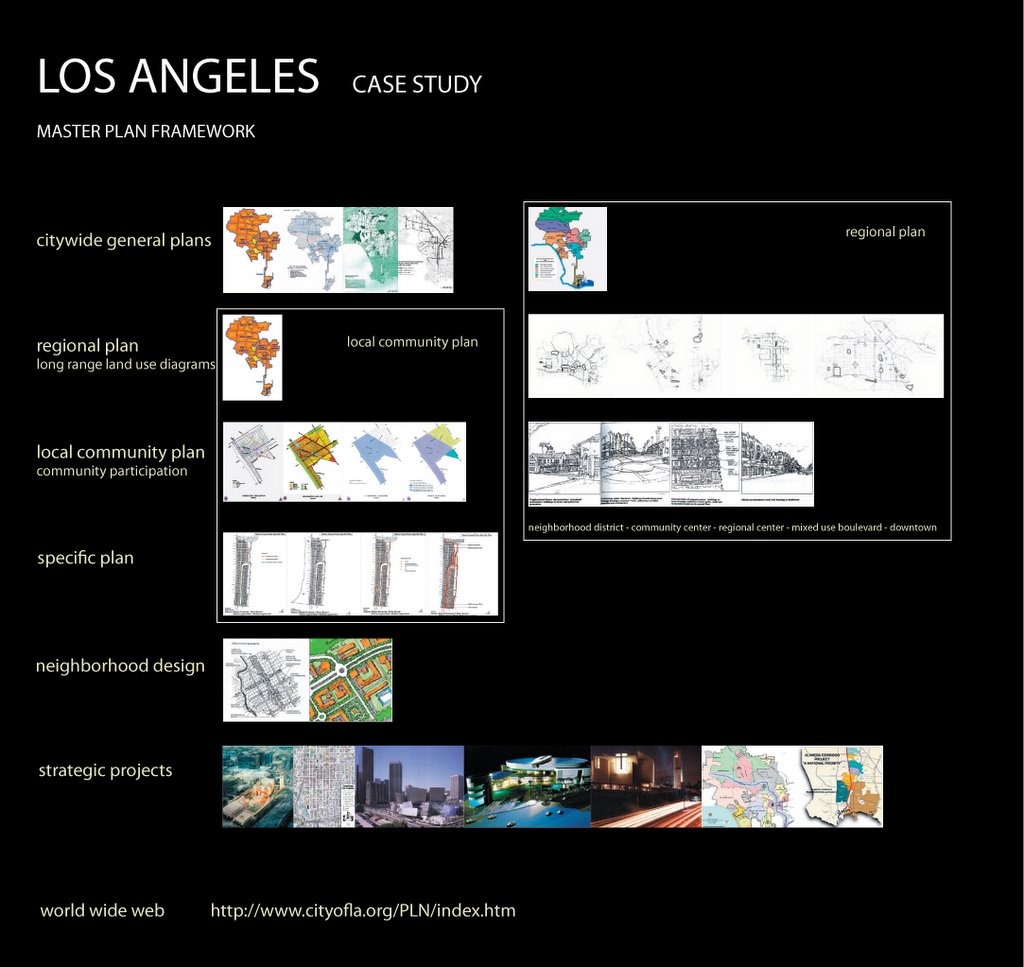
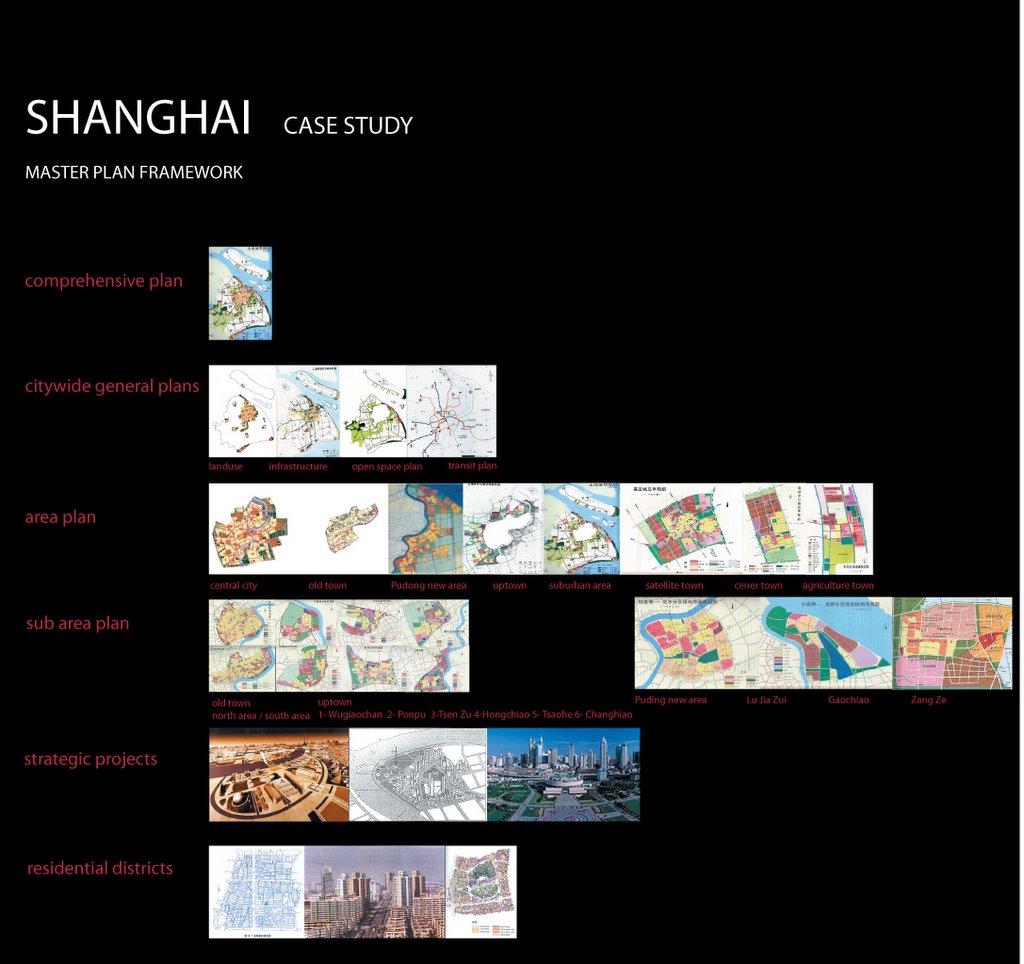
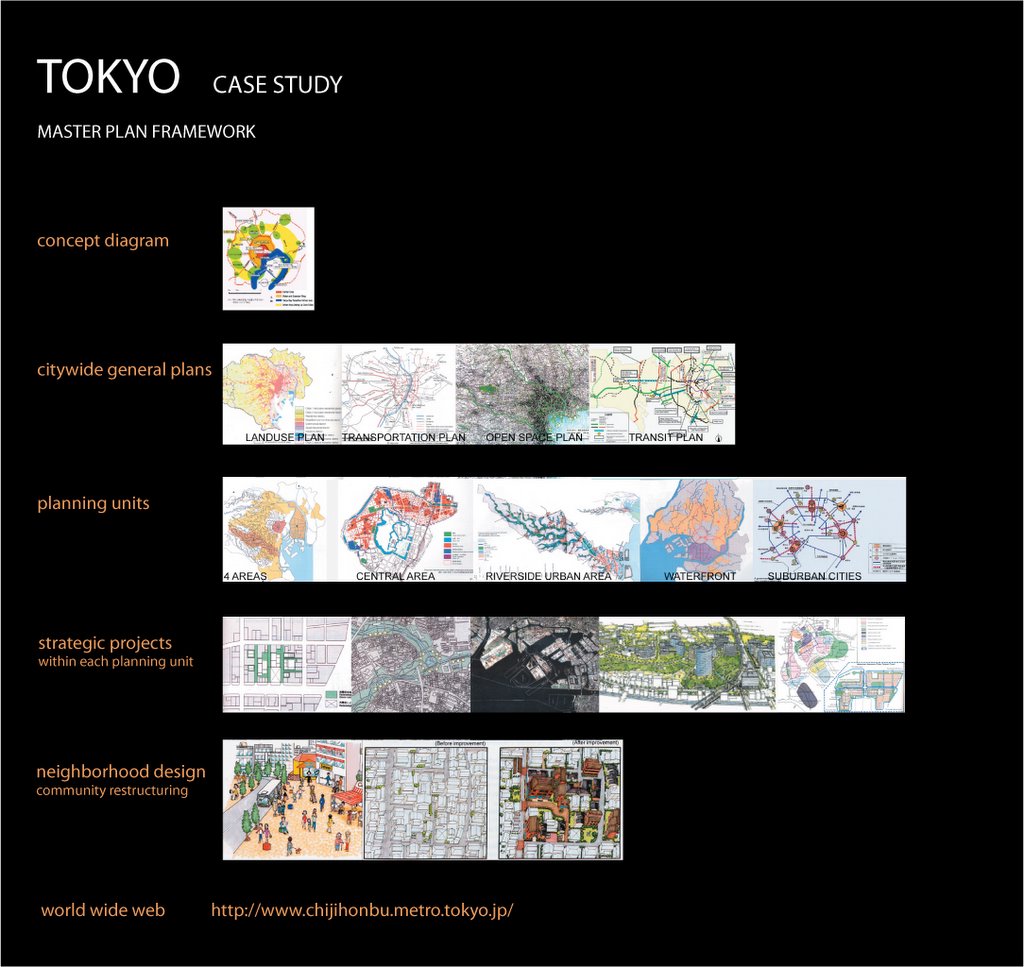
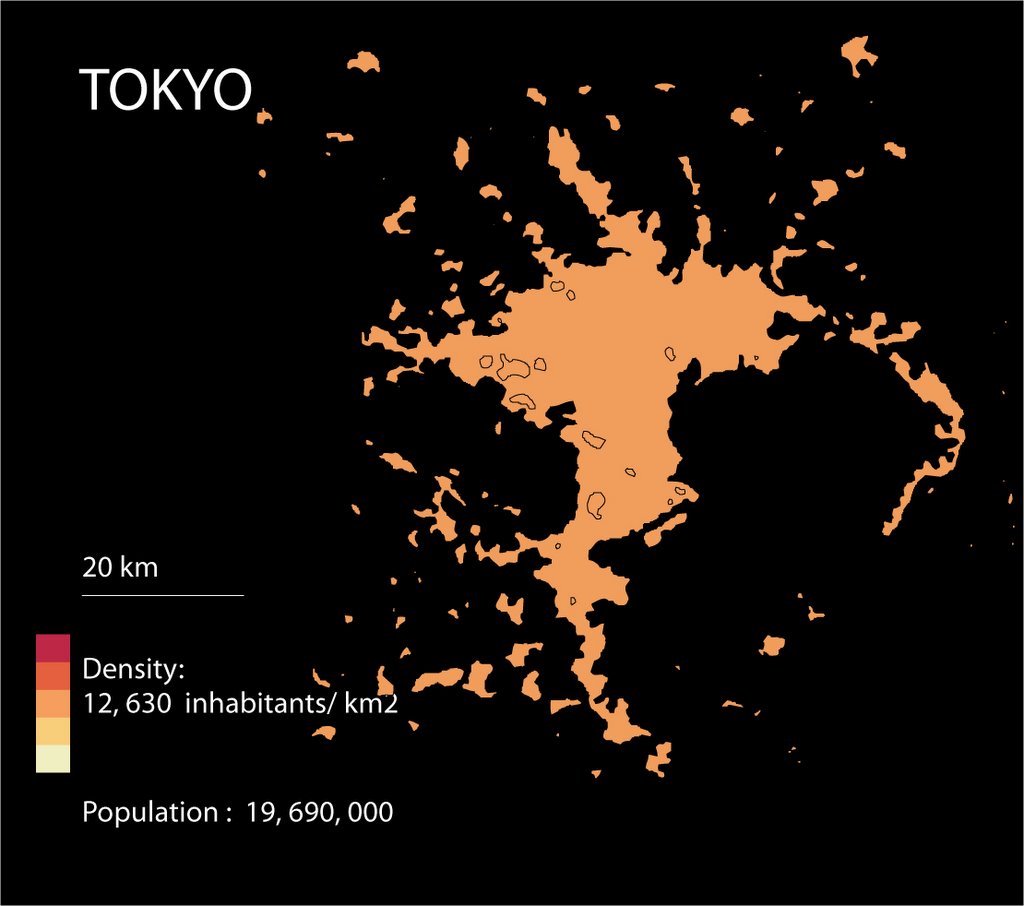
Urban Planning and Design, structure of London, Los Angeles, Shanghai and Tokyo


The structure of each city, panels designed for the December exhibition currated by Joan Busquet and Felipe Correa, faculty at the Graduate School of Design.

By Cati in 'on the side' work

Urban Planning and Design


Designing the December exhibition currated by Joan Busquet and Felipe Correa, faculty at the Graduate School of Design, I found interesting that the density of Tokyo is pretty similar to the density of London. Felipe also mentionned how, as usual, average statistics can trick us in showing a Los Angeles with an average low density ... More info will come in the structure of each city.


By Cati in 'on the side' work

Wednesday, November 02, 2005

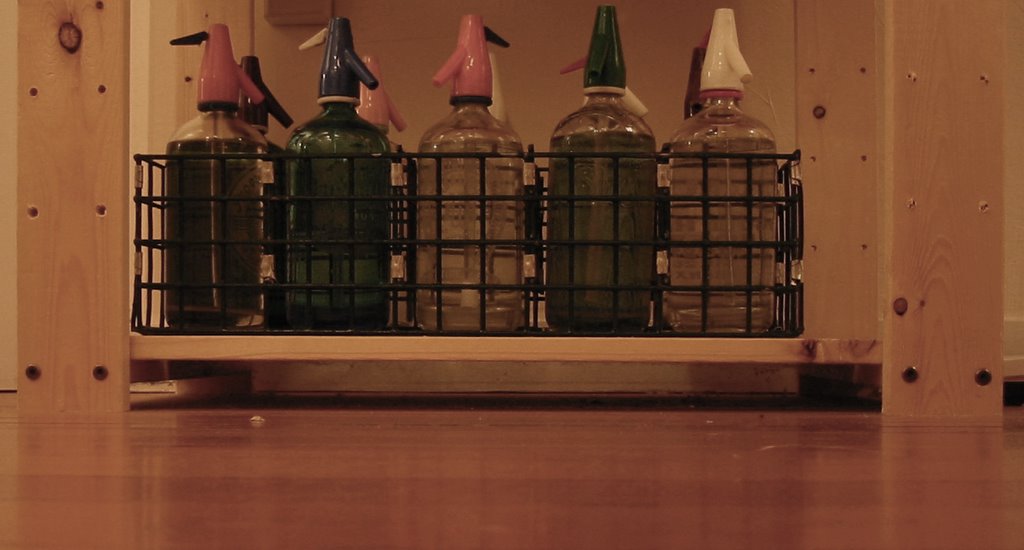
Encouraging sustainability at home!


Our, Lauren my roomate and I, bottles of sparkling water made by people around here: pure sustainability :D


By Cati in 'home design'

Tuesday, November 01, 2005

On design

On design by Cati Vaucelle

While the 16th of October 2005 the New York Times discusses prophecies made on the recent devastating situations, my response as a designer is to define a role of the designer in conceiving products that could support the after-shock of such catastrophes. While preventing earthquakes or hurricanes is still scientifically difficult, integrating political and social awareness into the conception of products for emergency support during and after an event could prevent the usual consequences of the natural disasters.

Journalists report on an event and represent the truth of an event, however the power of photography is immense; we watch documentaries, read newspapers by just ‘eye gaze scrolling, looking mainly at the pictures and thinking we are informed. Today, visual media is the favorite instrument of the development of information. The quantity of information cannot decrease. If the production of events is independent of the journalist, the everyday media consumption of the audience is constant. Journalists look for shocking visuals on a reality that does not deserve it and this reality then takes an abnormal importance. According to the cultural theorist and philosopher Jean Baudrillard, the Gulf War disinformation made not the events but the information become the scandal. We now look for the credibility of the truth and because of the lack of credibility in modern visuals, journalists use emotions to make spectators believe in the truth of the scene. As soon as it deserves the population’s attention, such as the series of natural disasters that have happened recently, the event cannot just be rationally described, the scale of dramatization having changed, reality has to be linked to some para normal phenomena, and thus journalists propagate, even if by questioning, the theories about prophecies and mystification of the events. Always stepping away from what is actually happening, and even though prophecies might be in actions, the only idea of not focusing of what is needed in such an emergency situation is renouncing to our responsibility as citizen.

Within this context, the designer conceives solutions to prevent -if possible- discomfort coming from threatening disasters, and engage in a discussion about what can be done to support a population before, during and after a catastrophe. Usually journalists discuss what is demanded through fascination for the 'spectacle'. They succeed most of the time in mobilizing the attention of citizens and raise funding to contribute to the global 'first days' help. However, after a few weeks attention is driven somewhere else. Even though resilience phenomena is taking place in the touched population, a considerable proportion of its actors may die of the disaster consequences few weeks later.

The responsibility as a designer today facing the major international problems borrows the philosophy of the Ulm School of Design of the post war in 1949 as it integrates political, social and scientific approach to design. A designer could want to change the dynamics in the world immediately and design solutions depending on the inter relationships between the agents in control. This is for instance one of the missions of Veja, a firm that uses material for fair trade, selecting ecological products, and producing objects in dignity. A designer could also want to enable a better democracy positioned politically and raising social questions. As much as the Ulm school of design introduced, as an example for their students, courageous persons who have risked their lives in resistance to a way of life they knew was fundamentally incompatible with their own values, designers today have the privilege to potentially combine political and social solutions to the design of effective products and or media.

Recently, we can then read a lot about comparative scale of death tolls, and indeed, at 7.6 magnitude, the earthquake was said to be the strongest to hit South Asia in a century and as killed around 55, 000 people with a death toll still raising. What is even of most importance for a designer is to prevent more death and more disease. The earthquake has thus left millions of persons homeless and evacuation plans have been prepared, expecting a threatening cold winter and accumulating rainy days that will certainly worsen the situation, and the population is then vulnerable to disease threats from the devastated public sanitation systems. Relief supplies are in place, but it is necessary to empower the population by relocating them in a new home. Could it be then a priority to create an emergency structure involving the design of mobile homes, health centers and toys structure to provide immediate psychological relief? What if all the survivors could have access to such immediate structure encouraged by the government? What if products were carefully designed integrating local knowledge with comfort and necessary means of existence. Could it bring them away a little from the drama? What if these components were mobile and easily transportable to allow them to be at the desired location in a minute? An instant support.

The mission of design today is to offer concrete solutions to such gigantic social and economic disasters as the attempt of Peter Brewin and William Crawford at the Royal College of Art in designing inflatable concrete and flexible long-term shelters for supporting the population after devastating events:
All the materials to create a robust and durable concrete shelter for disaster relief are combined within a plastic sack. The sacks can be easily transported to the necessary location. Water is added to the sack on site and the plastic inner can then be inflated to create a shelter. The concrete mix covering the inner sets in 4 hours leaving a structure that has a 15 year life-span, keeping cool during the day and retaining heat through the night


The role of the designer is to rethink the linkage between propagated information and the actual flux of events into concrete design solutions considering the dynamics in actions between political debates and social implications. Involving the population as soon as possible in the design process is also a way to have active participation and awareness of the current events, empowering it to participate and by this diminishing its feeling of powerless that contributes to its uncomfortable and useless disaster mystification and fear of prophecies.

By Cati in product design
Sunday, October 30, 2005

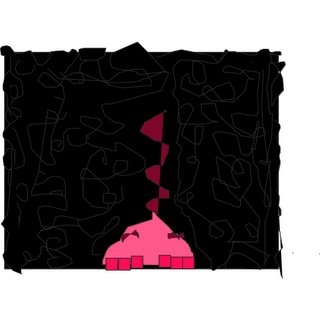
The pot


Object I made for my CAD CAM class, first assignment
more info

Friday, October 28, 2005

Project: Memento Box

The Memento Box is a personal door to souvenirs. I designed this interactive box as an attractive passage from door to space. The door leads to my souvenirs and is always slightly opened.


The door to souvenirs

I usually gather my souvenirs, my life memento artefacts into a shoe box . This shoe box gets older with the souvenirs and is such a precious element in my life . Any of the objects it contains recalls a passage in my life .

What if these souvenirs could be recalled though our senses? a smell can prompt a memory, a taste can suddenly recall an old story, e.g. the Madeleine of Marcel Proust and whenever we day dream, memories just pop up to our mind .
However, when we try to concentrate of souvenirs, they just fade away. There is this illusory sensation that it is impossible to grasp them, and the hardest we try, the less clearer the souvenirs become .

What if the process of recalling souvenirs were embedded into a shoe box and what of this shoe box becomes a space, our personal space of souvenirs .

I designed this interactive box as an attractive passage from door to space . The door leads to my souvenirs and is always slightly opened . A bright light shines in the back of the box clarifying a few objects and pictures around it . However, whenever my hand tries to grab what captures the eye, the door closes onto my hand and all is dark again . Whenever I go away for a tiny bit, the door opens up and more lights shine into some parts of my souvenirs and I can travel though them from far away ...

This project is my first assignment for the Kinetic Architecture class at Harvard GSD . More information about this project -its computational implementation, design properties, and concept details- can be found on my technical blog .

Inside the box


  • When you first come close to the box, the door is slightly opened with some light in the back. When you come closer, the light turns off and the door closes. If you step back then the door opens mid way and a few lights shine in the back. It never opens up completly as you can never recall all of your memories even from a single moment ...
    It connects a bit with Tantalus story where water recedes as he tries to drink and fruits retreat as he tries to reach.


  • Inside the box.
    well you cannot really see everything as it meant to attract you and represent the process of remembering souvenirs. If you go from far away you can then see few Legos everywhere, pictures of my childhood, my favorite doll as a child and few others objects ...


  • Process of building the box.

    Hardware:
    I am using a BASIC Stamp Rev. Dx Module to control a photocell sensor and a servo motor.

    Mechanic:
    I am using a rotational to linear motion system I made with Legos pieces.

    Software:
    I am writing in Basic for this Basic Stamp


  • I am using a rotational to linear motion system I made with Legos pieces that is hidden among the Lego objects inside the box


  • Electronics consist of a programable BASIC Stamp Rev. Dx Module, a photocell, few LEd's, minimum electronic components, and a servo motor

  •