For our pro-seminar class, a PhD requirement, Stefanie Tellex, Noah Vawter and Aaron Zinman and I am designing a prediction market for corruption. Our idea is that citizen can bet on the next congress that will be indicted.
Looking for visual tools and data analysis, I have found on Jaiunblog, the observatoire presidentiel web site.
It is an interactive presidential observatory. It allows individuals to visualize a tendançologue to follow the media popularity of main political French figures estimated for this election and this until the presidential elections of 2007.
The interactive µtendançologue considers also news from blogs, newsgroup, online press. It allows the user to compare between presidential online press.
This online observatory also proposes an interactive political blogopole map. The map represents the total of citizen's blogs that bring up political debates in France.
The Blogopole and a close-up on the French Green party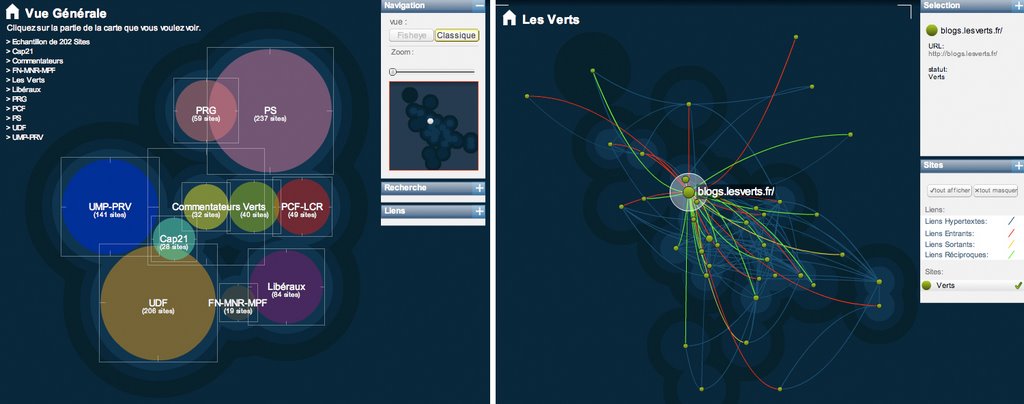
Tuesday, December 05, 2006
Prediction market for corruption

Sunday, December 03, 2006
The Revigators
Adam showed me an amazing web site on radioactivity. All you want to know about the cool products that contain radiation from uranium are listed here.
My favorite pick
The idea is that you drink the water coming out of this revigator. The radioactive water is exceptionally healthy for you according to studies (see below). Theodore Gray (the author of this web-catalog on uranium) proposes a nice parallel to our current expectations of what is "natural", assuming natural is pure and unharmful. This object came from a time where radioactivity was considered "natural".
The claim that it can't possibly be harmful because it's not a drug or medicine, it's all natural. The "it" being radon gas, which is now known to be one of the most powerfully toxic substances in the world, so toxic that even barely measurable concentrations from natural sources are a problem in many people's houses.

The study
Here is the book that describes the revigator.
Saturday, December 02, 2006
An outside of the dysmorphic body

Screenshots from the video
In this sculpture the dysmorphic body is reappropriated to create an outside of the body and therefore exemplify its disproportion. 
Screenshots from the video
For this video, I arranged lights and shadows to create a positive out of a negative impression that I carved in the mold. I reappropriate the dysmorphic body and through the camera I confuse the eye of the viewer and create the illusion of a body being carved. Finally, I end the video by using a string to present the illusion trick to the viewer, the string is a link between the inside and the outside.
Video
Material: plaster
Video: Raw data with no editing
Thursday, November 30, 2006
Effects of a Snoezelen on self-injury and aggression

Attribution: Photo of a snoezelroom at Het Balanske, Halensebaan 2, 3390 Tielt-Winge, Belgium by Michaël RY Laurent, Belgium.
Snoezelen or controlled multisensory stimulation is used for people with (severe) mental disabilities, and involves exposing them to a soothing and stimulating environment, the "snoezelen room". These rooms are specially designed to deliver stimuli to various senses, using lighting effects, color, sounds, music, scents, etc. The combination of different materials on a wall may be explored using tactile senses, and the floor may be adjusted to stimulate the sense of balance.by Wikipedia
Originally developed in the Netherlands in the 1970s, snoezelen rooms have been established in institutions all over the world (like in Germany, where more than 1200 exist).
Snoezelen might be beneficial to people with autism and other developmental disabilities, dementia, and brain injury. However, research on these matters is scarce, with variable study designs.[1] [2]
References
[1]Chung JCC, Lai CKY. Snoezelen for dementia. The Cochrane Database of Systematic Reviews 2002, Issue 4. Art.
[2]Lancioni GE, Cuvo AJ, O'Reilly MF. Snoezelen: an overview of research with people with developmental disabilities and dementia. Disabil Rehabil. 2002; 24: 175-84.
Effects of Snoezelen room, Activities of Daily Living skills training, and Vocational skills training on aggression and self-injury by adults with mental retardation and mental illness. Res Dev Disabil. 2004 May-Jun;25(3):285-93. By Singh NN,
Lancioni GE, Winton AS, Molina EJ, Sage M, Brown S, Groeneweg J.
Abstract Multi-sensory stimulation provided in a Snoezelen room is being used increasingly for individuals with mental retardation and mental illness to facilitate relaxation, provide enjoyment, and inhibit behavioral challenges. We observed aggressive and self-injurious behavior in three groups of 15 individuals with severe or profound mental retardation and mental illness before, during, and after being in a Snoezelen room. All participants were receiving psychotropic medication for their mental illness and function-derived behavioral interventions for aggression, self-injury, or both. Using a repeated measures counterbalanced design, each group of participants was rotated through three experimental conditions: Activities of Daily Living (ADL) skills training, Snoezelen, and Vocational skills training. All other treatment and training activities specified in each individual's person-centered plan were continued during the 10-week observational period. Both aggression and self-injury were lowest when the individuals were in a Snoezelen room, followed by Vocational skills training and ADL skills training. The levels in the Snoezelen room were significantly lower than in both the other conditions for aggression but only in ADL skills training for self-injury. The difference in levels before and after Snoezelen were statistically significant with self-injury but not with aggression. The order of conditions showed no significant effect on either behavior. Snoezelen may provide an effective context for reducing the occurrence of self-injury and aggression.
PMID: 15134793 [PubMed - indexed for MEDLINE]
Michael Graves and universal design
Discussing about Universal Design with my research group, Amanda showed us the fascinating work of Michael Graves featured in Metropolis magazine.
"People who become disabled have to radically redesign their outlook about the physical world," Graves says, remembering the first days after he was out of danger and learning to live with paralysis. "They redesign their sense of privacy and their sense of independence. Yet in the products they have to use, design has abandoned them."
The following is a very nice cane-bag combo, cane that can be hidden at any time.

This model folds into a built-in padded nylon bag. The latter was developed after Peschel and his team noticed that people often like to keep folding canes out of sight in a bag or purse. Getting it manufactured, however, was tricky: the designers ultimately had to find one factory to make the bags, then a second to assemble the cane into it.—M.C.
Courtesy Michael Graves Design Group

Shower Heads
Graves Design developed two handheld shower-spray products, both in white injection-molded plastic with blue overmolded rubber grips. The smaller one was designed to fit in the palm of the hand; people with arthritis or dexterity problems can comfortably use it without a tight grip. A swivel connector at the base allows the unit to spin without twisting the attached hose (it also fits into standard shower holders). —M.C.
Joe Andris/courtesy Michael Graves Design Group
Wednesday, November 29, 2006
Semiotic principles for practical design
I recently gave a lecture for the Tangible Interfaces class lead by Professor Hiroshi Ishii. I presented my process of design from a Graphical User Interface to a Tangible User Interface. I also introduced semiotic principles for practical design in the form of a design assignment.
I introduced a visual aesthetic process to bring the students into re-thinking their own process from their first ideas to the conceptualisation of their project. 
The visual aesthetic production process by Howard Riley (2004)
The main point is that social and individual percepts are codified into material form. Products can then be decomposed into separated features. This help understand that, when combined, these features become cultural choices. Pointing out the combination of features naturally point to cultural implications, i.e. are culture specific.
The final point is to determine within a concept what are the assumptions while making design choices. It helps articulate a project within a framework and allows the identification of the 'why' of the final design choices that will later be encoded into material form.
I also presented the Semiotic Square by Greimas and Rastier. 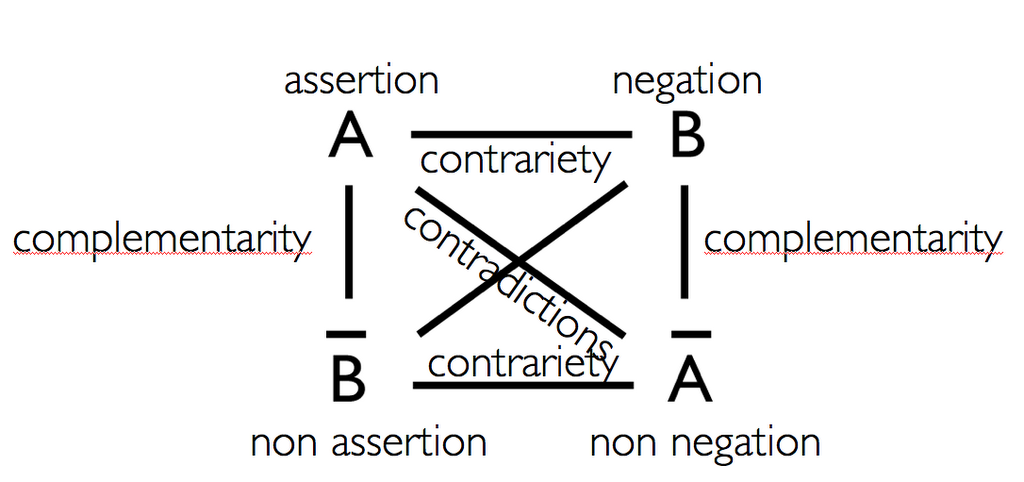
Designers can use semiotic tools for visualizing social ideology embedded in combinations of features.
A selection of references
HOWARD RILEY (2004) Perceptual modes, semiotic codes, social mores: a contribution towards a social semiotics of drawing. Visual Communication, Vol. 3, No. 3, 294-315 .pdf
ALAN RHODES and RODRIGO ZULOAGO (2003) A semiotic analysis of high fashion advertising. 2003. .pdf
OSBORN J.R. (2005) Theory Pictures as Trails: Diagrams and the Navigation of Theoretical Narratives Cognitive Science Online, 3.2, pp. 15-44 .pdf
A guide to evaluate Universal Design performance
I found a guide to evaluate the universal design performance of products.
Evaluating the Universal Design Performance of Products, EUDPP, Molly Story, James Mueller, and M. Montoya-Weiss, 2002 from the Center for Universal Design.
Paper in .pdf format
Their definition of universal design
Universal design is the design of all products and environments to be usable by everyone regardless of age, ability or situation. Achieving usability by people of all ages, abilities, and situations is very difficult, but it is a goal well worth striving for. As universal design performance is increased, so are usability, safety and marketability for all users.
In sum, the 6 principles of universal design are:
1. Equitable Use
2. Flexibility in Use
3. Simple and Intuitive Use
4. Perceptible Information
5. Tolerance for Error
6. Low Physical Effort
7. Size and Space for Approach and Use
The Universal Design Performance Measures are not intended to be used as a “scoring” device, nor as a substitute for real-world testing by individuals with personal experience of aging or disability. Product developers with some knowledge of the issues involved in aging and disability will find this tool helpful in:
• Evaluating product usability throughout its life cycle: packaging, instructions, set-up, use, maintenance, and disposal;
• Developing product testing and focus group methodologies for use with individuals of diverse ages and abilities;
• Promoting the universal design features of products to potential customers;
• Identifying universal design features of products for design competitions and award programs.
Monday, November 27, 2006
io brush and Kimiko


On the canvas, artists can draw with the special "ink" they just picked up from their immediate environment.
My colleague and friend Kimiko Ryokai will join the faculty of the School of Information, Berleley, in January 2007. She will teach in the iSchool and the Center for New Media. She graduated from the Tangible Media Group at MIT Media Lab with Dr. Hiroshi Ishii. She is currently employed at the product design firm, IDEO.
A while back for her PhD, Kimiko designed io brush, a super intuitive platform to paint digitally using colors, patterns, movements that surround us. For her master thesis she invented and researched on Storymat, a pretty mat that stores children's storytelling play by recording their voices and movements of the toys they play with.
IO brush movie that I recommend watching (25 mb). Delight warrantied.
Sunday, November 26, 2006
La déroute

Today it's my birthday. Usually I dig through the French La Redoute catalog to pick something I like. This year I discovered this chef d'oeuvre by the artist Nicolas Simarik: La Déroute. A different point-of-view on "La redoute".
I love it. It's full of life. Reading the pages of the fallacious catalog reminded me of the work of Lucien Alma and Laurent Hart, Borderland (previously called Bordeline) the video game with everyday "heroes". Link.
Borderland


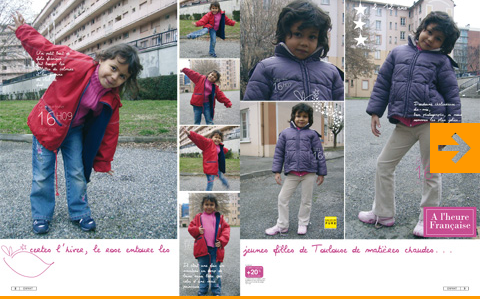
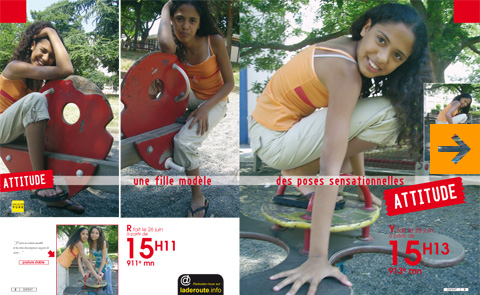
For more pictures, visit the catalog's diaporama
Thursday, November 23, 2006
The shadows of objects
Playing with light and shadows, artist can give sens to a magma of clothing, metal, clouds and so forth.
Simple elements of design, yet strong impact. Playing with our expectations of what an object can and/or cannot do, artists can impress us. I discovered the work of Fred Eerdekens on the blog of Etienne Mineur.
Life itself is not enough, 1999, Clothing, glass, steel, light projectors, 700 x 120 x 90 cm by Fred Eerdekens