I recently gave a lecture for the Tangible Interfaces class lead by Professor Hiroshi Ishii. I presented my process of design from a Graphical User Interface to a Tangible User Interface. I also introduced semiotic principles for practical design in the form of a design assignment.
I introduced a visual aesthetic process to bring the students into re-thinking their own process from their first ideas to the conceptualisation of their project. 
The visual aesthetic production process by Howard Riley (2004)
The main point is that social and individual percepts are codified into material form. Products can then be decomposed into separated features. This help understand that, when combined, these features become cultural choices. Pointing out the combination of features naturally point to cultural implications, i.e. are culture specific.
The final point is to determine within a concept what are the assumptions while making design choices. It helps articulate a project within a framework and allows the identification of the 'why' of the final design choices that will later be encoded into material form.
I also presented the Semiotic Square by Greimas and Rastier. 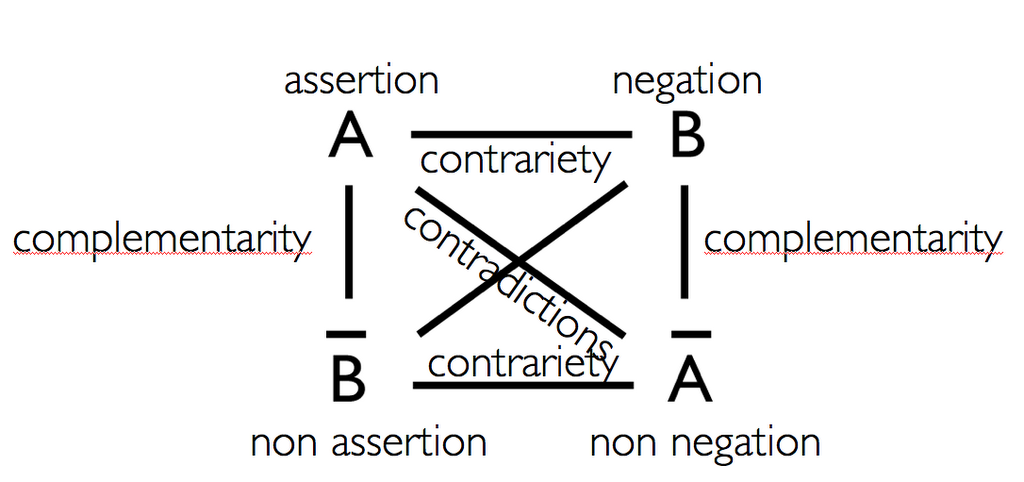
Designers can use semiotic tools for visualizing social ideology embedded in combinations of features.
A selection of references
HOWARD RILEY (2004) Perceptual modes, semiotic codes, social mores: a contribution towards a social semiotics of drawing. Visual Communication, Vol. 3, No. 3, 294-315 .pdf
ALAN RHODES and RODRIGO ZULOAGO (2003) A semiotic analysis of high fashion advertising. 2003. .pdf
OSBORN J.R. (2005) Theory Pictures as Trails: Diagrams and the Navigation of Theoretical Narratives Cognitive Science Online, 3.2, pp. 15-44 .pdf
Wednesday, November 29, 2006
Semiotic principles for practical design

A guide to evaluate Universal Design performance
I found a guide to evaluate the universal design performance of products.
Evaluating the Universal Design Performance of Products, EUDPP, Molly Story, James Mueller, and M. Montoya-Weiss, 2002 from the Center for Universal Design.
Paper in .pdf format
Their definition of universal design
Universal design is the design of all products and environments to be usable by everyone regardless of age, ability or situation. Achieving usability by people of all ages, abilities, and situations is very difficult, but it is a goal well worth striving for. As universal design performance is increased, so are usability, safety and marketability for all users.
In sum, the 6 principles of universal design are:
1. Equitable Use
2. Flexibility in Use
3. Simple and Intuitive Use
4. Perceptible Information
5. Tolerance for Error
6. Low Physical Effort
7. Size and Space for Approach and Use
The Universal Design Performance Measures are not intended to be used as a “scoring” device, nor as a substitute for real-world testing by individuals with personal experience of aging or disability. Product developers with some knowledge of the issues involved in aging and disability will find this tool helpful in:
• Evaluating product usability throughout its life cycle: packaging, instructions, set-up, use, maintenance, and disposal;
• Developing product testing and focus group methodologies for use with individuals of diverse ages and abilities;
• Promoting the universal design features of products to potential customers;
• Identifying universal design features of products for design competitions and award programs.
Monday, November 27, 2006
io brush and Kimiko
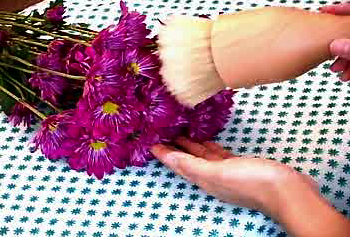

On the canvas, artists can draw with the special "ink" they just picked up from their immediate environment.
My colleague and friend Kimiko Ryokai will join the faculty of the School of Information, Berleley, in January 2007. She will teach in the iSchool and the Center for New Media. She graduated from the Tangible Media Group at MIT Media Lab with Dr. Hiroshi Ishii. She is currently employed at the product design firm, IDEO.
A while back for her PhD, Kimiko designed io brush, a super intuitive platform to paint digitally using colors, patterns, movements that surround us. For her master thesis she invented and researched on Storymat, a pretty mat that stores children's storytelling play by recording their voices and movements of the toys they play with.
IO brush movie that I recommend watching (25 mb). Delight warrantied.
Sunday, November 26, 2006
La déroute

Today it's my birthday. Usually I dig through the French La Redoute catalog to pick something I like. This year I discovered this chef d'oeuvre by the artist Nicolas Simarik: La Déroute. A different point-of-view on "La redoute".
I love it. It's full of life. Reading the pages of the fallacious catalog reminded me of the work of Lucien Alma and Laurent Hart, Borderland (previously called Bordeline) the video game with everyday "heroes". Link.
Borderland


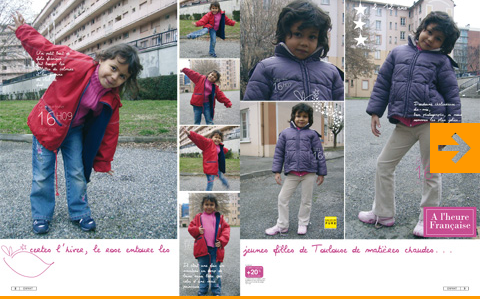
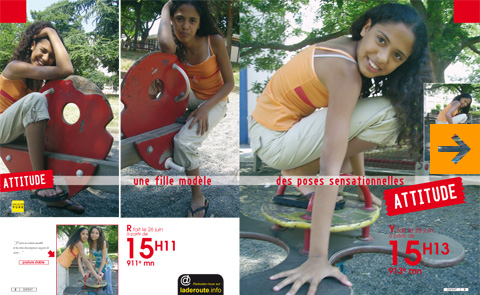
For more pictures, visit the catalog's diaporama
Thursday, November 23, 2006
The shadows of objects
Playing with light and shadows, artist can give sens to a magma of clothing, metal, clouds and so forth.
Simple elements of design, yet strong impact. Playing with our expectations of what an object can and/or cannot do, artists can impress us. I discovered the work of Fred Eerdekens on the blog of Etienne Mineur.
Life itself is not enough, 1999, Clothing, glass, steel, light projectors, 700 x 120 x 90 cm by Fred Eerdekens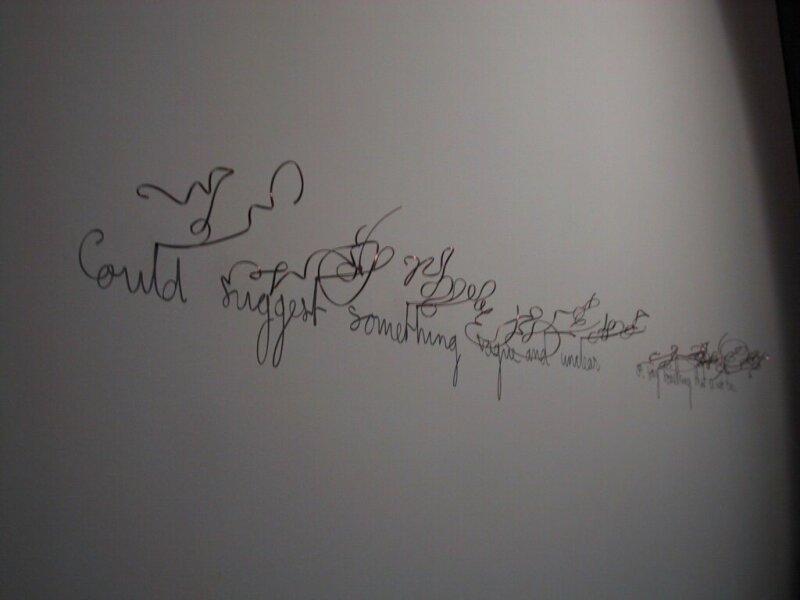


The talking machine
This is what I call sound art. An very simple design that can have such an impact.
I believe we forget what an object can naturally do without computing technology. By simply reproducing the vocal tract and pushing air through it, artists can make a acoustic speech synthesizer such as what Martin Riches achieved with his Talking Machine.
While I was voicing the pipes for a mechanical organ I noticed that when they were playing incorrectly they would sometimes make sounds quite similar to human speech. I wondered if it would be possible to make special speaking pipes and whether it would be possible to make them talk.
The result was the Talking Machine — an acoustic speech synthesizer.The speech sounds are produced using a flow of air and resonators just as in natural speech.The machine has 32 pipes, each one a simplified version of the human vocal tract. They reproduce the spaces which are formed in the mouth, nose and throat when we speak.The pipes are built according to measurements of X-Ray photographs taken of a person speaking. In other words, the E-pipe reproduces the narrow shape of the human mouth saying E, the OO- pipe has something like the small round OO-shaped lips and so on. S, F, Sh and similar sounds are produced by special whistles which reproduce the shapes made by the lips, tongue and teeth. The valves which control the flow of air are operated by a computer.

More info
Audio from the talking machine
Wednesday, November 15, 2006
Seamless-sensory Interventions
Based on my previous work on haptics for psychotherapy, I am now designing Seamless Sensory Interventions for the treatment of mental and neurological disorders.
My current research proposes haptics as the key to bringing treatment into the social sphere through devices, and providing new ways to mediate between the patient and the therapist both in and outside of therapy. Self-mutilation is a perfect test-case, because of the definitive “physicality” of the symptoms. However, the broader solutions that I am proposing have implications for diseases as diverse as autism, depression, and schizophrenia.
Sunday, November 12, 2006
The theremin by Three as Four

a cool video of an alien on a roof with one of the first electronic instrument, the theremin! (Invented in the 1920's) Worth watching ...
Also they make cool outfit for dogs
Web site: Three as Four.
Friday, November 10, 2006
A Carrie Outfit for Barbie
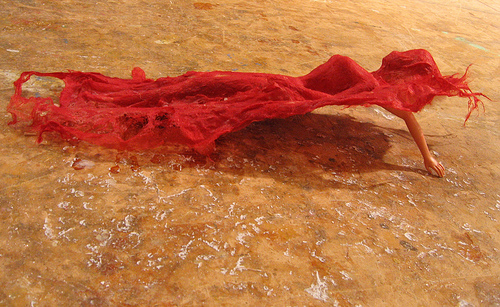
After having designed a Tomb for my Barbie, I have designed a Carrie Outfit.
Barbie has a Ken, a Corvette, a castle, and all the outfits she ever wanted. However she has nothing for Halloween. I designed this outfit in Papier Mache to fit the Barbie we love.
The following picture shows that the outfit has taken the perfect shape of the Barbie doll.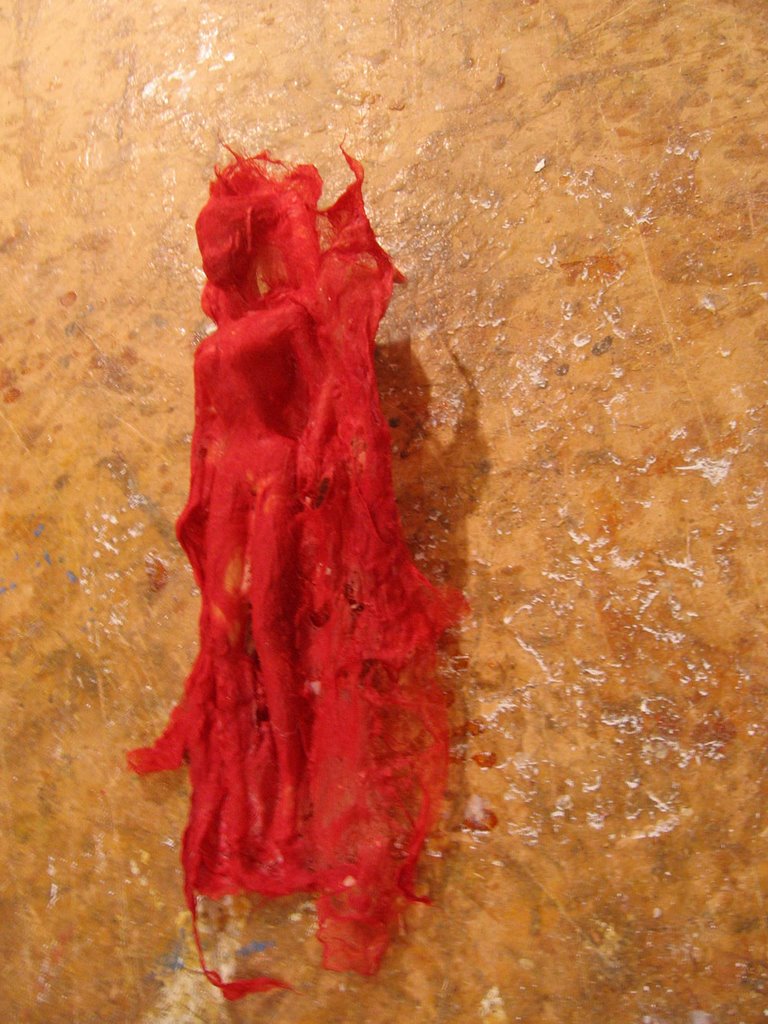
A Carrie Outfit for Barbie in Papier maché (doll not included)
More pictures on Flickr ...
Wednesday, November 08, 2006
Fashion garments
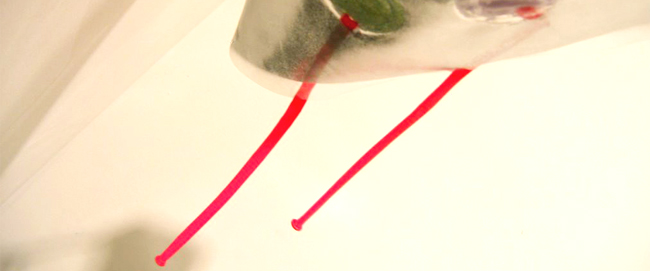
Picture of our X-mode project
Creating, discussing, sharing, building with Yaz on fashion garments (statement coming soon). A few sketches of our nurturing ideas ...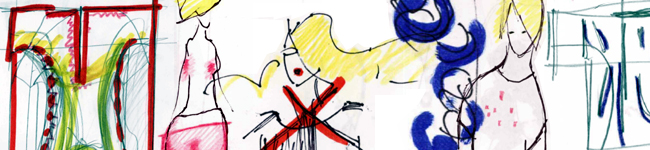
More pictures
