Showing posts with label movie. Show all posts

Wednesday, June 27, 2007

Multisensorial video?


Caution: Objects in this mirror may be closer than they appear!

I work on getting closer and closer to the expression, and the content of the expression, through video, and this by interfacing capture, edition and projection. Sometimes, novels inspire you the most in what you do. I chose the following quote of Jean Baudrillard from his book America:

Nostalgia born of the immensity of the Texan hills and the sierras of New Mexico: gliding down the freeway, smash hits on the Chrysler stereo, heat wave. Snapshots aren't enough. We'd need the whole film of the trip in real time, including the unbearable heat and the music. We'd have to replay it all from end to end at home in a darkened room, rediscover the magic of the freeways and the distance and the ice-cold alcohol in the desert and the speed and live it all again on the video at home in real time, not simply for the pleasure of remembering but because the fascination of senseless repetition is already present in the abstraction of the journey. The unfolding of the desert is infinitely close to the timelessness of film... - Jean Baudrillard, America

Monday, June 25, 2007

Science Fiction movies and HCI


Forbidden Planet (1956): the “thought analyzer” is a device inherited from the planets former inhabitants, displays a 3 dimensional image.


Human Computer Interaction in Science Fiction Movies by Michael Schmitz in CS Seminar “Instrumented Spaces” SS 2003 A. Butz, C. Endres, W. Wahlster.

I was recently talking about the influence of HCI over science fiction movies but also the reverse situation on how science fiction movies and books can inspire researchers in HCI. This paper, available online, proposes an analysis of several science fiction movie examples related to HCI.

Abstract: Science Fiction movies have been a source for speculation about the future of technology and human computer interaction. This paper presents a survey of different kinds of interaction designs in movies during the past decades and relates the techniques of the films to existing technologies and prototypes where possible. The interactions will be categorized with respect to their domain of real-life applications and also evaluated in regard to results of current research in human computer interaction.


Minority report (2002)

Wednesday, April 18, 2007

Flying video-taking pet?


Would you like a flying video-taking pet that follows you around? Here is a fun visionary video on the future of mobile technology for teenagers by Microsoft found on RoomWare


Video: Career in Computer Science - MS Research

Saturday, April 15, 2006

Selection of short animation movies

This semester, I take the Harvard Animation class, a VES course at the Faculty of Arts and Sciences, taught by Ruth Lingford.
Yesterday during our weekly screening, I particularly enjoyed watching movies from Gaelle Denis, Lisbeth Svarling, and especially the work of Emily Mantell 'To Have and to Hold'.

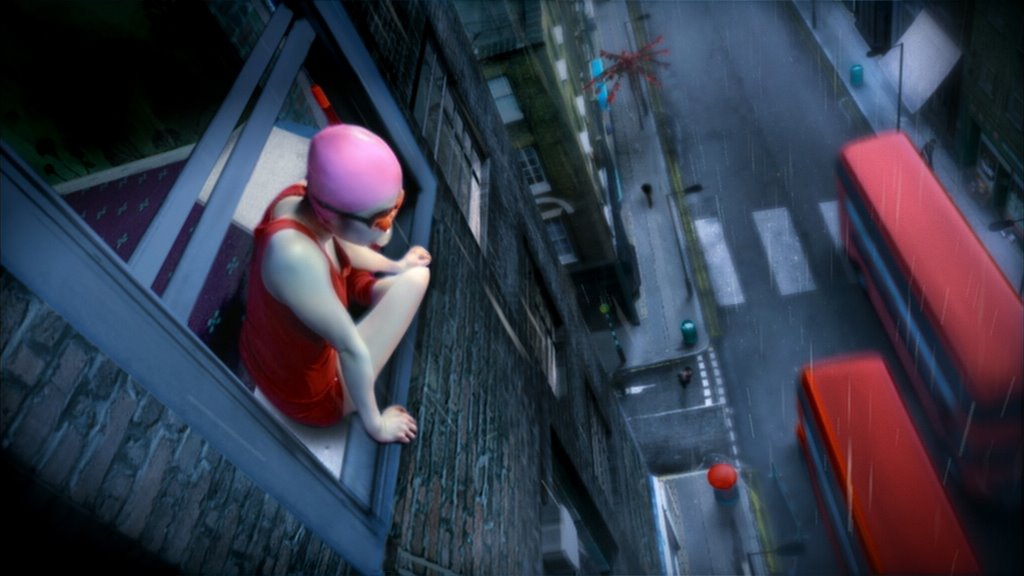
From Gaelle Denis I watched the very beautiful City Paradise, a journey through a very atmospheric London.

screenshots from the animation


She also is the author of Fish Never Sleep a very cute but intense story of an insomniac.


The cute Cloud Cover animation from Lisbeth Svarling can be watched here. The story features beautiful drawings and a story that can be interpreted in many ways. A little girl followed by her black cloud, looking for cure, looking for love... very touching and sweet.


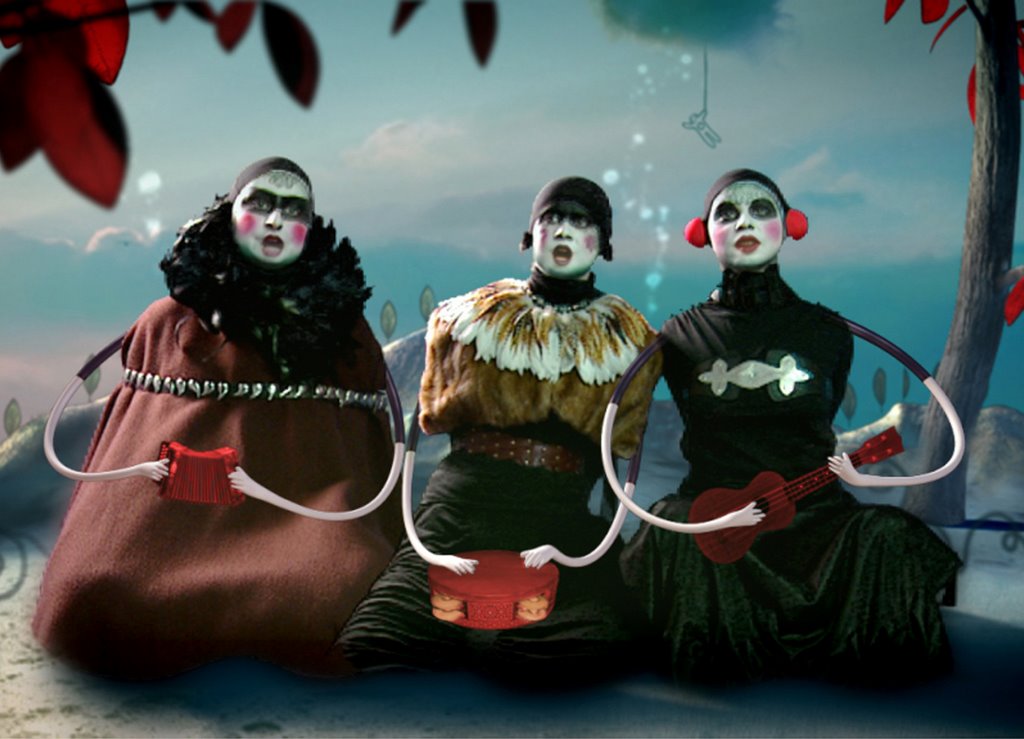
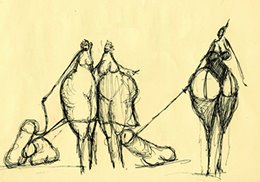
Finally, I literally adored the work of Emily Mantell 'To Have and to Hold'
An alternative world based on a companionship fantasy where women take the lead.


  • pieces of all the individual animations from the RCA show 2004 can be watched and downloaded here Check the Matthew Abbiss' Play

  • various kinds of animations can be watched here


  • In Animation