Saturday, April 08, 2006

Dynamic mappping of wireless network in real-time

At GSD, I attended a talk by Carlo Ratti about research he directs at the SENSEable City lab. He presented iSPOTS, project that analyses how wireless technology is changing life at MIT. This research looks at superposing real time information --with the mapping of laptops or cell phones-- to understand the relation between activity and space . One application Carlo mentionned is to look at how tourists move in the city based on their nationality.
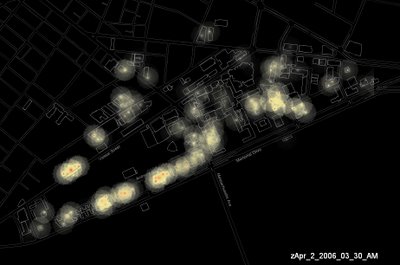
The iSPOTS project aims at describing changes in living and working at MIT by mapping the dynamics of the wireless network in real-time. Thus, the complex and dispersed individual movement patterns that make up the daily life of the campus can be revealed, helping TO answer many questions: Which physical spaces are preferred for work in the MIT community? How could future physical planning of the campus suit the community's changing needs? Which location-based services would be most helpful for students and academics?
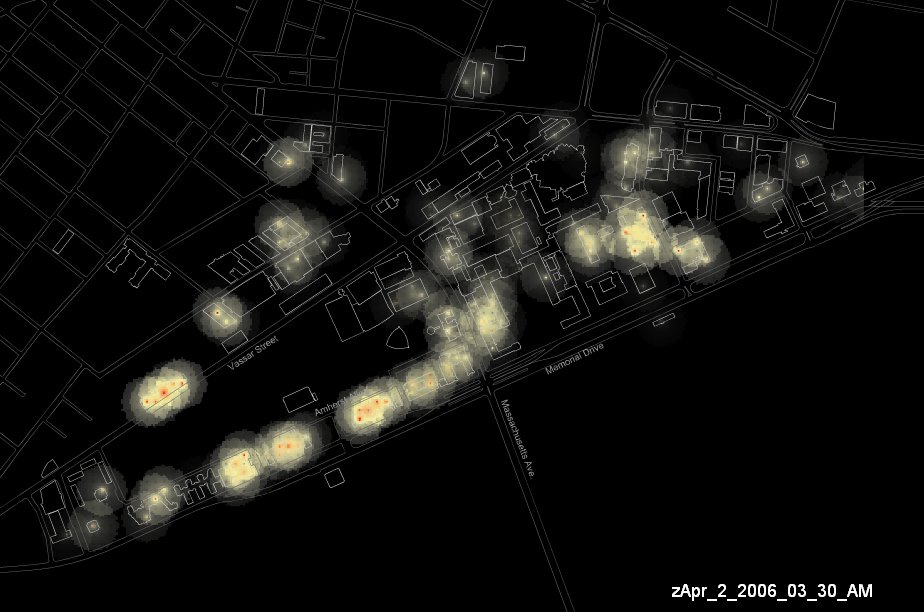


This map shows how wireless Internet is used on the MIT campus in real-time.

They have developped a script for people to locate themselves with precision on the campus and decide to share location with who they want. They are also developping the mobile-skype so they can use skype from their mobile phone.

  • research paper on How Wireless Technology is Changing Life on the MIT Campus

  • ispots web site


  • In urban planning


    Friday, April 07, 2006

    Patent the spam strategy

    More spam in my mail box. Like 10 today about Chase Bank.
    Checking my emails and looking at patents, I wander if spam strategies can be patented. Anti-spam patents exist for their spam filtering techniques, however spam techniques (even if illegal) should definitly be patented.

    Maybe an on-the-side patent service should exist for all illegal actions and strategies that take place, innovate and succeed.

    Thursday, April 06, 2006

    Toy Fair (s)

    I am fascinated by contemporary art exhibitions. If possible I try to attend La Biennale d'Art Contemporain in Lyon.
    Another source of inspiration --that I have been told is adverse to contemporary art shows-- are Toy Shows. To me, toys are also inspirational as in the manner invention is linked to fashion and technology and they are meant to hacked, rediscovered and appropriated for one's own creative use. I also am interested in the evolution of the industrial aspect of a toy production.

    Some Toy Fairs:

  • Middle Eastern toy fair in May

  • ABRIN-Brazilian Toy Fair in April

  • Tokyo Toy Show, The Japan Toy Association in July


  • There is also:
    UNITED ARAB EMIRATES, Theme Parks & Fun Centres Show, 22-24 May, CHINA, International Toy, Baby & Gift Fair, oct 18-20, CHINESE TAIPEI, Taipei Domestic Toys & Children Articles Show- KOREA, Seoul International Toy Fair- SWEDEN, Stockholm Toy Fair

    By Cati in personal addiction

    Saturday, April 01, 2006

    Birgitta Cappelen's furniture


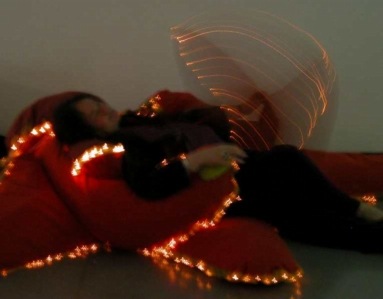
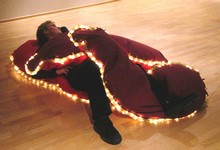
    In the area of furniture that responds to your body movements, form, and needs, I met product designer and researcher Birgitta Cappelen at the Collaborative Artefacts Interactive Furniture (CAIF) workshop in 2005. She presented and discussed her collaborative work: 'unfoldings. The furniture is filled with bending sensors, sensors, speakers. One can hug, sit, and relax on the furniture and the motions are reciprocated with music, moving images and light.


    Unfoldings is an interactive audio-tactile field, open to potential movements that are reciprocated with music, moving images and light. Unfoldings is like a piece of furniture, a cross between cushion, armchair and travelling rug, to sit or lie on or use as a shawl or blanket. The individual interacts with the field by sitting down, moving or speaking - to one self or to others - to create one's own or together with others.
    More info about unfoldings


    The Meaning of Liff


    Liff (lif) n. A common object or experience for which no word yet exists

    The Deeper Meaning of Liff: A Dictionary of Things There Aren't Any Words for Yet — But There Ought to Be By Douglas Adams, John Lloyd and Bert Kitchen


    Peoria (n.): the fear of peeling too few potatoes

    Some more:
    Abinger (n.): Person who washes up everything except the frying pan, the cheese grater and the saucepan which the chocolate sauce has been made in.
    Berrilillock (n.) An unknown workmate who writes "All the best" on your leaving card.
    Bodmin (n.) The discrepancy between the amount pooled and the amount needed when a large group of people try to pay a bill together after a meal.
    Grimbister (n.) Large body of cars on a motorway all travelling at exactly the speed limit because one of them is a police car.
    Noak Hoak (n.) A driver who indicates left and then turns right.
    Scrabster (n.) One of those dogs which has it off on your leg during tea.
    Shoeburyness (abs.n.)The vague uncomfortable feeling you get when sitting on a seat which is still warm from somebody else's bottom.
    Skoonspruit (n.) The tiny garden-sprinkler thing your mouth does sometimes for no apparent reason.
    By Cati in personal addiction

    Friday, March 31, 2006

    Hala Elkoussy photography


    The work of Hala Elkoussy reminds me of the atmosphere I love so much in 'time of the gypsies' from Emir Kusturika

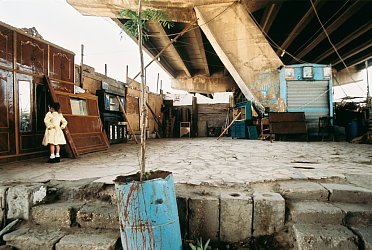
    The starting point for the photographic and video work of Hala Elkoussy (b. 1974, Cairo) is the constant change in the relationship between people and their social environment. In this she focuses specifically on the city where she was born, Cairo, a metropolis that exemplifies all of the large urban conglomerates in North Africa and Eurasia when it comes to modernisation and Westernisation. Stedelijk Museum Bureau Amsterdam is showing her project Peripheral, which was previously seen at the Istanbul Biennale in September, 2005.


    Hala Elkoussy, Peripheral (and other stories), 2 April – 14 May 2006 at the Stedelijk Museum Bureau Amsterdam.

    By Cati in personal addiction

    Wednesday, March 29, 2006

    Health care and product design : Sleep & Recovery Enhancer by André Kongevold


    SRE - Sleep & Recovery Enhancer by André Kongevold

    Today, stress-related sleeping problems are increasingly common. More and more people experience difficulties falling asleep at bedtime. The SRE will guide the user through autogenous exercises to lower the stress-level and reduce time to fall asleep. This in turn will improve sleep quality and minimize daytime effects.


    More info

    The Hug by Sohui Won


    When you chat with your friend or family, you can feel their touch as well. Just hug "the hug."


    " "The Hug" is communicator to feel touch. It has two main functions.

    - Sending / Saving / Receiving messages
    - Sending / Saving / Receiving touches

    Have you wanted to convey your touch to your lover or children? Trough this device, you can transmit your touch with a message to another device that my pal has. When you leave a message, you can hug and touch "The Hug" to transmit your touch. So the movement of your touch can be conveyed to your mate's device through heat-line and vibration."

    More detail about the project

    The Hug : interaction design


    The Hug is A visionary robotic product concept developped by Carl DiSalvo, Carl DiSalvo, Francine Gemperle, Willy Yonkers, Elliott Montgomery, and Jamie Divine.

    The Hug is a soft, huggable product that uses sensing technology and wireless telephony to provide social and emotional support for distant family members. Thisrobotic product uses verbal communications along with touch and physical interaction to create a sense of presence. The Hug uses technology in a way that profoundly addresses an observed human need -- the need for a sense of presence during intimate communication.


    descriptive paper and technical details published at RO-MAN (IEEE International Workshop on Robots and Human Interactive Communication), another one on the design form, and a case sketch.


    More info


    Monday, March 27, 2006

    Ernesto Neto : huggable sculptures


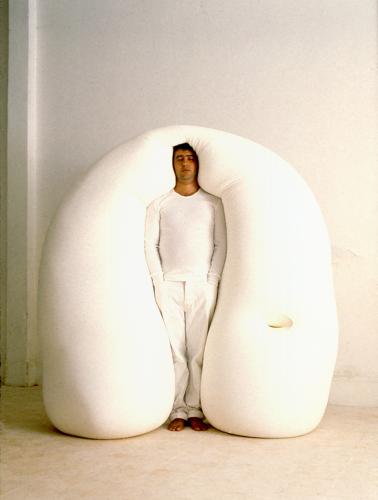
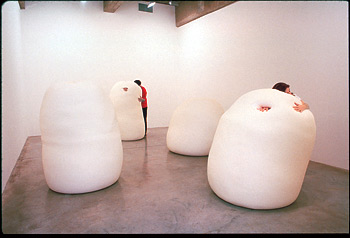
    I love Ernesto Neto's soft "huggable" sculptures.

    Exhibited in Hirshhorn Museum, Washington, USA in March 2002. Neto's sculptures and installations are indeed singular in contemporary art," says curator Viso. "His works, which he describes as a 'kind of body/space/landscape,' not only arrest us visually but also make us keenly aware of the spaces inside, around and between our bodies. We become voyagers in sensorial odysseys


    Ernesto Neto (Brazilian, born 1966), "The Ovaloids Meeting" (1998). Courtesy of the artist and Tanya Bonakdar Gallery, New York.