Monday, September 11, 2006

Cultures multiples

The virtue of multiculturalism: personal transformation, character, and openness to the other.
By Fowers BJ, Davidov BJ In Am Psychol. 2006 Sep ; 61(6): 581-94

A paper that makes you feel good about being multi cultural! Abstract is bellow.


The social, intellectual, and moral movement known as multiculturalism has been enormously influential in psychology. Its ability to reshape psychology has been due to its ethical force, which derives from the attractiveness of its aims of inclusion, social justice, and mutual respect. The cultivation of cultural competence, presented as a developmental process of acquiring self-awareness, cultural knowledge, and skills, is an important emphasis in the multicultural literature. The authors place the cultural competence literature in dialogue with virtue ethics (a contemporary ethical theory derived from Aristotle) to develop a rich and illuminating way for psychologists to understand and embody the personal self-examination, commitment, and transformation required for learning and practicing in a culturally competent manner. According to virtue ethics, multiculturalism can be seen as the pursuit of worthwhile goals that require personal strengths or virtues, knowledge, consistent actions, proper motivation, and practical wisdom. The authors term the virtue of multiculturalism openness to the other and conclude by describing how attention to cultural matters also transforms virtue ethics in important and necessary ways. ((c) 2006 APA, all rights reserved).


In multi cultures

Sunday, September 10, 2006

The Triumph of Apple

I read Etienne Mineur's blog and found this extract of the Triumph of the Nerds: The Rise of Accidental Empires from 1996.
Documentary that contains interviews of Paul Allen (Microsoft), Bill Atkinson (designer, Macintosh Development Team), Steve Ballmer (Microsoft), Dan Bricklin (l'inventeur de VisiCalc), Bill Gates (Microsoft), Adele Goldber (Xerox PARC), Steve Wozniak ( Apple), Steve Jobs (Apple).
Via Etienne Mineur

The apple extract

Saturday, September 09, 2006

Body organisation and spatial representation

Body organisation and spatial representation.
By Tolja J, Cardia C In Cogn Process. 2006 Sep ; 7 Suppl 5: 95

Abstract

This work falls within the area where psychology, anatomy and architecture meet and overlap. It comes from an interdisciplinary research carried out by professionals from very different, although complementary, backgrounds, as medicine and psychotherapy on one side, and interior design, landscape and urban design, on the other side. Through a brief powerpoint slide show, the results of a research carried out with the students of the Domus Academy of Design, the Landscape School Arte e Messaggio and the Department of Architecture and Planning of the Milan Polytechnic. The objective of the presentation is to show how a change in body organisation can affect the spatial perception, the spatial experience and the spatial representation. In the experiment reported, through a series of small, but specific, body movements the students have entered into different phisical patterns, with their relative "state of mind", and then led to note how these changes have affected their perception of space. After the students to the research have been lead to experience specific body organisations and neurological patterns, they have been asked to draw a familiar type of space: a room for the interior designers of the Domus Academy, a garden for the landscape designers, a town square for the urban designers of the Politecnico di Milano.The results show recurring and meaningful patterns in the drawings for every type of body organisation. The demonstration, will offer to the participants the opportunity to understand clearly the correlation among neuro-physical patterns and their related spatial perception and representation. A short discussion at the end will adress practical implications of specific spatial choices in determining body and neurological patterns in fields as architecture, urban design, education, psychology and medicine.

Pocket-sized psychology studies

Pocket-sized psychology studies: exploring daily diary software for palm pilots.
By Le B, Choi HN, Beal DJ. In Behav Res Methods. 2006 May ; 38(2): 325-32

Abstract

Daily dairies, also known as experience sampling methods (ESM) or everyday experience methods, are a common methodology utilized to provide insight into momentary psychological processes. Traditionally, such studies often have utilized paper-and-pencil surveys administered several times each day over a span of several days or weeks. However, advances in technology now allow these studies to be conducted using palmtop computers (i.e., personal digital assistants; PDAs). Three software packages for running these studies on the Palm operating system were explored and compared on a number of features Specifically, ESP (Experience Sampling Program, by Feldman Barrett & Barrett, 2001), iESP Version 3.2 (Intel Experience Sampling Program, by Intel Research Seattle & the University of Washington Computer Science and Engineering Department), and PMAT Version 2.0 (Purdue Momentary Assessment Tool, by the Military Family Research Institute at Purdue University) were examined, with their key features compared. These advances in software for running diary studies include a number of features that provide researchers with methods and information previously unavailable in diary studies and may expand the range of possibilities in diary study designs.


In psychology & wearable technology

Friday, September 08, 2006

The 'moi-peau' and self mutilation

Researching on how haptics can provide a controlled painful stimulus as a treatment for self mutilation, I found an interesting medical research paper on the relationship between personal physical boundaries and self mutilation.
[The "Moi-peau"], Consoli SG, Med Sci (Paris). 2006 Feb ; 22(2): 197-200.

The author reviews the work of Didier Anzieu, pionneer of the 'moi-peau' concept. Certain persons have not yet acquired the 'moi peau', and use defense mechanims: Among other clinical characteristics, they have a "pathology of action" and frequently attack their own skin, paradoxically, in order to test the solidity and reliability of their own limits.

Because dermatologists frequently receive patients suffering from ereutophobia, dysmorphophobia, tattooing, self-mutilation, artefacta dermatitis, the author suggests that Anzieu bridged dermatologists to psychoanalysts.

Abstract of the paper

To construct a coherent identity, humans must distinguish what belongs to the external, perceived world from what belongs to their own inner world and the inner world of other individuals. Based on the theory developed by S. Freud and on work by ethologists, a number of psychoanalysts (J. Bowlby, R.A. Spitz, D.W. Winnicott, etc.) have underlined the importance of early tactile exchanges with the mother if a child is to become an autonomous individual who feels secure within what he or she perceives to be sound and reliable mental and physical boundaries. More recently, other psychoanalysts (E. Bick, W.R. Bion, etc.) have studied the fantasized mental structures that form the limits between an individual's inner mental space and the external world (including other individuals). As part of this theoretical psychoanalytical movement, Didier Anzieu, a French psychoanalyst, started to develop the concept of the "Moi-peau" in 1974. The "Moi-peau" designates a fantasized reality that a child uses during its early development to represent itself as "me", based on its experience of the body surface. The child, enveloped in its mother's care, fantasizes of a skin shared with its mother: on one side the mother (the outer layer of the "Moi-peau"), and on the other side the child (the inner layer of the "Moi-peau"). These two layers must separate gradually if the child is to acquire its own me-skin. D. Anzieu's work allowed dermatologists and other specialists, such as pediatricians, to focus on the quality of early tactile exchanges between a mother and her child, including the child with a chronic skin disorder. It also helped dermatologists to recognize patients with "borderline" states, which are particularly frequent in dermatology (ereutophobia, dysmorphophobia, tattooing, self-mutilation, artefacta dermatitis). These borderline patients are adults who, as a result of their mental conflicts, adopt defense mechanisms derived from both neurotic and psychotic functioning. Their complaints reflect difficulties with the solidity of their mental and physical limits: their real skin is metaphorically linked to the fantasized mental structure that delimits the individual mental space. Among other clinical characteristics, they have a "pathology of action" and frequently attack their own skin, paradoxically, in order to test the solidity and reliability of their own limits. Finally, D. Anzieu's work encouraged dermatologists to use psychotherapeutic approaches in parallel to classical dermatologic approaches, when necessary, and helped them better understand how psychoanalysts work with patients who have not yet acquired their own "Moi-peau". As a result, D. Anzieu was among the first to reconcile dermatologists and psychoanalysts.


In haptic psycho therapy

Wednesday, August 02, 2006

Auto-Vision

p
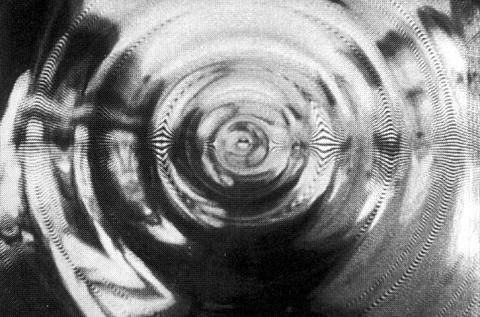
A still picture made out of the Texture of Light system

Today at Siggraph I presented my second research poster session on 'The Texture of Light' which is research on lighting principles and the exploration of life feed video metamorphosis in the public space using reflection of light on transparent materials.

My poster


I chatted with Kenneth Brecher, professor of Astronomy and Physics, Director, Science and Mathematics Education Center at Boston University.
He is the author of Project Lite that is about light inquiry through experiments. We discussed longely my Texture of Light project and we shared some exciting experiment results.
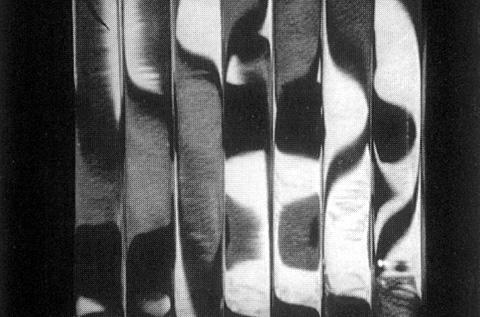
He mentioned the work of Karl Gerstner «Auto-Vision» who experimented with plexiglas sheets and images coming from TV.


Between 1962 and 1963, Gerstner made his first attempts at optically distorting television images with lenses made of Plexiglas. In 1964, he exhibited his results for the first time in an installation that used 12 television sets, each one shown wearing a different pair of so-called «glasses». ( Exhibition: «Crazy Berlin» at Haus am Lützowplatz, Berlin) Also from 1964 comes the oldest existing version of «Auto-Vision» for a single television set. A new housing for the black-and-white TV set closes at the front, with a square television, and can accommodate six differently formed Plexiglas lenses, with everything meticulously packed in a crate for its transport. In this form, the perfection of design and presentation makes Gerstner’s «Auto-Vision» function as the prototype for a possible serial production. (...) «The name identifies the difference from television. The aim is not to broadcast programs, but to create programs directly. For this we use daily television programs that are abstracted through a ‹pair of spectacles,› and alienated to the point of being non-representational,» is Gerstner's comment on the process(1) These Perspex ‹spectacles› have something in common with Op Art. They can be swapped around, and each pair creates a different effect.
By Media Art Net

(1) Cited in Johannes Gfeller, «Frühes Video in der Schweiz,» in Georges-Bloch Jahrbuch des Kunstgeschichtlichen Seminars der Universität Zürich, 1997, pp. 224f. Gfeller provides a comprehensively researched account of Gerstner's TV works.


In Tangible Vision

TENS Pain Control Units

Today I discussed with visitors at Siggraph about research on haptics for psychotherapy. I have been recommended to look at the Faculty of Health, School of Health and Human sciences in the UK. The centre for Pain Research Group is concerned with the use of non-invasive approaches to manage pain. They present TENS a medical device that treats pain for electro stimulation.

They work on the analgesic effects of Transcutaneous Electrical Nerve Stimulation (TENS) and Interferential Current Therapy (IFT).

Many types of pain which are often relieved with drugs can today be treated by electrical stimulation with no side effects. Pain relief with TENS (Transcutaneous Nerve Stimulation) is produced through high frequency electrical stimulation of the nerve which disrupts the pain signal so that the pain is no longer felt.


In Physical therapy

Tuesday, August 01, 2006

Goth youth subculture. self mutilation. suicide attempts


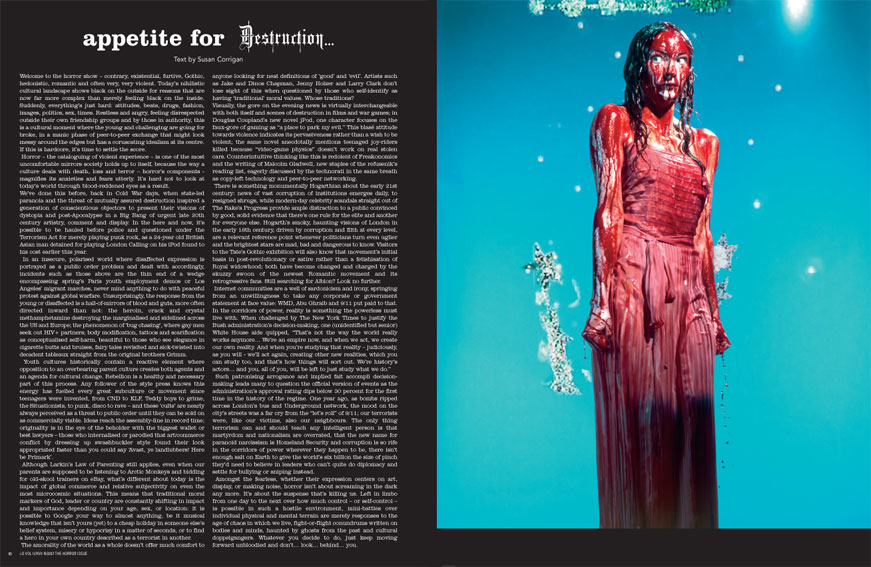
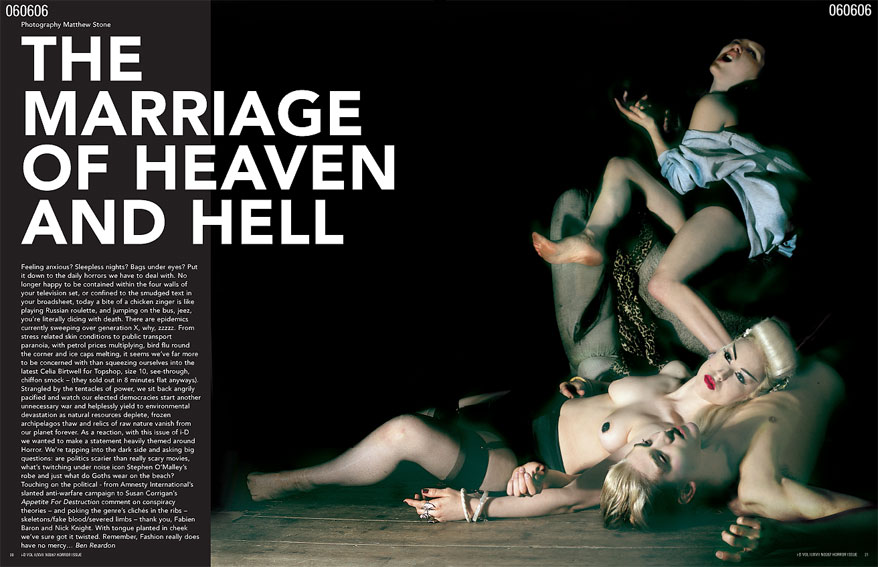
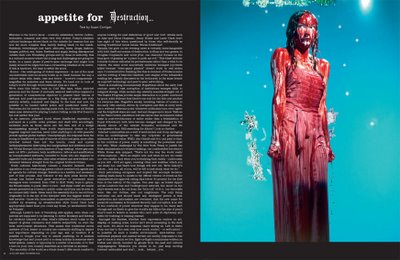
Picture taken from the magazine I-D horror issue of July 2006


A longitudinal cohort study develops on the relationship between goth youth subculture, self mutilation and suicide attempts to understand if deliberate self harm is associated with contemporary Goth youth subculture.

The paper, published in April 2006, is written by Robert Young, Helen Sweeting, and Patrick West: Prevalence of deliberate self harm and attempted suicide within contemporary Goth youth subculture: longitudinal cohort study. It is a study made with 1258 people aged 19, surveyed in 2002-4 and followed-up since age 11 (1994) in Scotland.

Identification as belonging to the Goth subculture was the best predictor of self harm and attempted suicide. Although based on small numbers, additional longitudinal analysis suggests both selection and modelling mechanisms are involved, selection mechanisms possibly being more likely.
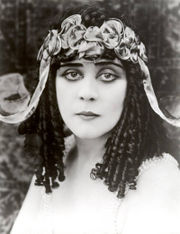


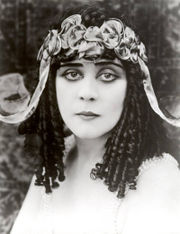
One famous female role model is Theda Bara, the 1920s femme fatale known for her dark eyeshadow, curves and smoldering onscreen presence. By Wikipedia about Theda Bara's look being an inspiration for Goth fashion.

Definition of Goth subculture by Wikipedia
Goth is a contemporary subculture prevalent in many countries around the globe. It began in the United Kingdom during the early 1980s in the gothic rock scene, an offshoot of the post-punk genre. The goth subculture is remarkable for its longevity compared with others of the same era. Its imagery and cultural proclivities show influences from nineteenth century Gothic literature, mainly by way of horror movies (particularly cinematic depictions of vampires).
The goth subculture has associated "gothic" tastes in music and fashion. Gothic music encompasses a number of different styles. Common to all is a tendency towards a “dark” sound. Styles of dress within the subculture range from death rock, punk, Victorian, androgyny, some Renaissance style clothes, combinations of the above, and/or lots of black attire, makeup and hair.


Gothic woman, traditional style, with big hair, spikes and piercings
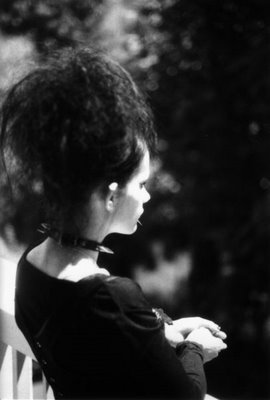
Picture from Wikipedia, the free encyclopedia.

The reviews were also particularly interesting in judging the results of this work. A pertinent one by Mark Taubert, Senior House Officer in Palliative Medicine:
Young’s interesting study (1) claims to find a strong association between Goth subculture and deliberate self-harm before and after adjusting for confounders.

Importantly, it fails to distinguish that the Goth subculture is not easily defined or categorised, spans several continents and has evolved to include a wide range of musical and clothing styles. This contemporaneously includes Mallgoths in the US, Gogans in Australia, Dark in Latin America, Cuervos in Spain and Spooky kids and Neogoths in the UK (2, 3). Young et al should have made it clear in their discussion that any conclusion only relates to a small sample of gothic youth in the Central Clydeside Conurbation. One cannot assume that Goth youths’ subcultural trends, icons and ideals would be similar in other geosocial regions.

Perhaps not all confounders have been taken into consideration given that Young’s study was conducted in Scotland between 2002 and 2004. During this period, a Scot won ‘Pop-Idol’ (Michelle McManus) and another won ‘Fame-Academy’ (David Sneddon). Both these TV programmes were difficult to avoid given the intense media coverage. The study concludes that the causality for Goths self-harming more than, say, Pop-Fans (53% and 7% respectively) remains unclear. The exasperation with current popular cultural trends may have driven one subculture, the Goths, to drastic methods of protest, such as overt self-harming.

Could frequent, involuntary exposure to mass-produced pop music affect the mental health of one youth sub-culture population more than another’s? As Ovid states in Tristia: Est quaedam flere voluptas.


Another point of view on the paper by Andrew J Ashworth, General Practitioner:

The observed association between deliberate self harm and the Goth subculture is seen as most likely to be by self-selection. I propose a physiological basis for that self-selection that is consistent with this and other evidence and offers theraputic possibilities.

The recorded method of deliberate self-harm in this study was “cutting, scratching or scoring”: all activities that might be expected to release endogenous endorphins systemically. Those who have suffered long term trauma can be expected to have higher levels of dynorphins (chronic endogenous antinociceptives), which are opiate kappa agonists, reducing dopamine secretion in the Nucleus Accumbens and causing reduced mood reactivity. “Driving” dopamine secretion through increased opiate mu secretion through physical (eg cutting), psychological (eg taking part in dangerous activity) or drugs (eg Heroin), or by smoking (Nicotine acts directly on Dopaminergic fibres)can rebalance the opiate system by overcoming the inhibitory kappa effect to permit perceived normality. Reactivity of mood mediated by dopamine can thus be subject to behavioural control, including deliberate self-harm by cutting, scratching or scoring.


Finally, the author's reply to the reviews:


The definition of “Goth” is contentious, but covers a wide range of musical tastes, social groupings, and aesthetics. The most relevant distinction here is between contemporary (usually younger) “Baby, Bat or sometimes referred to as Mall (US)” Goths vs. “mature, real or Elder Goths” 1. Our paper, as is clear from the title, refers to younger Goths; the results may not apply to all Goths.

The range of comments in response to our conclusion, that both selection and influence mechanisms may be involve, reflect the lack of evidence on this issue. To highlight this, we drew attention in the press release following publication to the possibility that engagement with Goth subculture could have positive rather than negative consequences for some young people. Our contribution is a first step towards producing an evidence base to test this, rather than relying on media speculation.

Some contributors have suggested that the association between self- harm and Goth subculture may be accounted for by other factors. However this is unlikely, since we adjusted for the strongest and most relevant correlates of self-harm found in other studies of young people. Others have suggested that our results were not valid due to the small numbers involved. We would point out that our paper underwent a formal statistical review before publication. Further, while the media focused on the 25 young people who unambiguously identified as Goth, nearly 8% of our representative sample had identified with Goth subculture, in varying degrees of intensity, and were 3-4 times more likely to self-harm, than the other participants.

It has also been suggested that by adopting a quantitive approach we may have missed contextual factors (this is obviously true of any non- qualitative study), and that the high rate of self-harm found among Goths is a form of decoration, analogous to body modification. We dispute this on two grounds. Firstly, since those who self-harmed were asked why, we know that the majority, regardless of youth subculture did so to relieve anxiety, anger and other negative emotions. Secondly, while cutting could be interpreted as some form of subcultural display, such an argument is difficult to sustain in relation to attempted suicide.


Finally, on a hopeful note, the I-D horror issue that I bought this July 06 seems to offer a nice come back into the Goth world ...

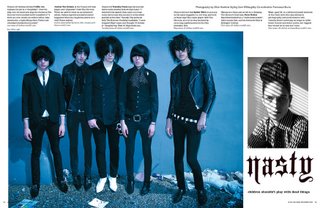

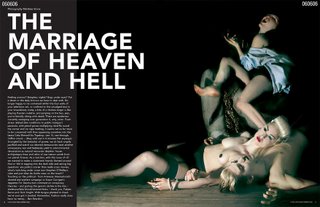
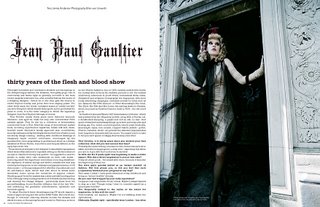
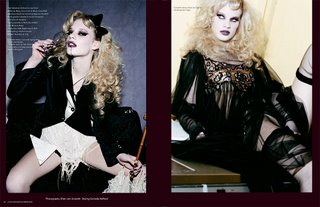


In self mutilation and fashion

Sunday, July 23, 2006

Feedback for people with OCD

UBICOMP TO PROVIDE FEEDBACK FOR PEOPLE WITH OBSESSIVE-COMPULSIVE DISORDER

Obsessive-Compulsive Disorder (OCD): Patients are Impaired in Remembering Temporal Order and in Judging Their Own Performance, J. Clinical and Experimental Neuropsychology, vol. 24, no. 3, 2002, pp. 261–269.

Today, Rob Van Kranenburg sent me an interesting article he wrote in 2003 on how ubicom applications could provide feedback for people with OCD. He is developing solutions in the framework of contemporary performance and theatrical practice.

The paper can be found here.

The paper mentions that in the US and Netherlands, one in 50 adults currently has OCD, and twice as many have had it at some point in their lives.

How could ubicomp be instrumental here? Phase 1 is researching if ubicomp applications can assess if a person has a tendency for audio, visual, tactile, or other kinds of feedback that would signal the task scenario’s closure. In Phase 2, we would have to access, for example, if visual feedback on clothing or another appliance could break the chain of repetition for a person who functions on visual feedback but is dealing with an apparatus that does not provide such feedback. Working closely with psychiatrists and OCD patients, in Phase 3 we could test whether such ubiquitous computing applications could break the loop of repetition, assuming that it is the kind of feedback that is responsible for the taskloop’s nonclosure.


Finally the paper concludes that ubicomp applications could focus on temporal markers and serendipitous feedback scripting into various scenarios to raise self-awareness.

In pervasive computing

Friday, July 21, 2006

Framework for Haptic Psycho Therapy


Hurt Me prototype

Cool Me Down prototype

It is a pity that just the excellent personalities suffer most from the adverse effects of the atmosphere -Goethe

Together with Leo we wrote a paper on a framework for Haptic Psycho Therapy. We presented our research at the Health Pervasive Systems Workshop of the IEEE International Conference of Pervasive Services 2006.

Download the powerpoint slides of our presentation

Abstract: A growing body of evidence supports touch-based therapy for assisting sensory issues stemming from common social and psychological problems. Simulating touch through haptic devices can complement existing treatments for mental illness by providing soothing sensations that help to ground the senses. We introduce the concept of using computerized touch stimulation as a means for psychological therapy, and present a haptic device that allows touch information to be captured, broadcast and replayed in a wearable garment. To be effective outside the home or care-giving facility, this new type of therapeutic wearable needs to be highly customizable, easily controlled by the user and discrete enough to be worn in public.

We developped four prototypes that will be exhibited at the A + D Gallery in Chicago, September 7 – October 21, 2006

The Touchcasting serie consists of:
COOL ME DOWN - An Electronic Cold Wrap for the Treatment of Schizophrenia
More info about Cool Me Down
- Patent pending -


HURT ME - A Bracelet that Generates Controlled Pain for Psycho-Therapy
More info about Hurt Me
- Patent pending -


SQUEEZE ME - A Vest that Simulates Therapeutic Holding
More info about Squeeze Me
- Patent pending -


TOUCH ME - A System and Method for the Remote Application of Touch Therapy
More info about Push My Buttons
- Patent pending -

I now working independently on Seamless Sensory Interventions for the treatment of mental and neurological disorders.
My current research proposes haptics as the key to bringing treatment into the social sphere through devices, and providing new ways to mediate between the patient and the therapist both in and outside of therapy. Self-mutilation is a perfect test-case, because of the definitive “physicality” of the symptoms. However, the broader solutions that I am proposing have implications for diseases as diverse as autism, depression, and schizophrenia.