Tuesday, September 12, 2006

Classification for haptic actuation technology

Angela Chang refered me to a paper that articulates a need for haptic classification. This is a key paper to understand how to create and distinguish among haptic effects.
An Activity Classification for Vibrotactile Phenomena By Conor O’Sullivan and Angela Chang. In Lecture Notes in Computer Science, Volume 4129/2006

Abstract

We observe that the recent availability of audio-haptic actuators allow richer vibration content to be available in commercial devices. However, we note that consumers are unable to take advantage of these rich experiences, mainly due to the lack of a descriptive language for vibration. We analyze the current methods for classifying vibrations. We propose a new framework for describing vibrotactile haptic phenomena, based on an organizing the media based on content activity. We describe this naming system, based on Russolo’s families of noise, and address other pertinent issues to introducing vibration content into commercial devices.

The creation of meaning in interaction design

But how, Donald, tell us how?: on the creation of meaning in interaction design through feedforward and inherent feedback

In Section 06: objects in space: But how, Donald, tell us how?: on the creation of meaning in interaction design through feedforward and inherent feedback By Tom Djajadiningrat, Kees Overbeeke, Stephan Wensveen
June 2002, Proceedings of the conference on Designing interactive systems: processes, practices, methods, and techniques. Publisher: ACM Press.
Abstract is below.

In recent years, affordances have been hailed by the interaction design community as the key to solving usability problems. Most interpretations see affordances as 'inviting the user to the right action'. In this paper we argue that the essence of usability in electronic products lies not in communicating the necessary action and instead shift our attention to feedforward and inherent feedback. With feedforward we mean communication of the purpose of an action. This is essentially a matter of creating meaning and we discuss two approaches to do so. With inherent feedback we try to strengthen the coupling between the action and the feedback. The sensory richness and action potential of physical objects can act as carriers of meaning in interaction. We thus see tangible interaction as indispensable in realizing feedforward and inherent feedback. We illustrate our ideas with examples from our teaching and research.

Monday, September 11, 2006

The Emotional Wardrobe

The Emotional Wardrobe, by Lisa Stead, Petar Goulev, Caroline Evans, Ebrahim Mamdani
In Personal and Ubiquitous Computing archive, Springer-Verlag, Volume 8 , Issue 3-4 (July 2004), Pages: 282 - 290, 2004.
Abstract follows ...

Since the industrial revolution, fashion and technology have been linked through the textile and manufacturing industries, a relationship that has propelled technical innovation and aesthetic and social change. Today, a new alliance is emerging through the integration of electronic technology and smart materials on the body. This study addresses the integration of technology with clothing from a fashion perspective, and examines its expressive and interactive potential. It proposes the concept of “The Emotional Wardrobe”: clothing that represents and stimulates emotional response through the interface of technology. It asks if fashion can offer a more personal and provocative definition of self, which actively involves the wearer in a mutable aesthetic identity. A multi-disciplinary framework combines fashion, material science and the real-time, affective computing platform, called “AffectiveWare”. By merging technology and fashion, The Emotional Wardrobe becomes a poetic interface, shifting emphasis from human–computer interaction to computer-aided, human–human communication.


Website of the Emotional Wardrobe project

Cultures multiples

The virtue of multiculturalism: personal transformation, character, and openness to the other.
By Fowers BJ, Davidov BJ In Am Psychol. 2006 Sep ; 61(6): 581-94

A paper that makes you feel good about being multi cultural! Abstract is bellow.


The social, intellectual, and moral movement known as multiculturalism has been enormously influential in psychology. Its ability to reshape psychology has been due to its ethical force, which derives from the attractiveness of its aims of inclusion, social justice, and mutual respect. The cultivation of cultural competence, presented as a developmental process of acquiring self-awareness, cultural knowledge, and skills, is an important emphasis in the multicultural literature. The authors place the cultural competence literature in dialogue with virtue ethics (a contemporary ethical theory derived from Aristotle) to develop a rich and illuminating way for psychologists to understand and embody the personal self-examination, commitment, and transformation required for learning and practicing in a culturally competent manner. According to virtue ethics, multiculturalism can be seen as the pursuit of worthwhile goals that require personal strengths or virtues, knowledge, consistent actions, proper motivation, and practical wisdom. The authors term the virtue of multiculturalism openness to the other and conclude by describing how attention to cultural matters also transforms virtue ethics in important and necessary ways. ((c) 2006 APA, all rights reserved).


In multi cultures

Sunday, September 10, 2006

The Triumph of Apple

I read Etienne Mineur's blog and found this extract of the Triumph of the Nerds: The Rise of Accidental Empires from 1996.
Documentary that contains interviews of Paul Allen (Microsoft), Bill Atkinson (designer, Macintosh Development Team), Steve Ballmer (Microsoft), Dan Bricklin (l'inventeur de VisiCalc), Bill Gates (Microsoft), Adele Goldber (Xerox PARC), Steve Wozniak ( Apple), Steve Jobs (Apple).
Via Etienne Mineur

The apple extract

Saturday, September 09, 2006

Body organisation and spatial representation

Body organisation and spatial representation.
By Tolja J, Cardia C In Cogn Process. 2006 Sep ; 7 Suppl 5: 95

Abstract

This work falls within the area where psychology, anatomy and architecture meet and overlap. It comes from an interdisciplinary research carried out by professionals from very different, although complementary, backgrounds, as medicine and psychotherapy on one side, and interior design, landscape and urban design, on the other side. Through a brief powerpoint slide show, the results of a research carried out with the students of the Domus Academy of Design, the Landscape School Arte e Messaggio and the Department of Architecture and Planning of the Milan Polytechnic. The objective of the presentation is to show how a change in body organisation can affect the spatial perception, the spatial experience and the spatial representation. In the experiment reported, through a series of small, but specific, body movements the students have entered into different phisical patterns, with their relative "state of mind", and then led to note how these changes have affected their perception of space. After the students to the research have been lead to experience specific body organisations and neurological patterns, they have been asked to draw a familiar type of space: a room for the interior designers of the Domus Academy, a garden for the landscape designers, a town square for the urban designers of the Politecnico di Milano.The results show recurring and meaningful patterns in the drawings for every type of body organisation. The demonstration, will offer to the participants the opportunity to understand clearly the correlation among neuro-physical patterns and their related spatial perception and representation. A short discussion at the end will adress practical implications of specific spatial choices in determining body and neurological patterns in fields as architecture, urban design, education, psychology and medicine.

Pocket-sized psychology studies

Pocket-sized psychology studies: exploring daily diary software for palm pilots.
By Le B, Choi HN, Beal DJ. In Behav Res Methods. 2006 May ; 38(2): 325-32

Abstract

Daily dairies, also known as experience sampling methods (ESM) or everyday experience methods, are a common methodology utilized to provide insight into momentary psychological processes. Traditionally, such studies often have utilized paper-and-pencil surveys administered several times each day over a span of several days or weeks. However, advances in technology now allow these studies to be conducted using palmtop computers (i.e., personal digital assistants; PDAs). Three software packages for running these studies on the Palm operating system were explored and compared on a number of features Specifically, ESP (Experience Sampling Program, by Feldman Barrett & Barrett, 2001), iESP Version 3.2 (Intel Experience Sampling Program, by Intel Research Seattle & the University of Washington Computer Science and Engineering Department), and PMAT Version 2.0 (Purdue Momentary Assessment Tool, by the Military Family Research Institute at Purdue University) were examined, with their key features compared. These advances in software for running diary studies include a number of features that provide researchers with methods and information previously unavailable in diary studies and may expand the range of possibilities in diary study designs.


In psychology & wearable technology

Friday, September 08, 2006

The 'moi-peau' and self mutilation

Researching on how haptics can provide a controlled painful stimulus as a treatment for self mutilation, I found an interesting medical research paper on the relationship between personal physical boundaries and self mutilation.
[The "Moi-peau"], Consoli SG, Med Sci (Paris). 2006 Feb ; 22(2): 197-200.

The author reviews the work of Didier Anzieu, pionneer of the 'moi-peau' concept. Certain persons have not yet acquired the 'moi peau', and use defense mechanims: Among other clinical characteristics, they have a "pathology of action" and frequently attack their own skin, paradoxically, in order to test the solidity and reliability of their own limits.

Because dermatologists frequently receive patients suffering from ereutophobia, dysmorphophobia, tattooing, self-mutilation, artefacta dermatitis, the author suggests that Anzieu bridged dermatologists to psychoanalysts.

Abstract of the paper

To construct a coherent identity, humans must distinguish what belongs to the external, perceived world from what belongs to their own inner world and the inner world of other individuals. Based on the theory developed by S. Freud and on work by ethologists, a number of psychoanalysts (J. Bowlby, R.A. Spitz, D.W. Winnicott, etc.) have underlined the importance of early tactile exchanges with the mother if a child is to become an autonomous individual who feels secure within what he or she perceives to be sound and reliable mental and physical boundaries. More recently, other psychoanalysts (E. Bick, W.R. Bion, etc.) have studied the fantasized mental structures that form the limits between an individual's inner mental space and the external world (including other individuals). As part of this theoretical psychoanalytical movement, Didier Anzieu, a French psychoanalyst, started to develop the concept of the "Moi-peau" in 1974. The "Moi-peau" designates a fantasized reality that a child uses during its early development to represent itself as "me", based on its experience of the body surface. The child, enveloped in its mother's care, fantasizes of a skin shared with its mother: on one side the mother (the outer layer of the "Moi-peau"), and on the other side the child (the inner layer of the "Moi-peau"). These two layers must separate gradually if the child is to acquire its own me-skin. D. Anzieu's work allowed dermatologists and other specialists, such as pediatricians, to focus on the quality of early tactile exchanges between a mother and her child, including the child with a chronic skin disorder. It also helped dermatologists to recognize patients with "borderline" states, which are particularly frequent in dermatology (ereutophobia, dysmorphophobia, tattooing, self-mutilation, artefacta dermatitis). These borderline patients are adults who, as a result of their mental conflicts, adopt defense mechanisms derived from both neurotic and psychotic functioning. Their complaints reflect difficulties with the solidity of their mental and physical limits: their real skin is metaphorically linked to the fantasized mental structure that delimits the individual mental space. Among other clinical characteristics, they have a "pathology of action" and frequently attack their own skin, paradoxically, in order to test the solidity and reliability of their own limits. Finally, D. Anzieu's work encouraged dermatologists to use psychotherapeutic approaches in parallel to classical dermatologic approaches, when necessary, and helped them better understand how psychoanalysts work with patients who have not yet acquired their own "Moi-peau". As a result, D. Anzieu was among the first to reconcile dermatologists and psychoanalysts.


In haptic psycho therapy

Wednesday, August 02, 2006

Auto-Vision

p
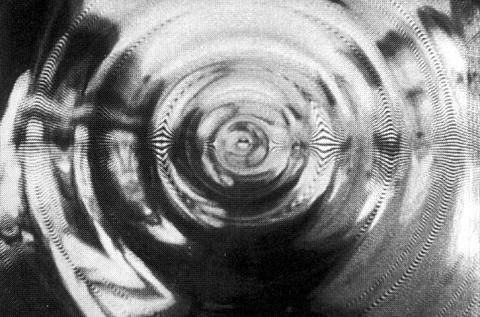
A still picture made out of the Texture of Light system

Today at Siggraph I presented my second research poster session on 'The Texture of Light' which is research on lighting principles and the exploration of life feed video metamorphosis in the public space using reflection of light on transparent materials.

My poster


I chatted with Kenneth Brecher, professor of Astronomy and Physics, Director, Science and Mathematics Education Center at Boston University.
He is the author of Project Lite that is about light inquiry through experiments. We discussed longely my Texture of Light project and we shared some exciting experiment results.
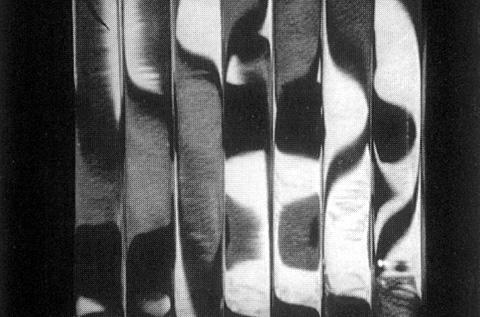
He mentioned the work of Karl Gerstner «Auto-Vision» who experimented with plexiglas sheets and images coming from TV.


Between 1962 and 1963, Gerstner made his first attempts at optically distorting television images with lenses made of Plexiglas. In 1964, he exhibited his results for the first time in an installation that used 12 television sets, each one shown wearing a different pair of so-called «glasses». ( Exhibition: «Crazy Berlin» at Haus am Lützowplatz, Berlin) Also from 1964 comes the oldest existing version of «Auto-Vision» for a single television set. A new housing for the black-and-white TV set closes at the front, with a square television, and can accommodate six differently formed Plexiglas lenses, with everything meticulously packed in a crate for its transport. In this form, the perfection of design and presentation makes Gerstner’s «Auto-Vision» function as the prototype for a possible serial production. (...) «The name identifies the difference from television. The aim is not to broadcast programs, but to create programs directly. For this we use daily television programs that are abstracted through a ‹pair of spectacles,› and alienated to the point of being non-representational,» is Gerstner's comment on the process(1) These Perspex ‹spectacles› have something in common with Op Art. They can be swapped around, and each pair creates a different effect.
By Media Art Net

(1) Cited in Johannes Gfeller, «Frühes Video in der Schweiz,» in Georges-Bloch Jahrbuch des Kunstgeschichtlichen Seminars der Universität Zürich, 1997, pp. 224f. Gfeller provides a comprehensively researched account of Gerstner's TV works.


In Tangible Vision

TENS Pain Control Units

Today I discussed with visitors at Siggraph about research on haptics for psychotherapy. I have been recommended to look at the Faculty of Health, School of Health and Human sciences in the UK. The centre for Pain Research Group is concerned with the use of non-invasive approaches to manage pain. They present TENS a medical device that treats pain for electro stimulation.

They work on the analgesic effects of Transcutaneous Electrical Nerve Stimulation (TENS) and Interferential Current Therapy (IFT).

Many types of pain which are often relieved with drugs can today be treated by electrical stimulation with no side effects. Pain relief with TENS (Transcutaneous Nerve Stimulation) is produced through high frequency electrical stimulation of the nerve which disrupts the pain signal so that the pain is no longer felt.


In Physical therapy